[Asia Economy Reporter Seungjin Lee] A study has revealed that consuming animal-based protein is important for bone health.
On the 25th, according to the Korean Hanwoo Board, the German Federal Institute for Risk Assessment (BfR) published research results in the journal Nutrients indicating that vegetarians may have lower bone density compared to people who enjoy both vegetarian and meat diets.
The research team assessed bone health in individuals who follow a vegetarian diet exclusively and those who consume both vegetarian and meat diets, confirming that vegetarians had poorer bone health. Additionally, 12 biomarkers of nutrients related to bone health, such as lysine, vitamin A, and vitamin B6, showed relatively lower concentrations in the blood and urine of vegetarians.
Last year, a study published in the BMC Medicine journal reported that following a vegetarian diet alone increases the risk of fractures. This study found that the probability of fractures was 43% higher in extreme vegetarians who do not consume any animal products such as meat, fish, dairy, or eggs compared to those who eat meat. The risk of fractures was also higher among vegetarians who consume dairy and eggs, as well as those who allow seafood.
According to the Ministry of Health and Welfare, the protein intake ratio of Korean citizens is 14.9%, which is lower than the recommended intake of 20-25%. Especially from their 40s, the protein intake ratio is below average, making it difficult to maintain muscle mass.
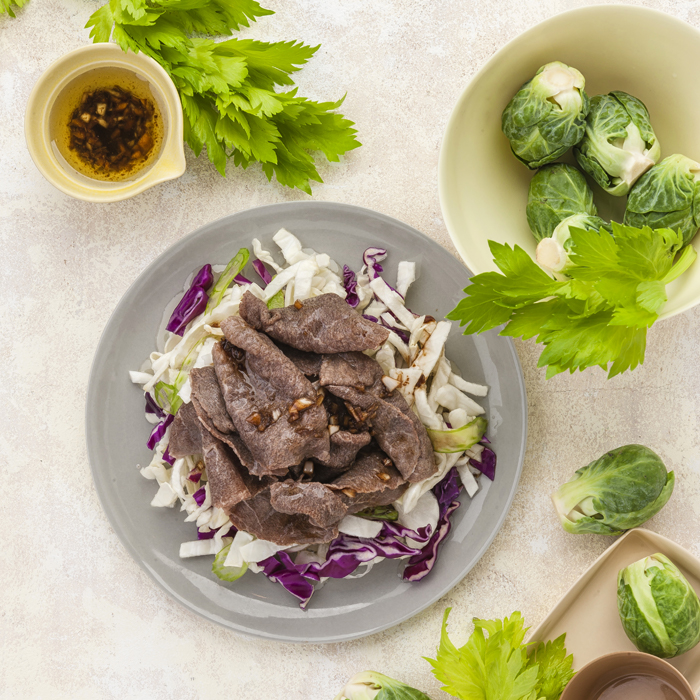
In response, the Korean Hanwoo Board introduces 'Hanwoo Cabbage Salad' for adequate animal protein intake to support bone health. Cabbage is rich in vitamin K, which helps increase bone density and reduce fractures. Although cabbage contains less calcium than dairy products, its absorption rate is about twice as high. Hanwoo beef is a protein source containing nine essential amino acids that the human body cannot produce.
One easy dish to make with milk is 'Milk Kongguksu' (milk soybean noodle soup), which is also effective for protein supplementation. Instead of the usual soybean water used in kongguksu, milk kongguksu uses milk and tofu blended with grains such as pine nuts and walnuts to easily make milk soybean broth. There is also 'Tomato Egg Stir-fry,' which pairs well with protein-rich eggs. Tomatoes provide dietary fiber and vitamin C, which eggs lack.
© The Asia Business Daily(www.asiae.co.kr). All rights reserved.
![Clutching a Stolen Dior Bag, Saying "I Hate Being Poor but Real"... The Grotesque Con of a "Human Knockoff" [Slate]](https://cwcontent.asiae.co.kr/asiaresize/183/2026021902243444107_1771435474.jpg)











