Changes in Crime Patterns Due to Prolonged COVID-19
Decrease in Five Major Crimes: Murder, Robbery, Theft, Violence, Sexual Violence; Increase in Domestic Violence
Experts: "Community-Level Systems Needed for Continuous Monitoring Within Households"
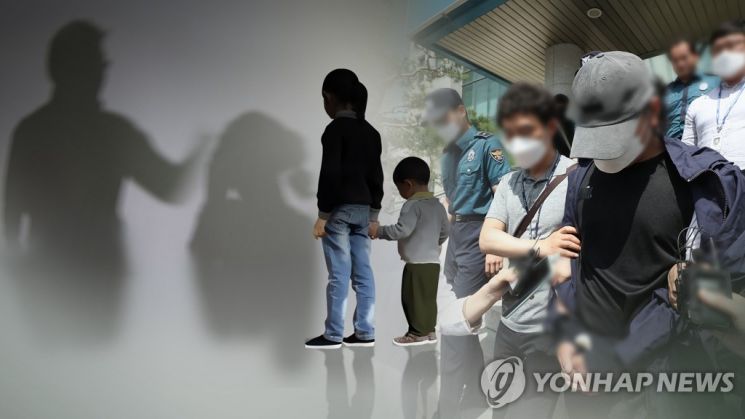 One year after the spread of COVID-19, the five major crimes (murder, robbery, theft, violence, and sexual violence) have decreased, while domestic violence has significantly increased. [Image source=Yonhap News]
[Asia Economy Reporter Kim Choyoung] As COVID-19 prolongs, crime patterns are also changing significantly. While the five major crimes?murder, robbery, theft, violence, and sexual violence?have decreased, domestic violence has surged. The increase in time spent at home due to social distancing and remote work is cited as the cause.
According to the Gyeonggi Southern Provincial Police Agency, crime report statistics from January to August last year showed a total of 98,122 cases of the five major violent crimes, down by 8,422 cases from 106,544 during the same period the previous year. Meanwhile, child abuse cases increased during this period. Reports rose by 4.3%, from 2,151 cases in 2019 to 2,243 last year.
The repeated delays in school openings and the increase in remote classes have made it difficult for schools, which are responsible for managing and supervising children's safety, to detect abuse within homes, which is also seen as a cause for the rise in domestic violence.It is also pointed out that physical abuse, which can be easily identified by seeing parts of the body such as the face, is difficult to detect in online classes where most students only show part of their bodies.
In particular, voices have emerged pointing out flaws in the current child management system of the education authorities after it was revealed that schools failed to detect signs of abuse from victimized children in child abuse cases.
 CCTV footage showing the victim child of a child abuse case that occurred in Changnyeong, Gyeongnam, last May [Image source=Yonhap News]
Earlier, in May last year, the 'Changnyeong Child Abuse Case' in Gyeongnam, which sparked national outrage after it was revealed that an elementary school child was repeatedly abused by being burned on the soles of their feet with a heated metal chopstick and having their head submerged in a water-filled bathtub, also saw the school fail to detect any signs of suspected child abuse.
It was confirmed that the victimized child attended remote classes online every day while abuse by the stepfather and biological mother was taking place at home. However, since the classes were not video calls with cameras on, the school could not detect signs of abuse. The teacher exchanged messages or phone calls with the child's parents about 50 times. The parents reported that the child was doing well and receiving online education properly, and the teacher took no special measures.
In February, when an elementary school girl in Jung-gu, Incheon, was found dead at home with bruises and wounds all over her body, it was also confirmed that the child had continuously participated in online remote classes. On days when in-person classes were held, the parents submitted related documents to the school claiming they would conduct home study or experiential learning, and the child was recognized as present. As a result, the child was not included in the Ministry of Education's list of students with unexcused absences.
When the school requested a home visit because the victimized child had not attended in-person classes for a long time, the parents refused the visit citing various reasons. It was only at the end of November last year that the teacher was able to speak with the victimized child by phone, but the school stated that they could not determine signs of abuse from the call alone.
As COVID-19 entered a prolonged phase, violence against women within homes also increased significantly. With rising stress and various uncertainties caused by COVID-19, and more time spent closely together at home, women, who are relatively vulnerable, became targets of violence.
Last year, the number of consultations reporting female violence victims through Korea Women's Hotline reached 39,000. The proportion of domestic violence consultations also increased sharply. In 2020, the total number of consultations was 39,363, of which 15,755 were related to domestic violence, the second highest after sexual violence (18,462 cases).
The counseling center stated that the proportion of domestic violence consultations, which accounted for 26% of all consultations in January last year, increased to 40% from February when COVID-19 began to spread in earnest. Among domestic violence consultations, spouses were the perpetrators in 58.3% (277 cases), followed by parents at 19.4% (92 cases). Cases involving siblings accounted for 6.1% (29 cases). In cases where parents were perpetrators, violence by biological parents accounted for 90 cases, and by stepparents 2 cases.
Although domestic violence increased due to the prolonged COVID-19 situation, it is often difficult to detect because it mostly occurs inside homes. Therefore, there are calls emphasizing the importance of neighbors' attention.
As seen in recent cases where neighbors' testimonies played a key role in investigations following domestic violence incidents, if neighbors pay attention and make efforts regularly, violence occurring within homes can be prevented and detected early.
In cases of child abuse, under the 'Special Act on the Punishment of Child Abuse Crimes,' anyone who becomes aware of or suspects child abuse crimes can report them. No disadvantageous measures should be taken against those who report child abuse crimes, and their identity is legally protected.
Amid various calls to prevent domestic violence, the National Assembly is emphasizing the responsibility of education authorities. Kang Deukgu, a member of the National Assembly's Education Committee from the Democratic Party of Korea, pointed out regarding the elementary school child abuse death case in Incheon, "This incident revealed blind spots in the Ministry of Education's 'unexcused absence child safety management network.'"
Kang said, "Since last year, schools have been conducting both online and in-person classes due to COVID-19, and as shown in Incheon, when parents replace attendance with home study citing infection concerns, there is no effective response. Education authorities must cooperate with city and provincial education offices to forcibly conduct thorough investigations to identify any other children suspected of abuse or cases of school refusal and actively take preemptive preventive measures."
Experts suggest that a community-level system should be established to continuously monitor any problems within homes. Professor Lee Jinsook of the Department of Social Welfare at Daegu University and president of the Korean Association of Family Social Welfare stated, "Due to the concealment and persistence characteristics of domestic violence, a system is needed to continuously monitor any problems within homes. Even during the COVID-19 situation, community services that provide online counseling or support small group activities to enable communication with the outside world remotely are necessary."
Professor Lee analyzed, "Homes are isolated from the outside, so violence is easily concealed and tends to persist. Due to economic contraction and increased social disconnection caused by COVID-19, stress has increased, leading to a rise in violence against relatively vulnerable women and children within homes."
© The Asia Business Daily(www.asiae.co.kr). All rights reserved.



















