AZ Vaccine Using Adenovirus Vector
High Fever and Headache Occur During Immune Response Process
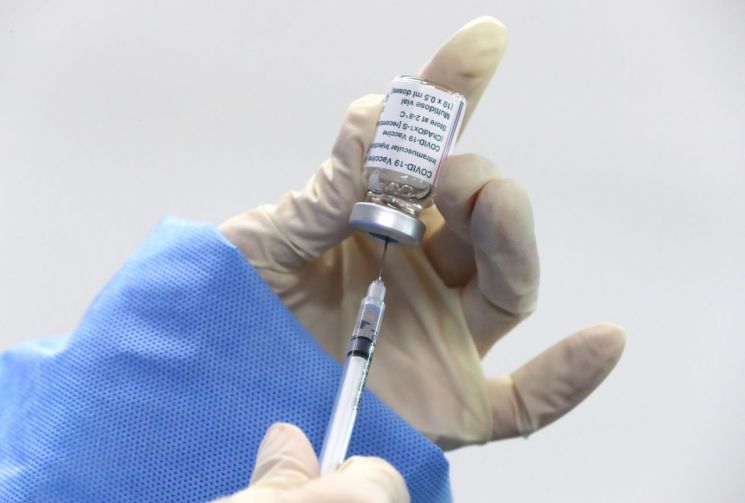 On the first day of COVID-19 vaccination, January 26, a Gangnam-gu Public Health Center official is preparing to administer the AstraZeneca vaccine at Seoul Nursing Home in Segok-dong, Gangnam-gu, Seoul.
 Photo by Yonhap News
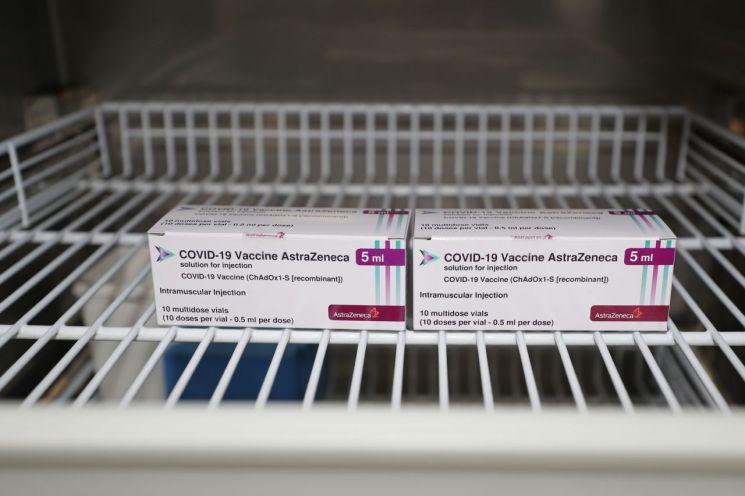
[Asia Economy Reporter Kang Juhee] As cases of adverse reactions such as headaches, fever, and body aches frequently occur after receiving the AstraZeneca (AZ) vaccine, concerns about vaccination are rising. Experts explained that due to the manufacturing method of the AZ vaccine, which uses adenovirus?a type of cold virus?as a vector, the aftereffects may appear relatively more frequently compared to other vaccines.
On the 11th, Professor Cheon Eun-mi of the Department of Respiratory Medicine at Ewha Womans University Mokdong Hospital explained in an interview with the Chosun Ilbo podcast 'Morning Live' that "Unlike RNA vaccines such as the Pfizer vaccine, the AZ vaccine uses adenovirus, a chimpanzee cold virus, as a vector," adding, "(The vaccine) carries part of the gene information inside the adenovirus, which penetrates the cells, triggering an immune response to this virus in the body. Therefore, reactions such as fever and muscle pain appear more frequently compared to other vaccines."
This means that due to the manufacturing method using adenovirus, the immune response to the AZ vaccine is stronger, which can cause relatively more severe aftereffects such as fever and body aches.
Professor Cheon continued, "Older individuals have often been exposed to adenovirus and thus have antibodies or immune responses, so side effects tend to appear milder," and "On the other hand, younger people have relatively less exposure to adenovirus, so their immune response can be stronger."
Regarding vaccination among medical staff, Professor Cheon said, "Medical personnel often find it very difficult to undergo surgery while experiencing high fever after vaccination," and suggested, "Instead of rushing the vaccination process, vaccinating at an appropriate time helps reduce side effects and lessens the burden on medical staff. It would be good to allow more time for medical staff vaccination, such as vaccinating on weekends."
Professor Kim Woo-joo of the Department of Infectious Diseases at Korea University Guro Hospital also stated on the same broadcast that "Young medical staff under their 40s at our hospital are experiencing symptoms such as high fever, muscle pain, and chills for a day or two," adding, "However, if these symptoms are strong, it shows that antibodies are being produced well. There are results indicating that the higher the side effects, the greater the infection prevention effect." He explained that these abnormal symptoms are a rite of passage occurring during the process of antibody formation and immunity development.
However, Professor Kim cautioned, "Within 15 to 30 minutes after vaccination, anaphylaxis symptoms such as difficulty breathing, chest pain, rapid pulse, and pale lips may appear," and emphasized, "In such cases, you must go to the emergency room and receive an epinephrine intramuscular injection."
© The Asia Business Daily(www.asiae.co.kr). All rights reserved.


















