Fair Trade Commission Announces Legislative Notice for Complete Revision of the 'Electronic Commerce Consumer Protection Act'
'From "Mail-Order and Brokerage Operators" to "Online Platform Operators and Users"': Terminology Revision
Specification of 'Advertising and Direct Transactions'
Imposing Transaction Responsibility on Platforms
Enhancing Utilization of Temporary Suspension Order System
Introduction of Consent Decision System and E-Commerce Dispute Mediation Committee
[Sejong=Asia Economy Reporter Joo Sang-don] Going forward, online platforms such as Naver and Coupang will be required to distinguish and display intermediary transactions and direct purchases separately. Additionally, platforms must clearly indicate whether content is advertising to prevent consumers from mistaking ads for search results.
On the 7th, the Korea Fair Trade Commission (KFTC) announced that it has prepared a full revision bill of the "Act on Consumer Protection in Electronic Commerce, etc." (hereinafter referred to as the E-Commerce Act) containing these provisions and will open it for legislative notice for 40 days until the 14th of next month.
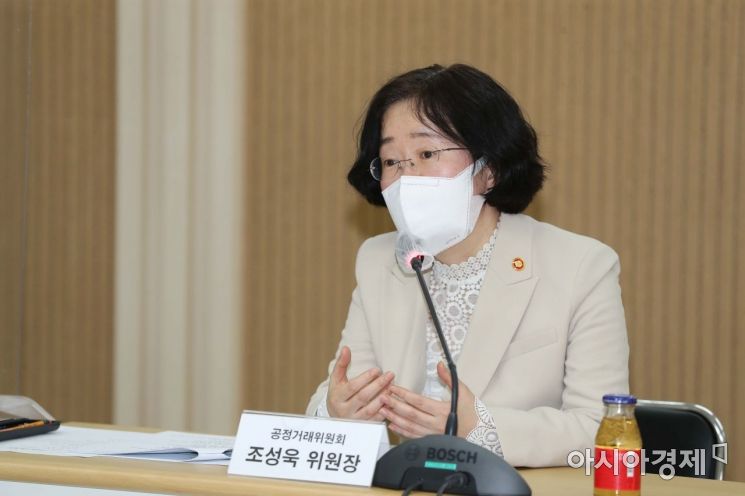
KFTC Chairman Cho Sung-wook explained, "As the influence of platforms in the digital economy strengthens, threats that hinder the sustainable development of the industrial ecosystem in various transaction relationships through platforms are also increasing. As the second blueprint of the digital fair economy measures, we are issuing a legislative notice for the 'E-Commerce Consumer Protection Act' to effectively prevent and promptly remedy consumer damages throughout the E-Commerce Act, including platforms."
According to Statistics Korea, the acceleration of the digital economy and the prolonged COVID-19 pandemic have activated non-face-to-face transactions, increasing online shopping mall transaction amounts from 25.2 trillion KRW in 2010 to 161.1 trillion KRW last year. Furthermore, according to the Online Shopping Association statistics, the proportion of transactions using online platforms rose from 33.2% in 2017 to 44.9% in 2019 due to convenience and recognition.
Regarding the direction of the E-Commerce Act revision, he said, "The basic principle of the amendment is to reorganize the regulatory system reflecting market changes. We focused on reasonably blocking frequent consumer damages in daily life and providing substantial remedies."
Accordingly, the amendment will abolish the various terms such as mail-order sellers and mail-order brokers previously defined and regulated diversely. Instead, e-commerce businesses will be classified and defined as ▲online platform operators ▲online platform users ▲and independent internet site operators.
Under the amendment, platforms must promptly block the online distribution of hazardous products. When recall orders are issued by heads of central administrative agencies or provincial governors according to relevant laws, e-commerce businesses must cooperate with recall implementation such as collection, retrieval, and disposal. Additionally, to prevent rapid damage spread, the government can directly order technical recall measures for businesses above a certain scale.
To strengthen information provision for consumers' rational choices, e-commerce businesses must distinguish and display advertising products to prevent consumers from mistaking them as pure search results. Also, key criteria such as views, sales volume, product price, and whether advertising fees were paid, which determine search and exposure rankings, must be displayed.
To realize the responsibility of intermediary platform operators, platforms must clearly disclose the roles they actually perform. For platforms mixing intermediary transactions and direct purchases, operators must separately display and notify to prevent consumers from misunderstanding the transaction parties. Platforms must indicate the tasks they perform during transactions (such as order receipt, payment collection, payment, refund, delivery) so consumers can easily identify responsibility and apply for damage remedies.
A KFTC official said, "There is internal consensus that advertising status and direct purchase status should be displayed as simply as possible," adding, "We are considering marking ads as 'Advertisement' and direct purchase items as 'Direct Purchase' in search results."
The amendment also imposes joint liability according to the degree of platform involvement. If consumer damage occurs due to the intentional or negligent acts of platform users (i.e., tenant businesses), but the platform operator has displayed, advertised, supplied, or issued contracts under its own name, the platform must be held responsible. Also, if the platform operator directly performs important tasks such as order receipt, payment, collection, or refund during transactions and causes consumer damage by its own intentional or negligent acts, both the tenant business and platform must bear joint liability. Consumers may selectively claim compensation from either tenant businesses or platform operators.
The amendment includes measures for rapid and effective consumer damage prevention and remedy. First, to quickly block damage spread to many consumers, the requirements for issuing temporary suspension orders against false, exaggerated, or deceptive consumer inducements have been partially relaxed. The current law requires clear violation and actual financial damage, resulting in only one case since its introduction in 2016. The amendment allows issuance when a clear suspicion of legal violation exists.
Additionally, to provide swift and effective remedies for false, exaggerated, or deceptive consumer inducements that mainly cause small-scale and widespread damage, a consent decision system will be introduced. A dispute mediation committee specialized in resolving the rapidly increasing online consumer disputes will be established to enable prompt and expert resolution in platform transactions (three-party relationships). Furthermore, as consumer damage increases due to the activation of overseas direct purchases, it is clarified that acts abroad affecting domestic consumers are also subject to the law.
Chairman Cho stated, "During the legislative notice period, we will fully collect and review opinions from stakeholders, experts, and related ministries. Once this bill passes the National Assembly, it is expected that consumer damages will be substantially remedied, and online platforms will compete and innovate to receive consumers' rational choices and grow."
© The Asia Business Daily(www.asiae.co.kr). All rights reserved.

















