Amid the Blue Wave, Biden Chooses Reality by Resolving Issues with the Republican Party
Daishin Securities: "Interest Rate Concerns Will Ease Starting the Second Week of March"
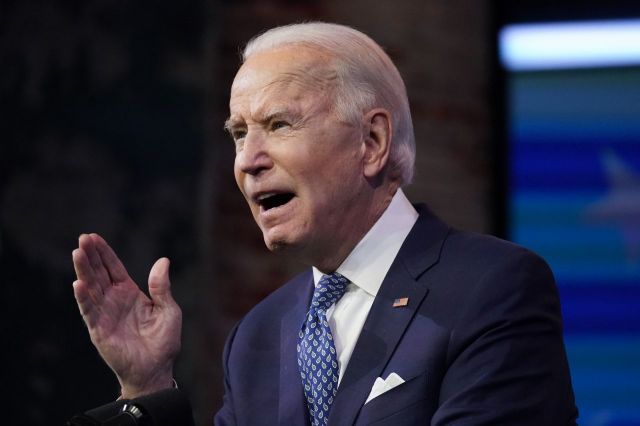
[Asia Economy Reporter Gong Byung-sun] Expectations are growing that U.S. President Joe Biden's bold fiscal policy could boost the stock market in the first half of the year. This is based on analyses suggesting a high likelihood that the $2.14 trillion stimulus package will pass the Senate as originally planned. Market anxiety caused by interest rates is also expected to ease starting from the second week of March.
On the 6th, Daishin Securities predicted a significant rise in the stock market in the first half of the year, considering the Biden administration's accommodative monetary policy and expansionary fiscal spending. On February 27 (local time), the U.S. House of Representatives passed an additional COVID-19 stimulus package worth $1.9 trillion (approximately 2,140 trillion KRW). Moon Nam-jung, a researcher at Daishin Securities, explained, "Both the House and Senate are controlled by the Democrats, achieving a Blue Wave," adding, "there is a high possibility that the additional stimulus package will pass the Senate as originally planned."
In particular, the likelihood of the original bill passing increased as issues with the Republican Party were resolved. This is interpreted as President Biden choosing pragmatism over idealism. The Republicans had opposed the proposal to raise the minimum wage to $15 per hour and the scale of the $1,400 cash support recipients. On February 25, Elizabeth MacDonough, the Senate Parliamentarian, ruled that the minimum wage increase could not be included in the stimulus package. Furthermore, on March 3, President Biden agreed with Democratic lawmakers to reduce the scale of cash support recipients.
Daishin Securities analyzed that market attention is shifting from interest rates to policy. On March 5, the yield on the U.S. 10-year Treasury bond surged intraday to 1.56%, causing market instability, but researcher Moon interpreted that future interest rate increases will be limited as empirical data must support such moves. Moon said, "Since the U.S. 10-year Treasury yield has risen to pre-COVID-19 levels, expectations for economic recovery are sufficiently reflected," and predicted, "Anxiety caused by interest rates will peak in the first week of March and gradually ease from the second week."
However, from the second half of the year, momentum is expected to slow due to the base effect of major countries' economic and earnings indicators. In other words, a pattern of peaking in the second quarter and then declining is anticipated. Daishin Securities recommended maintaining a 60:40 ratio between growth stocks and value stocks, expecting both to coexist. Additionally, within growth stocks, preferences are expected to shift toward sectors related to President Biden, such as eco-friendly and infrastructure-related stocks.
© The Asia Business Daily(www.asiae.co.kr). All rights reserved.

![User Who Sold Erroneously Deposited Bitcoins to Repay Debt and Fund Entertainment... What Did the Supreme Court Decide in 2021? [Legal Issue Check]](https://cwcontent.asiae.co.kr/asiaresize/183/2026020910431234020_1770601391.png)














