Plastic Emissions Increased by 15% in First Half of Last Year
Surge in Waste Plastic Could Worsen Collection Industry Conditions
Concerns Over Repetition of 2018 'Garbage Crisis'
"Reduce Single-Use Products" vs "Who Bears the Cost?"
Experts Call for Collaboration Among Government, Companies, and Consumers
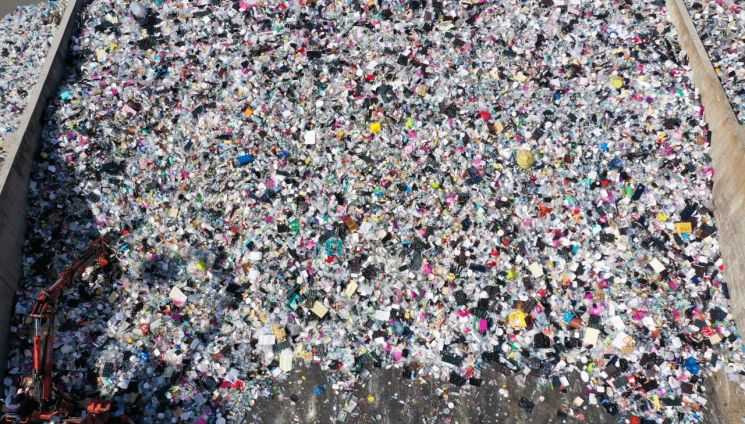 On October 5th last year, officials at the Suwon Resource Circulation Center in Yeongtong-gu, Suwon-si, Gyeonggi-do, are sorting out recyclable waste such as plastics that piled up after the Chuseok holiday. / Photo by Yonhap News
[Asia Economy Reporter Lim Ju-hyung] As the use of food delivery services has increased due to the spread of COVID-19, the amount of disposable containers for delivery has also surged sharply. In particular, many disposable containers are made of plastic products that are difficult to recycle, raising growing concerns about a so-called 'waste crisis.' Some argue that industries related to delivery services should make efforts to reduce the discharge of disposable items. However, there is also criticism about who should bear the increased costs and reduced convenience caused by curbing the use of disposable products, leading to controversy.
According to data from Statistics Korea, the transaction amount of food services ordered online reached a total of 17.4 trillion KRW last year, an increase of 78.6% compared to the previous year. This was because social distancing measures were strengthened due to the spread of COVID-19, leading people to refrain from going out or dining out and instead order food through delivery applications (apps).
The problem lies in the explosive increase in the use of disposable containers for food delivery as food delivery itself has increased. In particular, the amount of plastic products, which are complicated to recycle and difficult for stores to handle, has increased, raising concerns about waste disposal issues.
According to statistics from the Ministry of Environment, as of the first half of last year, the daily plastic waste discharge in South Korea increased by more than 15% compared to the same period the previous year, reaching a staggering 853 tons.
A sudden sharp increase in plastic waste discharge could lead to a waste crisis.
Recycling of plastic and other waste is generally carried out by private companies that collect and reprocess the waste. If the amount of plastic waste suddenly increases, the market price of plastic plummets, reducing the profits from waste collection and recycling, which could force domestic recycling companies to give up waste collection.
In fact, in 2018, when China banned the import of plastic waste, the sudden increase in domestic plastic waste led to a waste crisis where recycling companies gave up collecting waste.
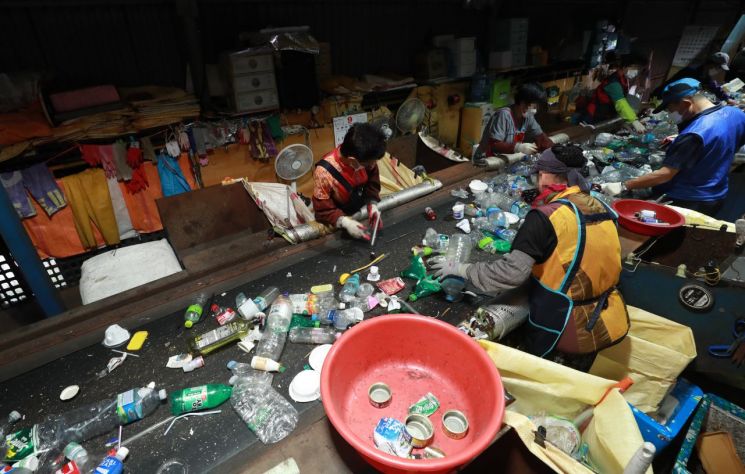 On September 24 last year, recycling waste such as plastics discharged from each household was being sorted at a recycling sorting center in Busan. / Photo by Yonhap News
Given this situation, citizens argue that industries responsible for delivery services should actively work to reduce disposable products.
A 20-something office worker, Mr. A, said, "Every time I order delivery food, I think at least five pieces of plastic waste come out. Cleaning up is troublesome, but I also feel guilty every time I throw it away. I think restaurants and delivery agencies should cooperate to reduce it."
A housewife in her 40s, Ms. B, expressed concern, saying, "Just looking at the apartment garbage area, there are many days when the waste left over from eating delivery food piles up like a mountain. If this is the amount of waste discharged in one apartment complex, the situation nationwide must be really serious."
On the other hand, some argue that the responsibility for disposable waste discharge cannot be placed solely on restaurants and delivery companies.
Mr. Lee (36), an employee at a gopchang (grilled intestines) restaurant in Gimpo, Gyeonggi Province, which provides food delivery services through a delivery agency, said, "As a business owner, I really want to reduce disposable containers for delivery as much as possible, but I just can't see any solution. There are demands to switch disposable containers to reusable pots and bowls, but reusable containers are much heavier and hold less food than disposable ones. This means delivery costs increase, making the food more expensive."
He added, "If reusable containers are used, there will also be separate costs for collection and dishwashing, which are all labor costs. Ultimately, food prices go up and service quality declines to some extent, and this is not something that either businesses or customers can easily take responsibility for alone," he lamented.
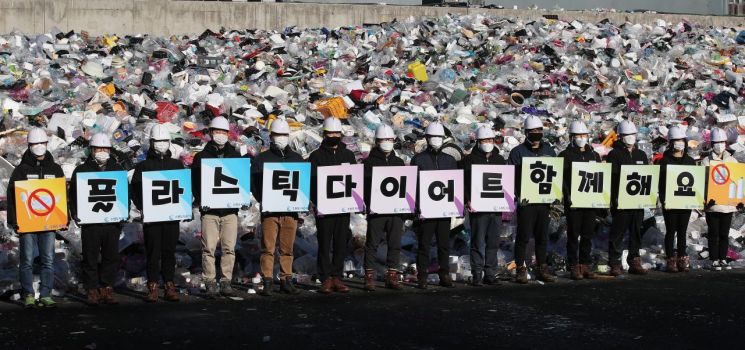 On the morning of January 19th, employees of Suwon Urban Corporation held placards with the phrase "Let's Join the Plastic Diet" at the Suwon Resource Circulation Center in Yeongtong-gu, Suwon-si, Gyeonggi-do, participating in an anti-plastic campaign. / Photo by Yonhap News
Experts advise that public and private sectors should jointly establish a systematic circular system to recycle disposable products and other waste effectively.
The private environmental organization 'Resource Circulation Solidarity' explained in a statement released last October, "Food delivery generates an average of about seven pieces of plastic waste, including single dishes, side dishes, sauces, spoons, and containers. Parcel delivery generates an average of about four pieces of waste per item, including product boxes, cushioning materials, and ice packs."
They continued, "If disposable products are used indiscriminately like this, the entire country will eventually be covered with plastic waste. The government, local governments, companies, and consumers must change their consumption, production, and sales behaviors suitable for the untact era to ensure a livable tomorrow."
Resource Circulation Solidarity also suggested examples of resource circulation systems that can be promoted jointly by public and private sectors, including ▲establishing a joint collection system ▲developing recyclable containers ▲building systems to encourage delivery companies to use recyclable products.
Meanwhile, the government plans to revise related systems to establish an effective waste management system.
Earlier, on the 17th of last month, the Ministry of Environment reported the '2021 Work Plan,' which includes waste management and reduction measures, to the National Assembly's Environment and Labor Committee. According to the plan, the Ministry of Environment will reduce the use of disposable products and packaging by delivery companies through pre-inspection of excessive packaging this year, promote mandatory use of transparent PET bottles, and encourage the use of recycled raw materials to advance the transition to a 'plastic-free society.'
Additionally, the ministry plans to prevent sudden suspension of recyclable waste collection through mandatory public responsibility collection and price linkage systems and strengthen monitoring to prevent incineration facilities from becoming saturated due to a surge in waste.
© The Asia Business Daily(www.asiae.co.kr). All rights reserved.



















