Ssangyong Motor 'Pre-Rehabilitation Plan' Under Negotiation... Stakeholders' Concessions and Coexistence Needed
"No intention or need for inter-agency turf battles"
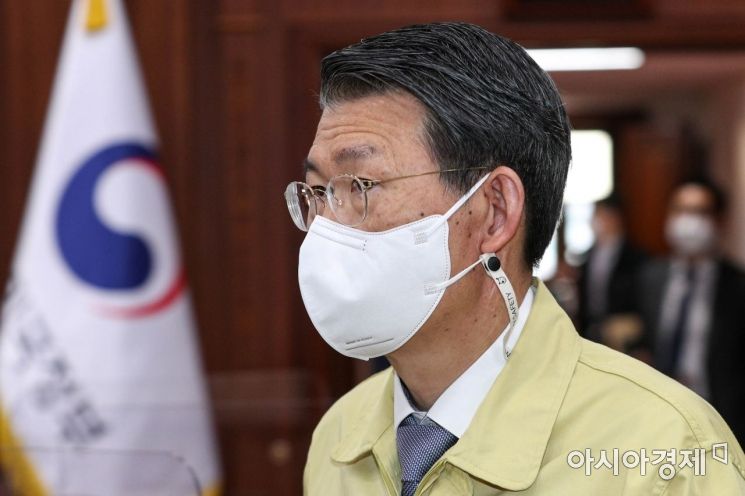
[Asia Economy Reporter Kwangho Lee] Eun Sung-soo, Chairman of the Financial Services Commission, stated in a letter that he is seriously aware of the increasing trend of household debt and related situations and will manage them carefully.
On the 6th, Chairman Eun sent an open letter to major columnists, reporters, and private advisory committee members, saying, "Unfortunately, difficult situations continue as COVID-19 prolongs. Accordingly, the government has pushed to extend the short-selling ban until May 3, and it is deemed inevitable to extend the maturity of COVID-19-related loans by an additional six months."
He continued, "I am well aware of many concerns surrounding our financial sector, such as warnings that 'household debt is continuously increasing and is risky,' concerns that 'the burden on the financial sector is increasing due to loan maturity extensions,' and criticisms that 'the short-selling system has become politicized.' I believe these issues are worth considering together at this point," he expressed.
He added, "Although this is a special situation where we must overcome the COVID-19 crisis, I prepared this letter hoping that providing a more detailed explanation of the policy decision background might broaden understanding."
Chairman Eun concluded, "The warm encouragement and sharp critiques you gave last spring greatly helped the government in policy formulation, so I hope you will carefully review this again and actively refer to it so that the government's concerns and policy directions can be easily conveyed to the public."
Below is a 10-question, 10-answer session on major financial issues.
* Household debt exceeded 1,700 trillion won last year, reaching an all-time high. Is the risk of household debt becoming a reality?
▲The financial authorities are also seriously aware of concerns about the rapid increase in household debt. We have consistently managed household debt, resulting in a continuous downward stabilization of the household debt growth rate since 2017. However, in 2020, due to expansive financial and monetary policies responding to the COVID-19 crisis, the household debt growth rate inevitably expanded. Considering the qualitative structure of household debt and debt repayment capacity, the possibility of household debt problems leading to systemic risk is limited. Nevertheless, we will continue to pay close attention to concerns that the rapid increase in household debt could become a major latent risk factor in the future. Under the current expansive fiscal and monetary policy stance, it will not be easy for the household debt growth trend to ease quickly. However, we will closely monitor household debt trends and carefully manage them to prevent an increase in loans exceeding repayment capacity or unnecessary loans, considering the COVID-19 situation.
* Is the extension of maturity and interest payment deferral for small business and SME loans merely postponing default risks and shifting them to the financial sector?
▲Given the delayed economic recovery and high future uncertainty, we understand concerns about the possibility of real-sector defaults transferring to the financial sector. Fortunately, due to steady efforts to improve soundness, the current soundness indicators of domestic financial companies are favorable. The financial authorities will continue to monitor the soundness of the financial sector and consistently encourage the expansion of loss absorption capacity, such as sufficient provisioning.
* The prolonged extension of loan maturity and interest payment deferral may produce zombie companies, burdening our economy. Is there a will to liquidate insolvent companies?
▲Companies receiving maturity extensions and interest payment deferrals due to COVID-19 should be distinguished from companies unable to repay under normal economic conditions. The maturity extension and deferral guidelines target companies experiencing temporary cash shortages due to sharp sales declines caused by COVID-19. These companies are fundamentally those that can repay principal and interest slowly over time once COVID-19 subsides and the economy returns to normal, so they should not be labeled as zombie companies. Also, the maturity extension and interest payment deferral target only 0.34% of total credit (by amount), which is not a level that raises concerns about producing zombie companies.
* At the end of last year, the household debt-to-GDP ratio exceeded 100%, leading to claims that household debt suppression is urgent. On the other hand, there are also claims that overly strict loan regulations need to be eased to support young people's homeownership. How will you address this significant gap?
▲It pains me to hear that various loan regulations hinder young people's housing ladder formation. However, as policy authorities, we face a deep dilemma in simultaneously managing appropriate household debt and supporting young people's homeownership. Rapid household debt growth burdens the economy by restricting consumption and may cause systemic risks triggered by asset value declines during external shocks, requiring continuous management. On the other hand, the essence of financial intermediation is converting future expected income into current liquidity, so expanding financial accessibility for young people hoping for a housing ladder is also necessary. Harmonizing these conflicting views will be one of the most challenging tasks for the financial authorities.
* There is skepticism about Ssangyong Motor's recovery prospects, and the government appears to be wavering between recovery support and restructuring. Is there no restructuring principle?
▲The government's basic principle regarding corporate restructuring is to balance industrial aspects and financial logic, and this principle will be upheld for Ssangyong Motor as well. Currently, Ssangyong Motor, major shareholders, potential investors, suppliers, and creditors are negotiating to proceed with a pre-packaged rehabilitation plan (P-Plan), but no agreement has been reached yet. If stakeholder negotiations are prolonged without smooth progress, economic and social damages are expected for all parties involved. I believe stakeholders need to make small concessions to achieve a mutually beneficial outcome.
* The Industrial Stabilization Fund is virtually inactive. Shouldn't the support conditions be eased? What are the future operational plans?
▲Since its launch in May last year, the Industrial Stabilization Fund has supported about 614 billion won to key industries such as aviation and their suppliers. Funding for companies struggling due to COVID-19 is primarily handled by private finance and policy finance (135 trillion won + alpha), and the fund was established to be used restrictively for large-scale key industries like aviation where such funding is insufficient. Since the fund is financed by taxpayers' money (government-guaranteed bonds), it must be used prudently.
* The extension of the short-selling ban until May 2 is seen as a political decision driven by public opinion or a cautious decision. Is that true?
▲We had prepared to resume all stocks on March 16, but since early this year, media and market interest has increased, raising concerns about market shocks regardless of the decision. In this situation, we judged that a partial resumption would minimize market shocks and decided to resume short-selling for some stocks (KOSPI 200, KOSDAQ 150) first. After this decision, reviewing implementation methods revealed that more than two months of preparation, including system development and pilot operation, is required, so the short-selling resumption date was set to May 3. We also considered that the amendment to the Capital Markets Act, which allows imposing fines and criminal penalties for illegal short-selling, will take effect on April 6. We will continue to carefully listen to suggestions and opinions from market participants and the media and maintain policy efforts to stabilize and grow the capital market, as we have done to ease stock market instability since the COVID-19 outbreak.
* With rising U.S. Treasury yields and increased market uncertainty, is the current stock market, supported by excessive individual leverage, becoming risky?
▲Despite the global crisis continuing since last year, the domestic stock market has shown a favorable trend this year, with the KOSPI index reaching 3,000 points. This is the result of good economic and corporate performance, active economic measures and quarantine policies, and increased public participation in the capital market. Recently, the market seems to be mixed with concerns about inflation possibilities due to rising U.S. Treasury yields and oil prices, and expectations for economic recovery due to vaccine and treatment development easing COVID-19 spread. The financial authorities are closely monitoring global capital market trends and domestic asset market fund flows and will continue to encourage investors to invest within their bearable range by checking securities firms' credit loan management status.
* The recommendation to reduce dividends for bank holding companies and banks is excessive management interference and may hinder the leap to a global financial hub. Is that true?
▲During the COVID-19 situation, supervisory authorities worldwide recommend strict capital management, including dividend restrictions. According to a Basel Committee survey, 27 out of 30 major countries have implemented capital preservation measures such as dividend restrictions due to COVID-19. Against this backdrop, Korea also temporarily recommended dividend restrictions and capital management for banks and bank holding companies according to regulations. This decision was based on objective stress test results, and banks (holding companies) that passed the test implemented it voluntarily, transparently following certain standards and principles like foreign countries.
* The amendment to the Electronic Financial Transactions Act is being distorted into a 'turf war' between the Financial Services Commission and the Bank of Korea, raising Big Brother concerns. Is it really necessary to push forward?
▲The Lime and Optimus private equity funds concealed insolvency and deceived investors with false investment information, causing significant damage. While encouraging new businesses, minimum safeguards to protect investors are essential. Especially, with huge daily remittances through big tech recently, transparency is crucial for consumer protection. Turf wars between institutions should not and will not happen. To address the Bank of Korea's concerns, we have proposed various alternatives through eight meetings and will continue discussions with an open attitude.
© The Asia Business Daily(www.asiae.co.kr). All rights reserved.

















