[Asia Economy Reporter Kim Eunbyeol] The connection of electronic financial networks between countries is expected to speed up overseas remittances and reduce fees in the future.
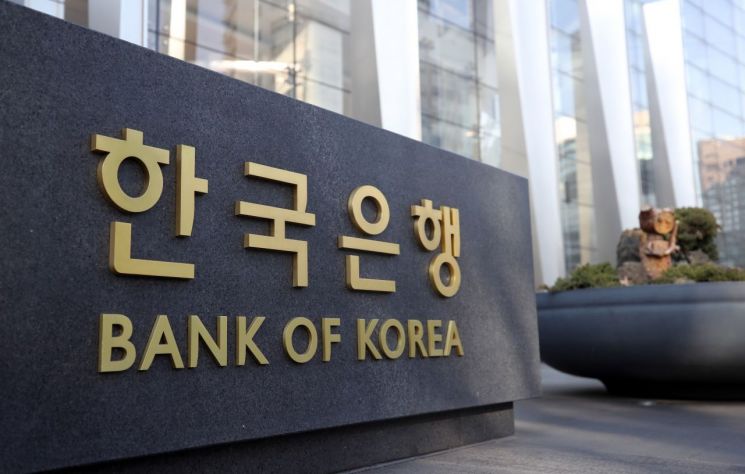
On the 2nd, the Bank of Korea introduced the G20 (Group of Twenty) "Cross-Border Payment Service Improvement Program," which contains these details. Cross-border payment services refer to cases where a payer transfers funds to a recipient in another country for purposes such as overseas remittances and payment of trade funds.
As international trade expands and the number of overseas migrant workers rapidly increases, cross-border payment services have been criticized for issues such as high fees, slow processing speeds, limited accessibility, and low transparency. Accordingly, international organizations such as the Bank for International Settlements (BIS) have prepared measures to improve the efficiency of payment services. Centered on the BIS, G20 central banks will first directly link each country's major payment and settlement systems by 2025 to reduce the involvement of correspondent banks and simplify cross-border remittance procedures. While correspondent banks can reduce risks during remittances, their involvement causes slow speeds and high fees until funds reach the recipient.
Central banks of each country will also establish standards to promote the adoption of the communication standard for cross-border payment services, "International Organization for Standardization (ISO) 20022," among member countries by next year. With the stabilization of the next-generation Bank of Korea Financial Network launched in October last year, the Bank of Korea plans to review the adoption plan for ISO 20022 starting this year. Furthermore, an international organization-led plan to build a multi-currency integrated payment and settlement system is expected to be prepared. Once this system is introduced, the payment transaction process requiring currency exchange could be simplified.
Additionally, overlapping operating hours between major payment and settlement systems of each country will be expanded to resolve issues of payment interruptions caused by time differences. An international standard protocol will be established to secure cross-border interoperability of open banking platforms.
Moreover, discussions are underway to grant participation eligibility in major payment and settlement systems, previously limited to banks, to non-bank payment service providers including fintech companies. Agreements for liquidity supply between central banks will be promoted, and foreign exchange simultaneous settlement (PVP) will also be activated.
Furthermore, in preparation for the potential use of stablecoins (virtual currencies pegged to existing currencies to reduce price volatility) as cross-border payment means, measures to enhance soundness will be taken, and the use of central bank digital currencies (CBDC) in cross-border payment services will be considered when designing them.
© The Asia Business Daily(www.asiae.co.kr). All rights reserved.
![Clutching a Stolen Dior Bag, Saying "I Hate Being Poor but Real"... The Grotesque Con of a "Human Knockoff" [Slate]](https://cwcontent.asiae.co.kr/asiaresize/183/2026021902243444107_1771435474.jpg)
















