Big Tech Facing Acquisition Possibility, Legally Difficult to Acquire
Synergy Also Hard to Expect in Current Situation
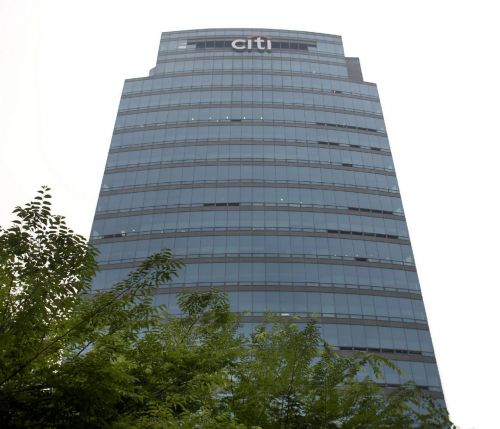
[Asia Economy Reporter Kiho Sung] As rumors of the withdrawal of Citibank Korea, a subsidiary of the U.S. Citigroup, resurface, financial circles are paying close attention to the possibility of it being put up for sale. Opinions are divided on whether Citibank, which has shown sluggish performance and reluctance to enter new businesses in recent years, is attractive as an asset for sale. There are also speculations that regional financial companies or big tech firms (large information and communication companies) might show interest. However, the prevailing view is that due to low profitability relative to its scale and the burden of absorbing personnel and branches, it will be difficult to find a buyer.
According to financial sources on the 3rd, The Wall Street Journal reported that Jane Fraser, the new CEO of U.S. Citigroup, is currently reviewing a comprehensive restructuring of the group. According to the report, Citigroup is highly likely to cease commercial banking (retail finance) operations in some parts of Asia, including Korea and Vietnam, leaving only investment banking (IB) functions. This is the first time Korea has been mentioned as a potential withdrawal target.
This background fuels the expectation that the withdrawal of Citibank Korea, whose exit rumors have reignited since 2015 and 2017, may become a reality this time. In fact, Citibank recently underwent a significant restructuring, reducing its branches from 133 in 2017 to 44 due to margin compression caused by low interest rates and competition with domestic commercial banks. Its reluctance to enter new businesses such as MyData also adds weight to the withdrawal rumors.
However, negative views dominate regarding its marketability. Big tech firms, considered the most likely candidates, say the acquisition is unattractive and unlikely. The biggest reason is the difficulty in overcoming legal hurdles. KakaoBank and K Bank have major shareholders from non-financial capital, so under the principle of separation of banking and industry, they can only own up to 10% of bank shares (15% for regional banks). This is the same situation for other fintech companies like Naver.
Although the branch network has been significantly reduced, the fact that there are still double-digit branches remaining is also a problem. According to the Electronic Financial Transactions Act, internet banks are required to provide financial products through electronic devices and prohibit users from face-to-face interactions with financial company or electronic financial business employees. Therefore, even if someone acquires Citibank Korea, they would face the difficult task of closing all branches and laying off related personnel.
There is also talk of converting Citibank Korea into an internet-only bank, but this is not easy either. If converted to an internet-only bank, the acquiring company can hold up to 34% of shares. However, the company must not have been penalized with fines or higher sanctions under the Fair Trade Act in the past five years, and government approval is required to convert Citibank Korea into an internet bank. Even if a big tech company attempts acquisition, there are many hurdles to overcome.
A big tech industry insider said, "Due to current laws, acquisition is difficult, and converting Citibank Korea into an internet bank slightly increases acquisition possibilities. However, big tech companies focusing on electronic finance have no reason to newly acquire an internet bank."
© The Asia Business Daily(www.asiae.co.kr). All rights reserved.

















