Nowon-gu Receives Approval for Redevelopment Plan of 186,965㎡ Baeksamaeul Site on 2nd... Full-Scale Development of Seoul's Representative Aged Residential Complex Formed in the 1960s... Mixed Construction of 1,953 Apartments with Various Floors Preserving Bulamsan Natural Scenery and 484 General Houses Preserving Alleyways... Contractor Selection in Second Half of This Year, Construction Starts Next Year
[Asia Economy Reporter Jongil Park] Baeksamaeul in the area of 104 Junggye-bon-dong, Nowon-gu (Mayor Oh Seung-rok) is being transformed into a premium residential complex where the past and present coexist.
With the district approving the project implementation plan on the 186,965㎡ redevelopment site of Baeksamaeul on the 2nd, the development of one of Seoul’s representative aging residential areas formed in the late 1960s is set to begin in earnest.
This comes 12 years after it was designated as a housing redevelopment maintenance zone in 2009.
The project, which will build a total of 2,437 apartment and general housing units, has two main features: the topographical situation located on the foothills of Bulamsan Mountain and the preservation of local history including past residents’ lifestyles.
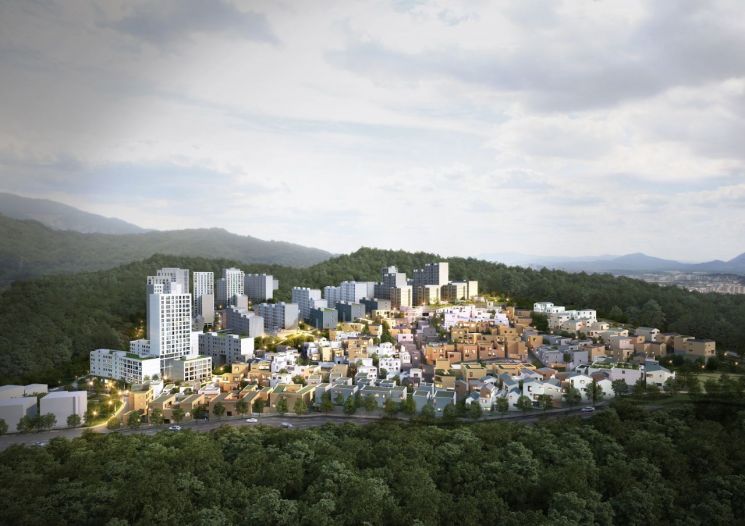
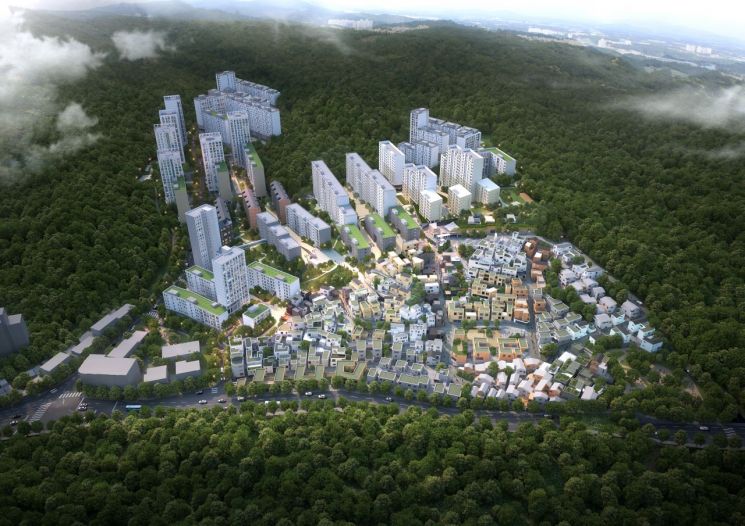
First, nine architects will design and appropriately mix apartments and general houses of various heights with different designs to preserve the natural scenery and partially maintain existing terrain such as alleys, allowing the past and present to coexist.
Another feature is the preservation of over 60 years of local history. Through the establishment of an exhibition hall, various daily items, materials, events, festivals, and photographs of people will be collected and displayed to preserve the old neighborhood’s appearance and the heartfelt memories of village residents’ lives.
Along with this, various communal facilities such as village restaurants and workshops will be arranged to encourage natural interaction among residents and revitalize the village community.
The residential complex will consist of apartments and general houses. The apartments will be built in 34 buildings with varying heights from 5 basement floors to 20 above-ground floors, comprising 1,953 units. The exclusive area will range from 59 to 190㎡.
The general houses will be constructed as part of the residential preservation project, maintaining alleys and other features, consisting of 136 multi-family housing buildings with 484 units ranging from 30 to less than 85㎡, offering a wide range of choices.
The remaining procedures include selecting a construction company in the second half of this year, approving the management disposition plan in 2022, starting construction thereafter, and aiming for completion in the first half of 2025.
Currently, relocation in Baeksamaeul is underway. Since August 2019, to prevent safety accidents in advance, Seoul City and Seoul Housing & Communities Corporation have supported relocation for residents of dangerous buildings who wish to move, and currently, 394 out of 597 households (about 66%) have completed relocation.
Also, to prevent accidents such as crime, fire, and building collapse due to increased vacant houses from early relocation, resident-centered patrol teams have been organized and operated, CCTV installation has been expanded, and joint patrols are conducted with Nowon Police Station.
This redevelopment project is the result of cooperation between Seoul City and Nowon-gu. Baeksamaeul, designated as a development-restricted zone in 1971, had its restriction lifted in 2008 to improve urban aesthetics and was designated as a housing redevelopment zone the following year. However, the project faced many difficulties, including delays caused by changes in the project implementer from Korea Land & Housing Corporation to Seoul Housing & Communities Corporation in 2017, architectural methods, and internal conflicts.
To resolve conflicts, conflict specialists were dispatched on-site, and all administrative efforts were mobilized through a total of 33 meetings and reviews to establish a maintenance plan that best fits local residents’ demands and regional characteristics, such as increasing the average number of floors.
Thanks to these efforts, resident conflicts were resolved by reaching consensus on an average apartment height of 12 floors or less and a maximum height of 20 floors or less, allowing the project to pass the Seoul City Urban Planning Committee review in May 2019.
Mayor Oh Seung-rok said, “The transformation of the poor residential environment known as Seoul’s last ‘dal-dongnae’ (old neighborhood) into a premium complex harmonized with nature is the result of cooperation from all local residents and others,” adding, “We will carefully oversee the smooth implementation of this new type of project where the past and present coexist.”
© The Asia Business Daily(www.asiae.co.kr). All rights reserved.


















