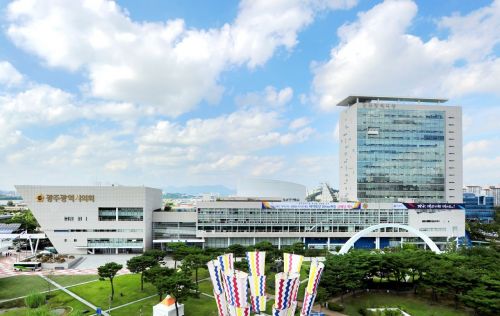
[Asia Economy Honam Reporting Headquarters Reporter Park Seon-gang] Gwangju Metropolitan City announced on the 1st that it has finally selected 175 village communities in the ‘2021 Village Community Support Project,’ which was promoted through an integrated public contest by four departments to realize resident-led village autonomy, and will provide a total of 1.21 billion KRW in support.
This integrated public contest was conducted for eight projects across four departments: ▲ Gwangju-type cooperative village model projects by the Autonomous Administration Division (cooperative villages, villages preparing for residents' autonomy councils), village education communities (including seed clubs), youth reconciliation playgrounds, village dispute resolution support center communication rooms, and sharing promotion projects ▲ Human Rights Villages by the Democracy and Human Rights Division ▲ Gwangju Village Welfare Communities by the Social Welfare Division ▲ Women and Family-Friendly Villages by the Women and Family Division.
The selection of village communities was finalized after review by each department’s internal screening committee, examination of project overlaps by the General Coordination Committee, and deliberation by the Local Subsidy Deliberation Committee, and was published on the city’s website (City Administration News → Notices and Announcements).
By autonomous district, 32 communities were selected in Dong-gu, 34 in Seo-gu, 37 in Nam-gu, 43 in Buk-gu, and 29 in Gwangsan-gu.
By category, for the Gwangju-type cooperative village model project aimed at realizing true village autonomy, 10 Gwangju-type cooperative villages and 1 village preparing for a residents' autonomy council were selected. The village education community support project, which involves villages and schools working together, selected 40 communities, and 11 communities were selected for the seed club project that provides learning opportunities for village education community activities.
Four communities were selected for the youth reconciliation playground project, where villages, schools, and students jointly address conflicts and school violence issues; 50 communities for the operation of village communication rooms that help residents resolve conflicts within the village themselves; and 11 communities for the sharing promotion project that operates various sharing programs in areas such as goods, spaces, and talents.
Additionally, 20 communities were selected for the human rights village creation project aimed at realizing the value of human rights by residents themselves starting from the village; 17 for the village welfare community project that identifies welfare needs and establishes a welfare safety net; and 11 village communities for the women and family-friendly village project aimed at strengthening women’s capabilities and promoting activities.
Gwangju City plans to continuously support accounting education and project consulting together with autonomous districts, the Gwangju City Urban Regeneration Community Center, and autonomous district village community support centers to ensure that the selected village communities can smoothly carry out COVID-19 response non-face-to-face projects discovered in each field, as well as the city’s key projects such as climate change response projects.
Kim Ji-hwan, head of the Autonomous Administration Division of the city, said, “Although community activities face many restrictions due to COVID-19, if we discover and resolve village agendas in new ways suited to the changed circumstances, we expect to be able to promote more substantial village community projects.”
© The Asia Business Daily(www.asiae.co.kr). All rights reserved.

















