Quarantine Lifted Between Mainland China and Macau... Anticipation of VIP Influx
Macau Casino Stocks Rise 6%... Largest Increase in 3 Months
Expectations Rise for Korean Casino Stocks to Benefit from Quarantine Lift Between Asian Countries
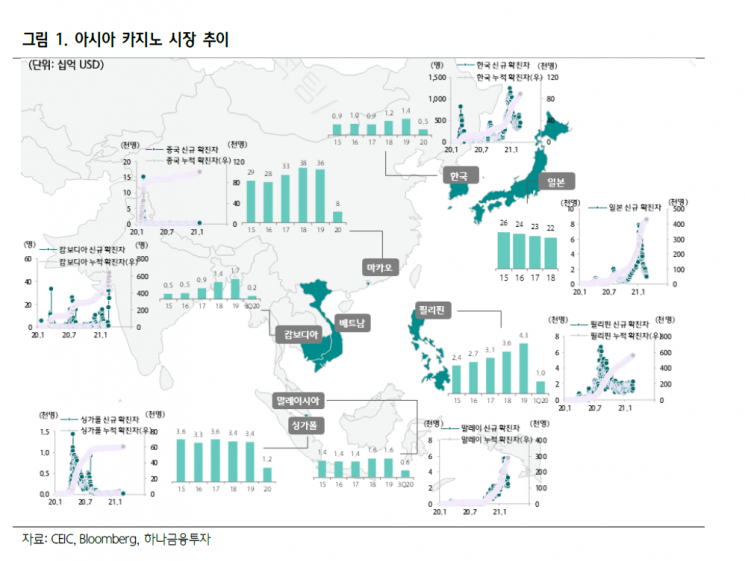
[Asia Economy Reporter Minwoo Lee] With the lifting of quarantine measures between Macau and mainland China, a rebound in the casino industry is anticipated. As quarantine restrictions with various Asian countries are also expected to be lifted, it is analyzed that domestic casino stocks, which suffered significant declines last year, will also rebound.
On the 1st, Hana Financial Investment made this outlook regarding the domestic casino industry. On the 23rd of last month, the 14-day self-quarantine requirement between Macau and mainland China was completely lifted, causing Macau casino stocks to rise by 6%, the largest increase in three months. Macau's GGR (Gross Gaming Revenue) had been in a slump with an annual contraction of -79%, but this measure has raised expectations that suppressed Chinese VIP demand for over a year may resume.
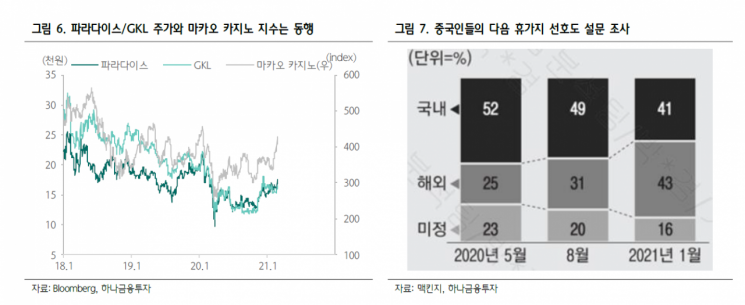
Researcher Kihoon Lee of Hana Financial Investment stated, "If quarantine measures are lifted not only for Macau but also for other Asian countries, Asian casinos, which experienced a -65% to -70% contraction last year, could recover." He added, "As confirmed by trends over the past two years, domestic foreigner casino-related stocks have shown a correlation with Macau casino stocks. Paradise has a 12-month forward price-to-book ratio (PBR) of 1.4 times, and Grand Korea Leisure (GKL) stands at a price-to-earnings ratio (PER) of 14 times based on 2022."
In the fourth quarter of last year, Paradise recorded consolidated sales of 104.6 billion KRW and an operating loss of 15.6 billion KRW. Sales decreased by 61% compared to the same period the previous year, and operating profit turned negative. However, this performance exceeded market expectations of an operating loss of 28.6 billion KRW. Researcher Lee analyzed, "Despite Walkerhill suspending operations from December 15 last year to January 4, December sales reached 31.6 billion KRW, which had a significant impact." He also noted, "The effects of labor cost reductions due to restructuring in the third quarter of last year also appeared, greatly reducing the deficit."
GKL showed somewhat weak results. In the fourth quarter of last year, it recorded sales of 14.9 billion KRW and an operating loss of 52.7 billion KRW. Sales dropped by 88.58% compared to the same period the previous year, and operating profit turned negative. Sales were also 43.10% lower than consensus estimates. Researcher Lee explained, "Due to social distancing policies related to COVID-19, operations in Busan were suspended from January 1 last year to January 15 this year, and in Seoul from November 24 last year until now." Notably, labor costs increased by more than 5 billion KRW, reflecting bonuses and other payments following an improvement in last year's management evaluation rating. However, non-operating income of 8.6 billion KRW was recorded due to tax audit refunds of about 3 billion KRW and reimbursements from lawsuits related to ordinary wages and welfare points.
© The Asia Business Daily(www.asiae.co.kr). All rights reserved.


















