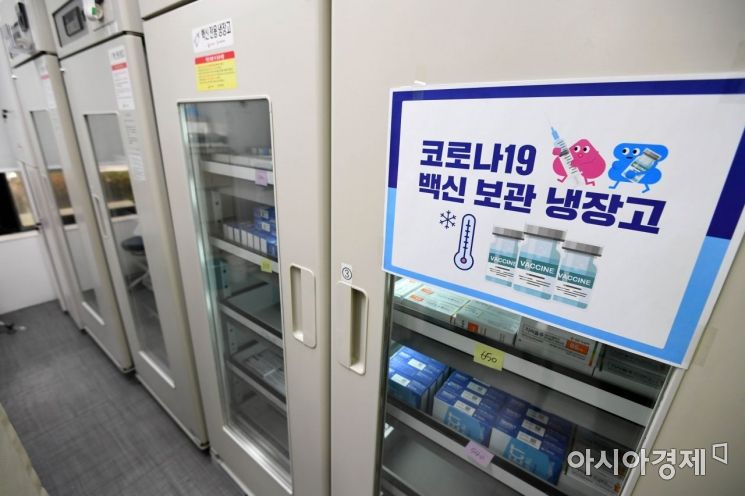
 On the 25th, one day before the COVID-19 vaccination, Park Seong-su, Mayor of Songpa-gu, is inspecting the vaccination route at the Songpa-gu Public Health Center in Seoul. Photo by Moon Ho-nam munonam@
[Asia Economy Reporter Lee Chun-hee] The government expects that at least 5,300 people will receive the COVID-19 vaccination on the first day of the vaccination campaign starting on the 26th.
Jung Kyung-sil, Head of the Vaccination Management Division at the COVID-19 Vaccination Response Promotion Team, stated at the regular COVID-19 briefing on the afternoon of the 25th, "COVID-19 vaccinations will simultaneously begin nationwide at 9 a.m. on Friday, the 26th," adding, "On the 26th, vaccinations will be administered to 5,266 residents and workers at 213 nursing facilities nationwide." Additionally, 292 nursing hospitals will conduct vaccinations separately according to their own plans based on hospital conditions, so the number of people vaccinated on the first day may increase.
The Pfizer vaccine, which will begin vaccinations on the 27th, will have 300 people vaccinated on the first day. At the Central Vaccination Center of the National Medical Center in Seoul, 199 staff members of the National Medical Center and 101 staff members of COVID-19 treatment hospitals in the metropolitan area are scheduled to receive vaccinations starting at 9 a.m. that day.
Regarding the controversy over the "first vaccination," Jung emphasized, "Rather than assigning the meaning of 'first vaccinated person' to a specific individual, we place significance on the first day vaccinations begin and are making thorough preparations for the vaccination implementation," adding, "At 9 a.m. on the 26th, vaccinations will simultaneously start nationwide at nursing hospitals and nursing facilities, including inpatients and workers under 65 years old, all of whom will be the first vaccinated." He further explained, "The first vaccinations will not be concentrated in specific regions, hospitals, or facilities but will be carried out simultaneously at nursing hospitals and facilities across the country," clarifying the reason for this decision.
Consent status as of that day was also disclosed. Jung explained, "Among 1,657 nursing hospitals and 4,156 elderly nursing facilities where the AstraZeneca vaccine will be administered, 289,000 inpatients, residents, and workers have consented to vaccination, resulting in a consent rate of 93.7%." Among 54,910 medical staff eligible for consent at 143 hospitals directly treating COVID-19 patients and 35 residential treatment centers where the Pfizer vaccine will be administered, 54,498 consented, showing a consent rate of 95.8%. The overall consent rate was calculated at 94.0%, with 343,978 out of 344,181 people consenting.
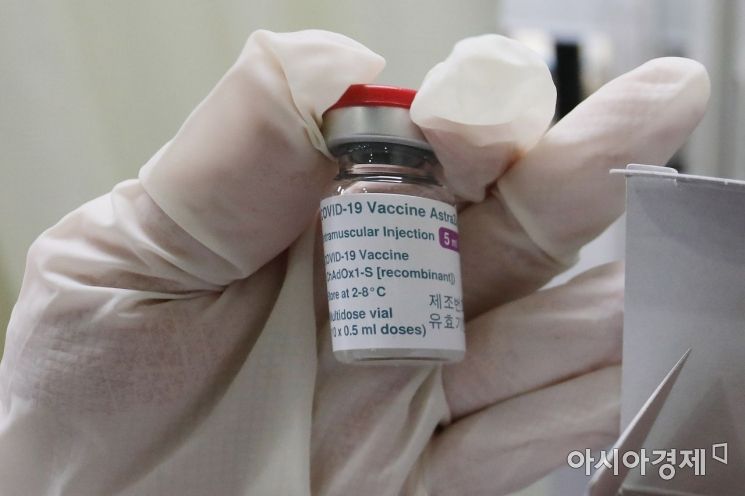 On the 25th, one day before the COVID-19 vaccination, medical staff at Songpa-gu Health Center in Seoul are inspecting the AstraZeneca vaccine. Photo by Mun Ho-nam munonam@
Regarding the criticism that even within the same COVID-19 dedicated hospital, medical staff treating COVID-19 patients will receive the Pfizer vaccine while general ward workers will receive the AstraZeneca vaccine, Jung emphasized, "All vaccines are confirmed for safety and efficacy by international organizations such as the World Health Organization (WHO) and pharmaceutical regulatory authorities of each country," adding, "All vaccines meet the standards, and it is not appropriate to compare superiority or inferiority based on vaccine type."
The government plans to transparently disclose cumulative and daily vaccination status, nationwide and regional vaccination numbers, and adverse reaction reports on its website starting from the day after the initial vaccination day, the 27th.
© The Asia Business Daily(www.asiae.co.kr). All rights reserved.
![Clutching a Stolen Dior Bag, Saying "I Hate Being Poor but Real"... The Grotesque Con of a "Human Knockoff" [Slate]](https://cwcontent.asiae.co.kr/asiaresize/183/2026021902243444107_1771435474.jpg)

















