Supreme Court: "No Provisions to Recognize as Duty-Related Death... Not a Delayed Processing"
[Asia Economy Reporter Baek Kyunghwan] The bereaved family of the late Lieutenant Kim Hun, who died under mysterious circumstances in the Joint Security Area (JSA) of Panmunjom in 1998, has ultimately lost a damages lawsuit filed against the state. The family claimed that the state was responsible for compensating mental damages due to the delayed decision on his honorable death status, but the Supreme Court ruled that "there was no malicious motive or intent to delay the honorable death processing."
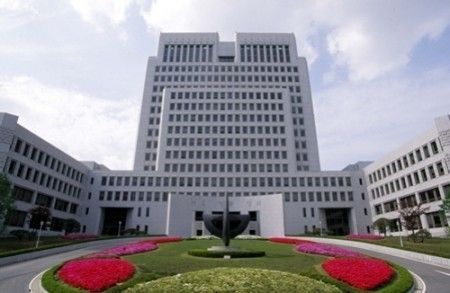
On the 25th, the Supreme Court's 2nd Division (Presiding Justice Noh Jeonghee) upheld the lower court's ruling that dismissed the damages claim filed by Lieutenant Kim’s father and other bereaved family members against the state.
Lieutenant Kim was found dead from a gunshot wound on February 24, 1998, while on duty at a GP (frontline guard post). At the time, military investigators concluded it was a pistol suicide. However, as the media and others raised the possibility of homicide and it became a social issue, the Ministry of National Defense formed a special investigation team to reexamine the case, but the military authorities’ conclusion of suicide remained unchanged.
Subsequently, in a damages lawsuit filed against the state, the Supreme Court in 2006 ruled that the military investigative agency was responsible for causing suspicion due to inadequate initial investigation and ordered the state to pay mental damages.
However, it took even longer to process Lieutenant Kim’s honorable death status. In 2012, the Anti-Corruption and Civil Rights Commission recommended the Ministry of National Defense recognize Lieutenant Kim’s honorable death, but the Ministry only officially processed it in August 2017, stating that "the death is recognized as 'death of unknown cause' while performing duties as a platoon leader." This was five years after the Commission’s recommendation and 19 years after his death.
In response, the bereaved family filed a lawsuit in June last year seeking 500 million won in damages from the state for the delayed honorable death processing.
The family lost in both the first and second trials. The first trial court stated, "The five-year delay in processing the honorable death after the Commission’s corrective recommendation was due to unclear legal grounds and the Commission’s request for suspension," and did not consider it administrative delay. The second trial court also ruled, "At that time, there were no precedents or legal interpretation guidelines for cases where the truth could not be determined, so it was thought that supplementation or revision of related laws should precede," and "it is difficult to recognize any malicious motive or intent by the administrative agency to delay the honorable death processing."
The Supreme Court’s ruling on this day was the same. The court stated, "From the perspective of the public officials belonging to the defendant who reviewed the classification of the deceased’s death, it would have been difficult to decide on honorable death without direct legal provisions recognizing it in cases where the truth could not be determined," and "it is difficult to view this as illegal to the extent that it objectively lost legitimacy when judged by the standard of an ordinary public official."
© The Asia Business Daily(www.asiae.co.kr). All rights reserved.

















