9th Industrial Development Forum Presentation "Rapid Changes Shrink Internal Combustion Engine Industry... Review After 2025"
[Asia Economy Reporter Yu Je-hoon] Amid the recent trend of ‘Net Zero (carbon neutrality)’ in response to climate change, with automakers pushing for electrification one after another, there is a claim that to promote the spread of eco-friendly vehicles, it is necessary to abolish the mandatory public bond purchase and individual consumption tax, and reform the automobile tax system linked to eco-friendly factors such as carbon dioxide (CO2) emissions.
On the morning of the 25th, Ryu Byung-hyun, an accountant at the law firm Yulchon, stated at the 9th Industrial Development Forum hosted by the Korea Industrial Alliance Forum (KIAF) that considering the future electrification trend in the industry, tax reform in this direction is necessary after 2025 through a presentation titled ‘Tasks for Automobile Tax Reform Aiming for the Carbon Zero Era.’
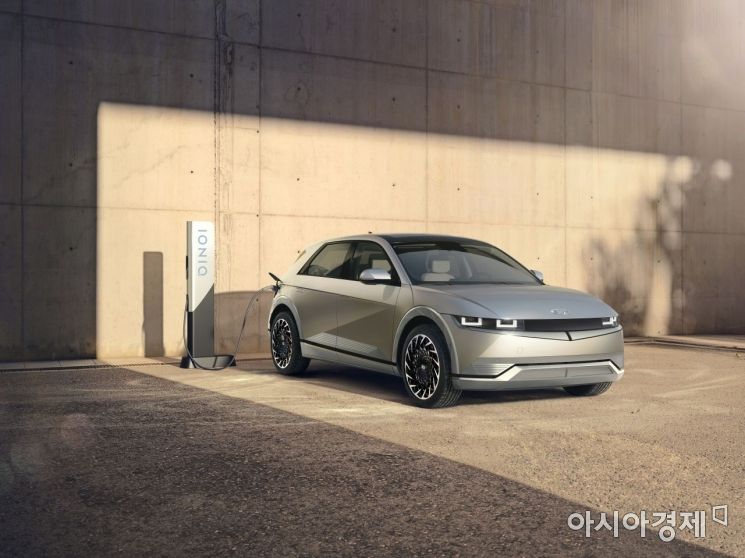
The government recently announced a blueprint under the ‘4th Basic Plan for Eco-friendly Vehicles,’ aiming to supply a total of 7.85 million eco-friendly vehicles by 2030, expanding their share to 30% of all vehicles. In the industry, Hyundai Motor Company plans to build a lineup of 23 electric vehicles by 2025, starting with the launch of the Ioniq 5, which first applied the dedicated electric vehicle platform E-GMP.
However, the current automobile tax system is still centered on the internal combustion engine vehicle ecosystem, and it is pointed out that there is not much incentive to promote the spread of eco-friendly vehicles. Above all, the overly complex taxation system is cited as a problem. The current automobile tax system consists of a total of 12 stages, including quasi-taxes, and issues such as double taxation have continuously been raised.
There is also little room to promote the spread of eco-friendly vehicles. In fact, acquisition tax and automobile tax rates and tax bases are set according to whether the vehicle is for commercial or non-commercial use or by engine displacement, so eco-friendly vehicles with ‘zero (0)’ or low CO2 emissions have no particular advantage.
Therefore, in the short term, it is pointed out that abolishing the individual consumption tax, expanding tax support for eco-friendly vehicles, and in the long term, simplifying the taxation system like advanced overseas countries are necessary. For example, the mandatory purchase of bonds, which was introduced to secure public project funding during the industrialization era and is currently evaluated as having little effectiveness, should be abolished, and individual consumption tax, local education tax, and driving tax should be excluded from the tax base, with the tax revenue effect reflected through fuel tax, etc.
A tax reform centered on CO2 emissions was also proposed. For example, acquisition tax on automobiles is currently imposed based on the acquisition price with rates of 4% for commercial use and 7% for non-commercial use, but it is suggested to reform the rates according to CO2 emissions, such as 4% for 0~20g/km and 5% for 20~40g/km. For automobile tax, the plan is to change the tax base from the current engine displacement to CO2 emissions.
However, there was also a point that the timing of such CO2 emission-based tax reform should be carefully considered in the mid-to-long term. The reason is that rapid tax reform could threaten the existing internal combustion engine industry. Accountant Ryu emphasized, "Rapid tax reform based on CO2 emissions for climate change response in the automobile sector could shrink the internal combustion engine industry," adding, "Considering the industry’s electrification preparation timeline, such as building electric vehicle infrastructure and securing transition funds, tax reform is necessary after 2025."
© The Asia Business Daily(www.asiae.co.kr). All rights reserved.

















