Dedicated Dust Suction Vehicles Operated Intensively in Safe Zones, Running Up to 126.6 km Daily for Dust Removal... 'Window Ventilation Systems' and 'Suction Air Mats' Installed in Facilities for Vulnerable Groups to Fine Dust
[Asia Economy Reporter Jong-il Park] #A senior resident living in Banpo-dong, Seocho-gu, recently experienced increased anxiety as the COVID-19 pandemic prolonged the time spent indoors. Although ventilation is important and they try to ventilate frequently, the news continuously reports severe outdoor fine dust levels, causing worry that opening windows might only lead to inhaling more fine dust.
#B, who sends their children to daycare, has also been increasingly concerned about whether the children might be inhaling too much polluted air either at daycare or outdoors.
As in these cases, with the recent rise in indoor time due to COVID-19, managing indoor air quality has become even more crucial.
Especially for indoor facilities used by vulnerable groups such as the elderly and children, ensuring environmental welfare is an even more important issue.
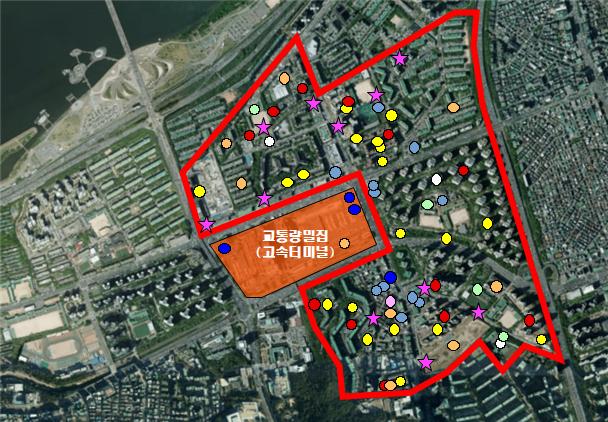
Seocho-gu plans to establish the area around Seoul Express Bus Terminal (1.6 km²) as a ‘Fine Dust Safe Zone’ for focused management to realize indoor environmental welfare and create an environment where residents can breathe safely.
The area around Seoul Express Bus Terminal is a representative traffic-congested area in Seocho-gu, with an average ultrafine dust concentration of 24 μg/㎥ over the past three years. This area includes 50 facilities used by fine dust vulnerable groups such as daycare centers, elementary schools, and senior centers, as well as 12 fine dust emission sources like construction sites and gas stations.
◇Fine Dust Management Around ‘Seoul Express Bus Terminal’?
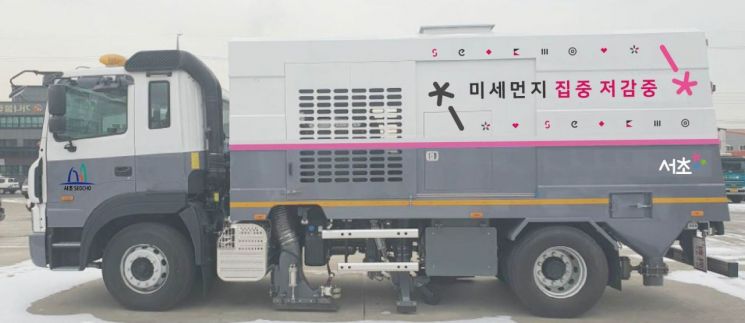
Starting in March, two dust suction vehicles will patrol the terminal area four times a day to remove road dust, a major source of fine dust emissions, as much as possible.
A district official pointed out that air pollution caused by vehicle exhaust emissions continuously occurring at the terminal is a problem. They noted that reducing vehicle idling is necessary to lower fine dust levels, but legally restricting idling is difficult during winter when temperatures drop below 0℃ and in early spring.
In addition, emission inspections will be conducted frequently at fine dust emission businesses such as construction sites and gas stations around the terminal. Indoor air quality inspections in underground shopping malls and subway stations in the area will be increased to twice a year to enhance indoor air quality management in multi-use facilities, thereby strengthening fine dust management.
◇Establishing the Safe Zone as a Place to Breathe Comfortably Indoors and Outdoors
The district’s care scope for the Fine Dust Safe Zone is not limited to outdoor areas.
In the first half of this year, ‘window-type ventilation systems’ will be installed in facilities used by fine dust vulnerable groups in the area, such as daycare centers and senior centers. The ‘window-type ventilation system’ is equipped with fine dust filters, allowing automatic ventilation without opening windows. This system removes pollutants like CO2 that are difficult to purify with air purifiers.
At the entrances of daycare centers, ‘fine dust suction air mats’ will be installed to absorb dirt and fine dust from shoes upon entry, providing an indoor environment where children can play freely and enter safely without worrying about fine dust.
Separately, the district will allocate its own budget to install and support window-type ventilation systems in homes of economically vulnerable groups within the Fine Dust Safe Zone, including pregnant women, mobility-impaired individuals, and families with multiple children who are vulnerable to fine dust.
This initiative is significant as Seocho-gu takes the lead in managing indoor air quality for low-income households with pregnant women and the sick who have limited outdoor access and are exposed to indoor air for long periods, thereby practicing ‘environmental welfare’ for marginalized groups that must not be overlooked in the era of climate crisis?making it the first such effort nationwide.
◇Seocho Opening an Era of Environmental Welfare to Confront the Climate Crisis
Meanwhile, the district’s efforts toward environmental welfare have been ongoing. In May last year, Seocho-gu signed an agreement with KAIST Sustainable Development Center, K-Weather, and Our Future Association to promote the ‘Green Seocho Project’ for indoor air quality management in preparation for the climate crisis era. This was a pioneering effort recognizing the need to present a new standard model for safe space management in the post-COVID era.
Additionally, the district provides customized and specialized air quality measurement information for ‘Our Neighborhood’ collected from 108 local air environment monitoring stations through a smart city app and website.
Thanks to these efforts, the district received the ‘Good Air City’ award at the 11th Air Day event, recognized for leading air environment welfare by managing indoor air quality in multi-use facilities through the ‘Green Seocho Project.’
Since 2017, the district has also managed construction site fine dust and noise using IoT (Internet of Things). Measurement devices attached to construction site soundproof walls monitor ultrafine dust and noise every minute. When levels exceed standards, automatic SMS alerts are sent to construction personnel and on-site inspectors to request reduction measures and enforcement, improving the efficiency of construction site fine dust management.
A district official stated, “We plan to compare and analyze air quality measurement data before and after the Fine Dust Safe Zone pilot project and conduct surveys. If the project’s effectiveness is deemed sufficient, we will expand the project area.”
© The Asia Business Daily(www.asiae.co.kr). All rights reserved.
![Clutching a Stolen Dior Bag, Saying "I Hate Being Poor but Real"... The Grotesque Con of a "Human Knockoff" [Slate]](https://cwcontent.asiae.co.kr/asiaresize/183/2026021902243444107_1771435474.jpg)

















