Using Solar Cells as Exterior Cladding for Walls, Windows, and Roofs to Produce Eco-Friendly Energy and Enhance Building Aesthetics
Support Budget Expanded to 2 Billion KRW This Year, Design Completion Improved by Extending Design and Construction Periods
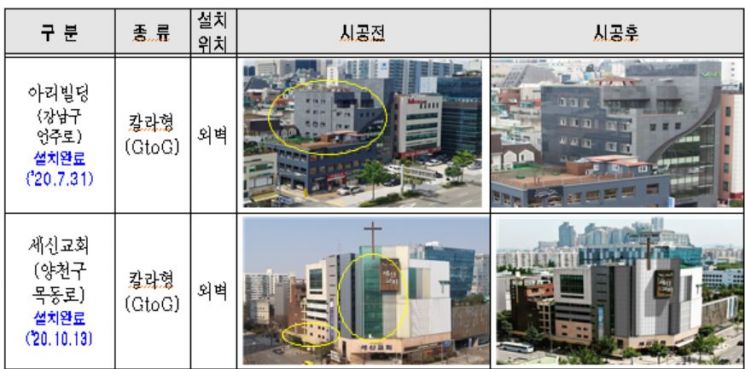
[Asia Economy Reporter Lim Cheol-young] The Seoul Metropolitan Government announced that it will begin accepting subsidy applications from the 26th for ‘Building-Integrated Photovoltaics (BIPV),’ a solar power generation facility installed on building exteriors that resembles exterior materials, reducing electricity bills while improving building aesthetics.
Seoul has expanded this year’s support budget to 2 billion KRW, recognizing the need to develop and promote differentiated urban solar technology to lead the future solar market, moving beyond the conventional framework of fixed rooftop or balcony solar installations.
If selected as a subsidy recipient, up to 80% of installation costs can be supported. Unlike last year, this year’s support excludes general-type solar cells and only supports design-type and new technology-type solar cells, with subsidies paid differentially according to these criteria.
Seoul expects demand for BIPV to increase as it offers both energy-saving effects and building exterior improvement. The city plans to continuously promote the BIPV project, encouraging new technology development in the solar field and researching and analyzing architectural design improvements to establish BIPV systems as a key solar project in Seoul.
To design solar installations that harmonize with building exteriors and urban landscapes, the proposal submission period this year has been extended from the previous 3 weeks to 2 months. Additionally, considering potential construction period extensions due to various factors such as changes requested by building owners during construction, the installation completion deadline has been extended from 80 days to 100 days after groundbreaking, providing sufficient design and construction time for high-quality solar installations.
Furthermore, the selection of solar distribution companies will undergo careful eligibility verification. Quantitative evaluations will include comprehensive and specialized construction license registration status, electrical construction license possession, corporate credit rating, distribution performance, and installation workforce status, while qualitative evaluations such as business capability and proposals will be conducted through an external review committee.
After BIPV installation, free defect repairs will be provided for five years, and if unauthorized removal occurs within five years from the installation date, the subsidy will be fully reclaimed. The application period for building-integrated solar subsidies is from the 26th to April 30th. After external review, participating companies will be selected in May, with projects starting at the end of May.
Kim Ho-sung, Director of the Green Energy Division of Seoul City, stated, “With the mandatory implementation of Zero Energy Buildings (ZEB) for private buildings advanced by two years to start in 2023, BIPV installations on walls and windows are expected to become more active, moving beyond traditional solar frameworks. We will do our best to make this BIPV private distribution project a catalyst for the development of the domestic industry of next-generation solar cells, ‘Building-Integrated Photovoltaics.’”
© The Asia Business Daily(www.asiae.co.kr). All rights reserved.

















