Controversy Over 'Vaccine Efficacy' Ahead of COVID-19 Vaccination
Good Vaccines Protect Recipients from Hospitalization, Severe Illness, and Death
Both Pfizer and AZ Show High Protection in Actual Vaccinations
Experts Warn "Fueling Vaccine Safety Controversy Threatens Public Lives"
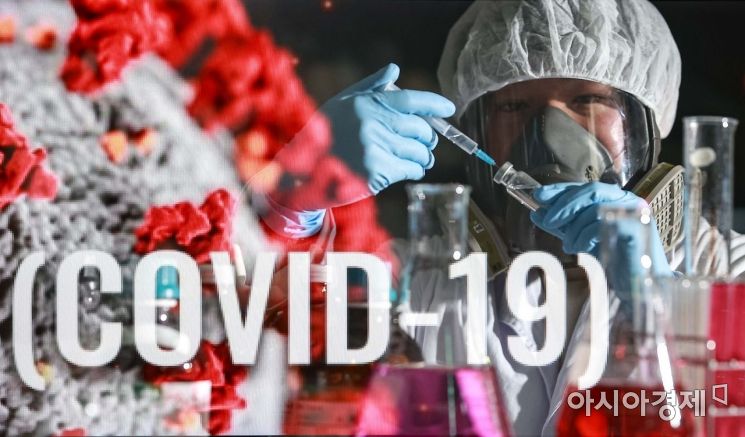
[Asia Economy Reporter Lim Juhyung] Controversy has arisen over the efficacy of the British AstraZeneca (AZ) vaccine, which is scheduled to be used for COVID-19 vaccinations in South Korea. There are suspicions that the AZ vaccine’s COVID-19 infection prevention rate is lower than that of the vaccine developed by the American company Pfizer, leading to claims that it might be a kind of 'second-rate vaccine' with inferior performance. In political circles, debates have erupted as some have called for President Moon Jae-in to receive the AZ vaccine to dispel doubts.
Experts point out that this controversy stems from misunderstandings about how vaccine efficacy is classified. They explain that vaccine efficacy is not only about preventing infection but more importantly about whether it can protect vaccinated individuals from severe symptoms caused by the disease and prevent the collapse of the healthcare system. Therefore, a comprehensive review of data on hospitalizations, severe cases, and deaths among vaccinated individuals is necessary, and considering this, the AZ vaccine cannot be regarded as less effective than the Pfizer vaccine.
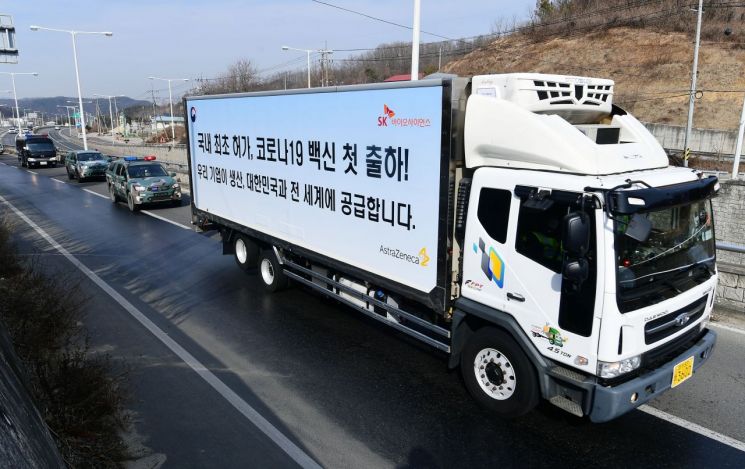 On the morning of the 24th, AstraZeneca vaccines produced at the SK Bioscience factory in Andong, Gyeongbuk, were loaded onto transport vehicles and escorted by the military and police as they were transferred to a storage warehouse. / Photo by Yonhap News
◆ Pfizer’s Prevention Efficacy 95% vs AZ’s Average Prevention Efficacy 70%
The debate over the performance of vaccines like Pfizer and AZ arose following the release of Phase 3 clinical trial results.
Earlier, Pfizer disclosed the final clinical trial results for its messenger RNA (mRNA) vaccine developed in collaboration with the German biotechnology company BioNTech in November last year. At that time, Pfizer stated on its official website that "the analysis showed a total prevention efficacy of 95%."
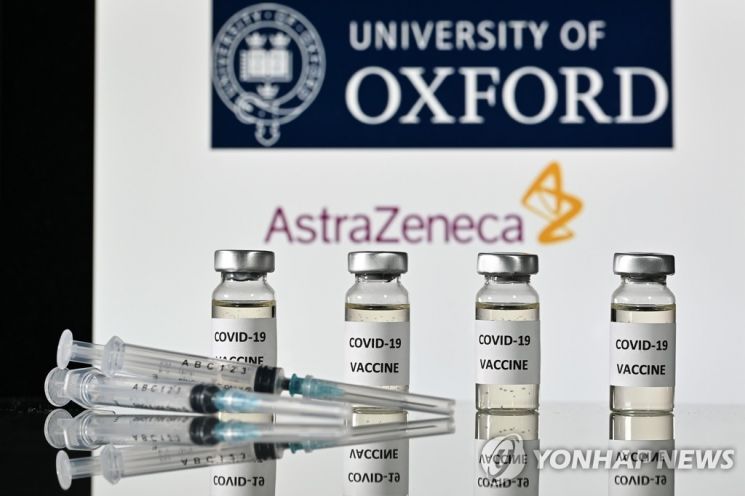 A vaccine developed through collaboration between British pharmaceutical company AstraZeneca and the University of Oxford. / Photo by Yonhap News
AZ also released its Phase 3 trial results in the same month. AZ explained that "the prevention efficacy was 62% when administered at a standard dose, but when 1.5 doses were administered, the prevention efficacy reached 90%, resulting in an average prevention efficacy of 70%." This meant a 25% lower prevention efficacy compared to Pfizer.
The fact that the 1.5-dose experiment showing 90% prevention efficacy was an unintended 'mistake' by the researchers was also criticized. At a press conference, Mene Pangallos, AZ’s Vice President, admitted, "It was serendipity that we administered half a dose for the first shot."
Moreover, concerns grew as it was pointed out that the elderly population aged 65 and over did not sufficiently participate in the clinical trials, leading the U.S. Food and Drug Administration (FDA) to decide to delay approval of the AZ vaccine until new clinical trial results are available.
◆ AZ Vaccine Hesitancy Emerging Domestically and Abroad
As a result, some domestic and international groups have expressed doubts about the AZ vaccine’s efficacy or have been reluctant to receive it. According to the British media outlet BBC, French President Emmanuel Macron stated at a press conference on the 29th of last month that "(the AZ vaccine) is almost ineffective for people aged 65 and older."
Additionally, according to the German media outlet DW News, in Germany, public preference for the Pfizer vaccine was prominent, leading to a suspension of AZ vaccine administration, with only 12% of the total AZ vaccine supply being used.
In political circles, there have been calls for the president to become the 'first recipient' of the AZ vaccine to restore public trust.
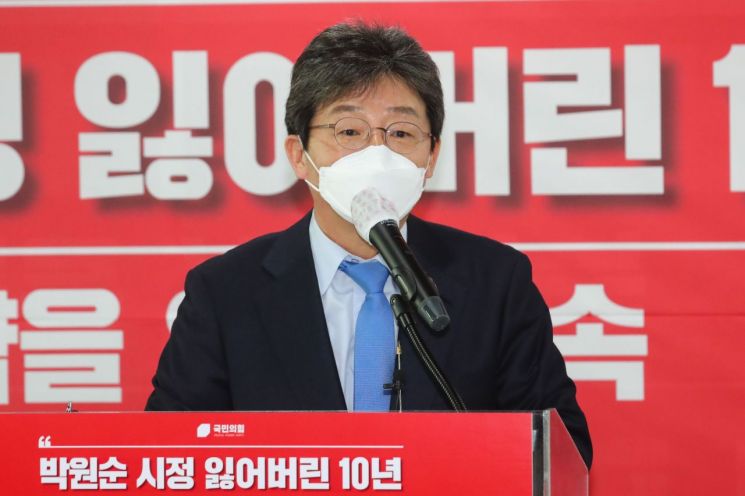
Previously, on the 19th, former People Power Party lawmaker Yoo Seung-min wrote on his Facebook, "With the president being the first to get vaccinated, please alleviate the public’s distrust accumulated from fake news originating from the Blue House and the Democratic Party," and urged, "The second vaccinations should be led by the Minister of Health and Welfare, the head of the Korea Food and Drug Administration, and the director of the Korea Disease Control and Prevention Agency."
In response, Democratic Party lawmaker Jung Cheong-rae criticized this as "an outrageous remark," saying, "Is the head of state a test subject for the vaccine? This is mockery and insult to the head of state." Then, People Power Party lawmaker Ha Tae-kyung retorted, "Then is the public the president’s gisaeng (court lady)?" escalating the controversy.
◆ Vaccine Efficacy: Prevention of Hospitalization and Severe Cases is Most Important
Is the AZ vaccine actually a 'bad' vaccine compared to Pfizer’s? According to experts, this misunderstanding arises from misprioritizing vaccine efficacy.
In an article titled "What Defines the Efficacy of COVID-19 Vaccines" contributed by Dr. Susanne Hodgson to the international medical journal The Lancet in October last year, vaccine performance is judged based on 'efficacy.'
This efficacy is broadly divided into three areas: prevention of transmission between people, prevention of hospitalizations, and prevention of severe illness/death. Among these, the most important efficacy during a pandemic is the prevention of hospitalizations and severe illness/death.
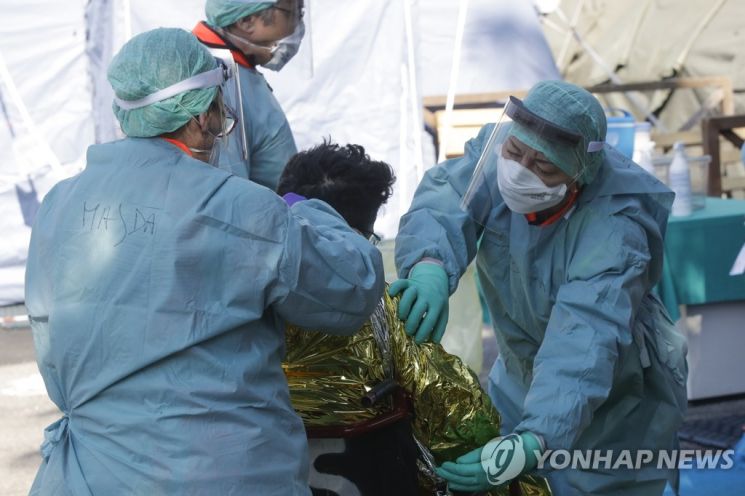 A patient seeking a COVID-19 testing clinic in Brescia, Italy, is receiving assistance from medical staff while wrapped in a survival blanket. / Photo by Yonhap News
For a highly fatal infectious disease like COVID-19, the crisis arises when △ the number of confirmed cases increases, △ hospitalizations due to severe symptoms rise, and △ the national healthcare system collapses. However, if mass vaccination significantly reduces the number of people developing severe symptoms or dying, the healthcare system can be protected, allowing control of the infectious disease situation without stringent social distancing or lockdown measures.
Regarding this, Dr. Hodgson also pointed out in the article that "the most important efficacy of a vaccine is to protect people from severe illness and death," and that "this is difficult to evaluate in clinical trials."
So, how effective is the AZ vaccine in real-world vaccination cases rather than clinical trials? According to a BBC report on the 23rd (local time), a study conducted on vaccinated citizens in Scotland, UK, found that the AZ vaccine reduced the risk of hospitalization by 94% at 5 weeks (28?34 days) after vaccination. During the same period, the Pfizer vaccine reduced hospitalization risk by 85%.
The UK citizens surveyed had received only one dose of the vaccine according to the UK government’s vaccination strategy, and the effect is expected to increase after completing the second dose. In other words, the AZ vaccine lags behind Pfizer only in prevention efficacy against transmission between people but shows equal or superior performance in the most important efficacy of preventing severe illness and hospitalization.
◆ Experts: Vaccine Safety Controversy Threatens Public Life
Experts also explained that vaccination for those aged 65 and older is 'safe.' Dr. Song Manki of the International Vaccine Institute appeared on TBS Radio’s "Kim Eo-jun’s News Factory" on the 23rd and said, "Because the number of participants aged 65 and older in the AZ vaccine clinical trial was not large enough, we are waiting for additional clinical results in March," emphasizing, "This does not mean it is unsafe."
He added, "All experts agree that vaccine safety has already been secured," and explained, "Vaccines have been proven to significantly reduce severe illness and death."
He further stressed, "We should focus on how to effectively utilize vaccines and vaccinate many people quickly, rather than fueling controversies about vaccine safety, which would lower vaccination rates and threaten public health safety."
© The Asia Business Daily(www.asiae.co.kr). All rights reserved.
![Clutching a Stolen Dior Bag, Saying "I Hate Being Poor but Real"... The Grotesque Con of a "Human Knockoff" [Slate]](https://cwcontent.asiae.co.kr/asiaresize/183/2026021902243444107_1771435474.jpg)


















