Government Announces First Phase of New Housing Sites under 2·4 Measures
Gwangmyeong-Siheung Selected as 6th 3rd Generation New Town with 70,000 Households
Good Accessibility to Seoul... Yeouido 20 Minutes, Seoul Station 25 Minutes
Population Redistribution Possible in Seoul Metropolitan Area... Expected Housing Price Stabilization
However, Resolving Resident Opposition is Key... Local Opinions Divided
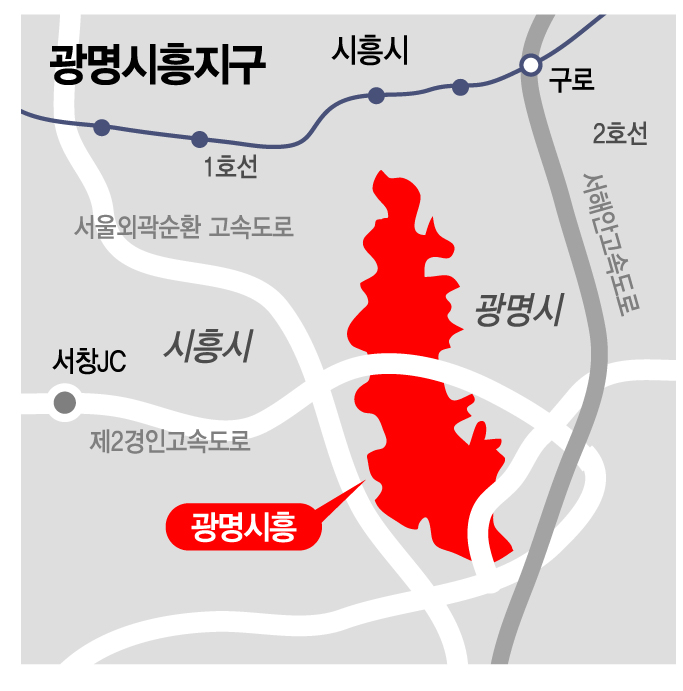
[Asia Economy Reporters Moon Jiwon, Lim Onyu] The government has confirmed the locations for 100,000 housing units out of approximately 250,000 new public housing units announced in the 2.4 Plan. It appears that the government accelerated the designation of new housing sites to quickly quell the spreading criticism regarding the effectiveness of the policy since the announcement.
The Gwangmyeong-Siheung district, with a scale of 70,000 housing units, is larger than Namyangju Wangsuk district (66,000 housing units), the largest among the existing 3rd phase new towns. Moreover, using the nearby KTX Gwangmyeong Station, commuting to downtown Seoul is possible within 20 minutes, raising expectations that it will absorb a significant portion of demand from the Gyeonggi and Incheon areas as well as the southwestern Seoul region.
Experts predict that with the announcement of specific new housing site locations, this could serve as a foothold for stabilizing housing prices in the metropolitan area. However, resolving residents' opposition will be key. In the case of Gwangmyeong-Siheung district, since there have been past cases where new town designation was thwarted due to residents' resistance, how the government manages conflicts with local residents going forward will remain a challenge.
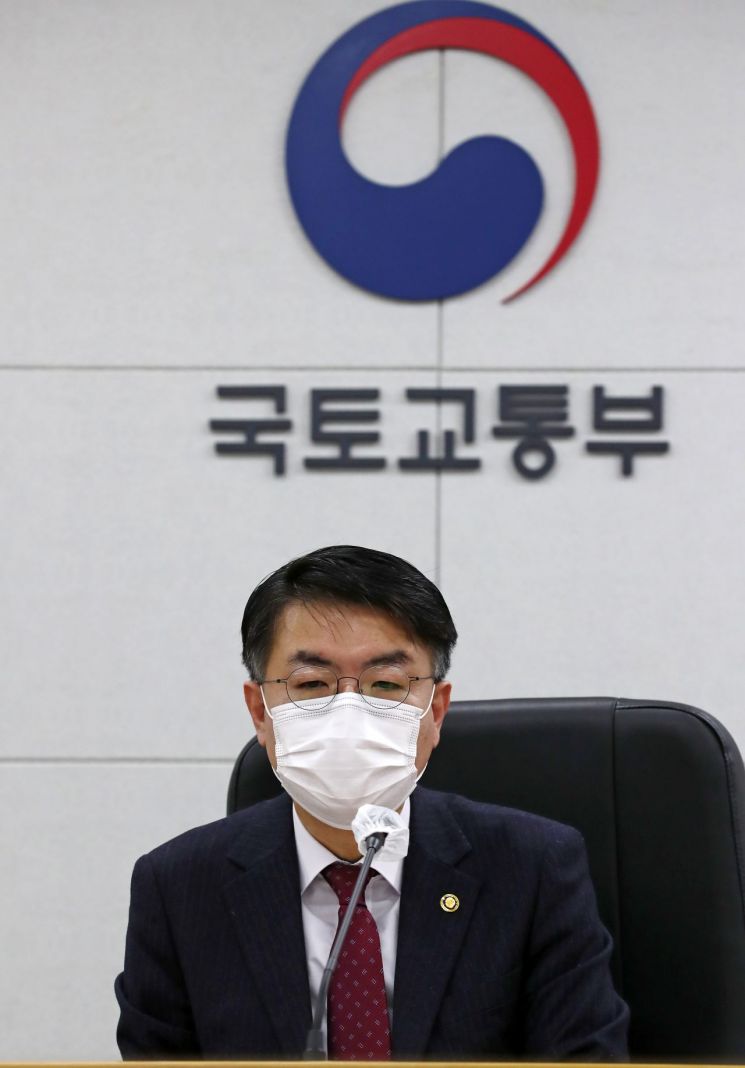 On the morning of the 24th, Yoon Sung-won, the 1st Vice Minister of the Ministry of Land, Infrastructure and Transport, is answering reporters' questions at a briefing on the new public land development plan to expand housing supply, held at the Government Complex Sejong in Sejong City. (Photo by Yonhap News)
Gwangmyeong-Siheung Expected to Become a Hub in the Southwestern Region
The Gwangmyeong-Siheung district is located in Gwangmyeong City’s Gwangmyeong, Okgil, Noon-sa, and Gahak-dong, as well as Siheung City’s Gwarim, Mujinae, and Geum-i-dong areas in Gyeonggi Province. The area covers 12.71 million square meters, making it larger than Namyangju Wangsuk (11.34 million square meters, 66,000 housing units), the largest among the 3rd phase new towns. It is 4.3 times the size of Yeouido and ranks as the sixth largest among all new towns in the metropolitan area historically.
This area has been mentioned several times in the past as a site for new town-scale development but was repeatedly thwarted. In 2010, it was designated as a housing site with plans for new town development surpassing Ilsan New Town, but the project was halted due to the real estate market downturn at the time. After being deregulated as a housing site in 2015, the Gwangmyeong-Siheung district was designated as a special management area and was a strong candidate during the 2018 announcement of the 3rd phase new towns. However, due to residents’ opposition and worsening traffic congestion, the designation ultimately failed.
The government’s decision to confirm Gwangmyeong-Siheung as the sixth 3rd phase new town this time is interpreted as due to the lack of clear alternatives. Gwangmyeong City borders the Seoul city limits and has excellent access to KTX and Seoul Metropolitan Subway Line 1, making it the most accessible location to Seoul from the southwestern metropolitan area.
The government plans to expand transportation networks allowing access to Yeouido within 20 minutes, Seoul Station within 25 minutes, and Gangnam Station within 45 minutes. They will build a rail network connecting existing subway Lines 1, 2, and 7 with the currently planned Sinansan Line, GTX-B, and the 2nd Gyeongin Line, and consider constructing a north-south urban railway passing through the new town to enable transfers between lines.
30,000 Housing Units Supplied in Busan and Gwangju... Creating Regional Hubs
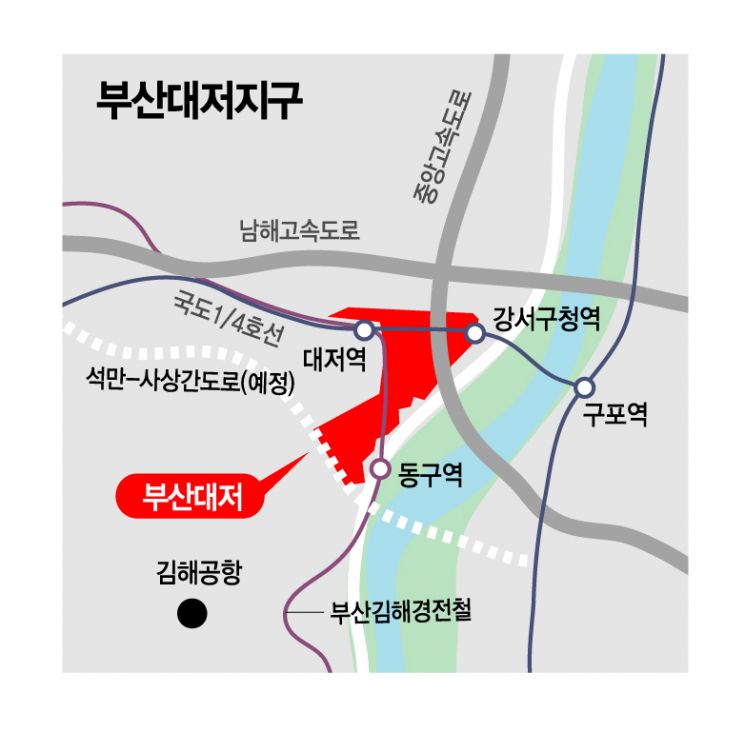
The government will also designate new housing sites near Busan and Gwangju to supply about 30,000 housing units. First, the Daejeo district in Busan covers 2.43 million square meters and will add 18,000 housing units. To create a self-sufficient city linked with the Busan Research and Development Special Zone, residential areas will be supplied as a hinterland, and 150,000 square meters of self-sufficient land will be allocated in adjacent areas to strengthen the special zone’s functions. A 'Startup Support Hub' will be introduced to establish a convergence industry cluster in the western Busan area.
Transportation functions will also be significantly expanded. A new station for the Busan-Gimhae Light Rail Transit will be built within the district to improve public transportation convenience toward downtown Busan and Gimhae. This will allow arrival at Seomyeon within 30 minutes and Busan Station within 20 minutes. Additionally, a 620,000 square meter park and green space will be created to establish a green corridor linked with the Nakdong River.
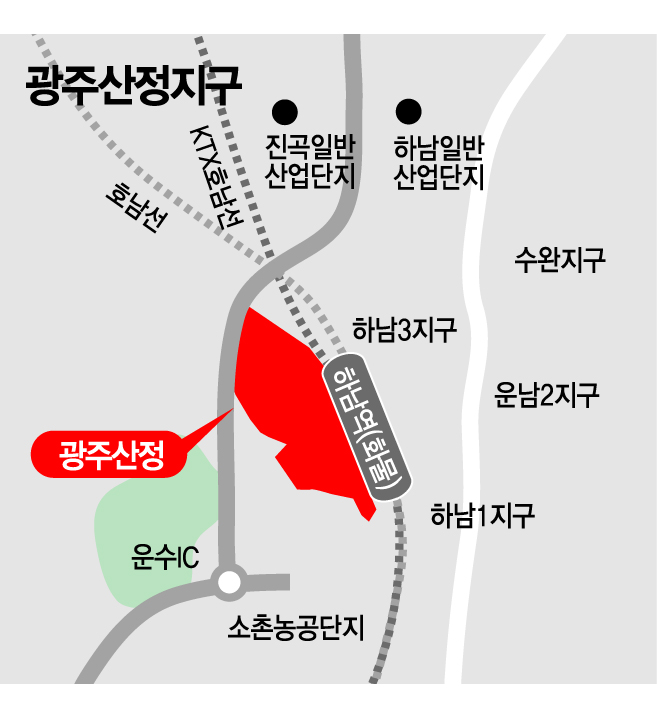
The Sanjeong district in Gwangju, covering 1.68 million square meters near Eodeungsan Mountain, will supply 13,000 housing units. This area will provide residential spaces for workers linked to the Gwangju-type job project and the Bitgreen Industrial Complex. Advanced logistics facilities connected to local industrial complexes will be developed, and a youth support network centered on youth startup housing linked with nearby universities will be established.
New Towns Expected to Lower Housing Prices... Resolving Residents’ Opposition is Key
Experts expect market stabilization through increased housing supply but see residents’ opposition as a variable. Park Wongap, Senior Real Estate Specialist at KB Kookmin Bank, said, "Designating new housing sites is a more visible supply signal than transit-oriented development or public redevelopment/reconstruction," and predicted, "It will have the effect of dispersing housing demand in the metropolitan area, especially in the southwestern region."
Yang Ji-young, Director of R&C Research Institute, said, "Considering the impact when the 10,000-unit Helio City in Songpa-gu was occupied, the ripple effect will be significant," but added, "Since this area was previously designated as a housing site but failed due to residents’ opposition, how to resolve residents’ resistance is important."
Concerns have also been raised about rental difficulties and potential declines in housing prices in nearby areas. Kim Hak-ryeol, Director of Smart Tube Real Estate Research Institute, said, "Gwangmyeong already faces severe rental difficulties due to Gwangmyeong New Town and Cheolsan reconstruction relocations, and if the demand for the 70,000 housing units in Gwangmyeong-Siheung increases, moving demand will rise, potentially worsening the rental shortage."
© The Asia Business Daily(www.asiae.co.kr). All rights reserved.



















