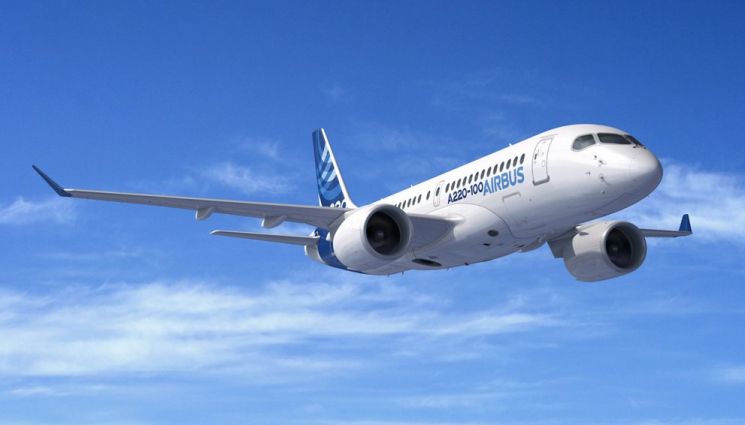
[Asia Economy Reporter Dongwoo Lee] Major global aircraft manufacturers recorded massive operating losses last year due to the impact of COVID-19, and this year is expected to be another challenging year.
According to the industry on the 24th, European aircraft manufacturer Airbus did not receive a single new aircraft order last month. This sharply contrasts with January of last year, just before the spread of COVID-19, when a total of 269 new orders were recorded. During the same period, the number of aircraft delivered to customers decreased by 10 units compared to the previous year, totaling 21 units.
An Airbus official said, "Due to the global aviation industry's downturn caused by the spread of COVID-19, no new orders were placed in January this year."
The company reported sales of approximately KRW 66.67 trillion last year, a 29% decrease compared to the previous year, and recorded a loss of KRW 1.47 trillion. During this period, new commercial aircraft orders were 268 units, and deliveries to customers were 566 units, down 65.1% and 34.4% respectively compared to the previous year.
If the COVID-19 spread continues, Airbus is inevitably facing an expansion of losses this year due to a reduction in new aircraft orders. Guillaume Faury, Airbus CEO, recently stated after announcing the results, "The crisis is not over yet," indicating that this year's business situation will not be easy.
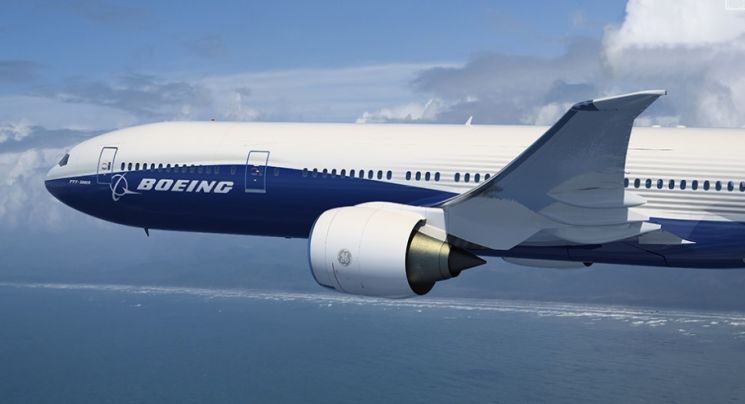
American aircraft manufacturer Boeing recorded a record loss of KRW 13.2 trillion last year, compounded by the impact of COVID-19 and the 737 Max crashes.
Boeing's aircraft orders last year totaled 184 units, a 25% decrease compared to the previous year. This is the lowest performance since 1994. During the same period, deliveries to customers also sharply dropped by 59% to 157 units, marking the lowest since 1984.
Last year's aircraft order cancellations also reached a record high of over 650 units. In January this year, there were 4 new aircraft orders and 6 cancellations, with cancellations exceeding orders.
Boeing has borne loss costs of approximately KRW 22.2 trillion due to the 737 Max crashes, and recently, a defect was found in the PW4000 engines installed on some Boeing 777 aircraft, leading to the suspension of operations for 128 aircraft worldwide.
Currently, operations of these aircraft have been completely suspended, including 24 units owned by United Airlines in the U.S., 32 units owned by Japan Airlines and All Nippon Airways, and a total of 29 units owned by Korean carriers such as Korean Air, Asiana Airlines, and Jin Air.
Additionally, Boeing's next-generation flagship aircraft, the 787 Dreamliner, was found to have manufacturing defects in the tail section last year, leading to a temporary halt in deliveries and the start of an investigation.
An industry official said, "Due to the impact of COVID-19 and Boeing's engine defects, aircraft manufacturers are also facing performance burdens for the time being," adding, "There is potential for a rebound depending on COVID-19 vaccine supply in the second half of the year, but recovery is expected to be slow."
© The Asia Business Daily(www.asiae.co.kr). All rights reserved.


















