Cost Reduction Measures for Prolonged COVID-19
Return Completed by This Month
Total 24 Aircraft Held in Q1
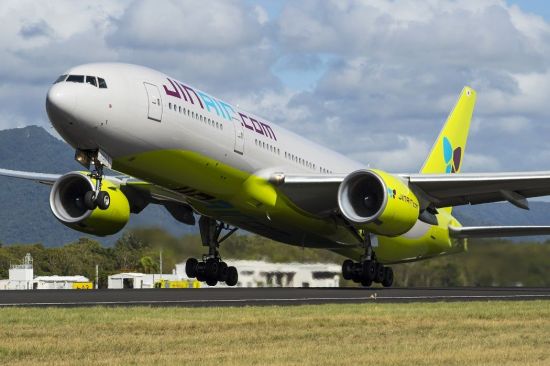
[Asia Economy Reporter Dongwoo Lee] Jin Air has reduced its fleet by four aircraft this year. This is interpreted as a cost-cutting measure in preparation for the prolonged impact of the COVID-19 pandemic.
According to the aviation industry on the 18th, Jin Air terminated the lease contracts for two Boeing 737-800 aircraft last month and decided to return two more of the same model this month.
If Jin Air completes the returns by this month, its total fleet in the first quarter of this year will be 24 aircraft, including 20 Boeing 737-800s and four long-haul 777-200s. This is fewer than the 25 aircraft Jin Air had when it went public in 2017. Compared to the plan announced at the time of listing, which aimed to increase the fleet by 4-5 aircraft annually to secure about 34 aircraft by early 2020, this is about 10 fewer aircraft.
Jin Air explained, "The aircraft returned last month were older models whose previous contracts expired due to the acquisition of new models, and the additional returns decided this month are for flexible operations considering the external environment."
The industry expects that Jin Air’s reduction in operating aircraft is to minimize operating losses by cutting fixed costs due to the sharp decline in passenger numbers caused by the COVID-19 pandemic.
As of the third quarter of last year, Jin Air’s aircraft lease liabilities totaled 376.1 billion KRW, a 22.3% increase from the previous quarter (307.4 billion KRW). During the same period, interest expenses related to aircraft leases amounted to 12.9 billion KRW, and lease payments due within one year totaled 110 billion KRW. When including payments due within 1 to 5 years, the total reaches approximately 400 billion KRW.
Considering that Jin Air recorded sales of 271.8 billion KRW and an operating loss of 184.7 billion KRW last year, fixed costs such as aircraft lease fees and maintenance costs could pose a significant management burden in the future, according to industry consensus.
A Jin Air official said, "Although we expanded our cargo transportation business during the COVID-19 pandemic, we have not yet achieved satisfactory results," adding, "We plan to operate aircraft flexibly in the future, considering external conditions."
© The Asia Business Daily(www.asiae.co.kr). All rights reserved.
















