[Asia Economy Honam Reporting Headquarters Reporter Lee Gwan-woo] Gwangju Institute of Science and Technology (GIST) announced on the 16th that the research team led by Professor Lee Jae-seok of the Department of Materials Science and Engineering developed a polymer filter material that permanently possesses electrostatic force by attaching zwitterions to polymers, as well as an antibacterial filter effective in reducing fine dust.
A zwitterion in chemistry refers to a molecule that carries both positive and negative charges, making it electrically neutral, and electrostatic force is the attraction between particles caused by electric charges.
The filters used in typical fine dust reduction masks are made by melt spinning polypropylene to create nonwoven fabric, which is then given electrostatic force; however, this electrostatic force easily disappears due to moisture, alcohol, oil particles, or carbon particles.
Melt spinning is the process of extruding polymers through fine holes and cooling them to produce fibers of nonwoven fabric in the form of thin, long threads.
The functional polymer material developed in this study has the advantage of permanently maintaining electrostatic force because zwitterions with a high dipole moment?a measure of polarity of charged substances in physics?are attached to the polymer.
Furthermore, due to the nature of polymers allowing the design of various chemical structures, this can be utilized for developing functional filter materials tailored not only for indoor fine dust but also for environments containing volatile organic compounds or viruses in the long term.
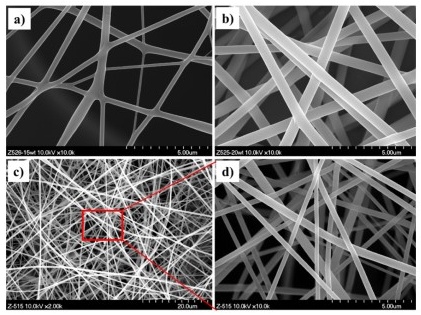
In this study, polymers with introduced zwitterions were processed by electrospinning to control the diameter of nanofibers to the scale of several hundred nanometers, producing nanofiber fabric. The developed nanofiber fabric demonstrated excellent antibacterial properties (99.90%) and high filtration performance (98.5%/5.8 mmH2O).
Professor Lee Jae-seok of GIST said, “We have developed a new filter material with permanent electrostatic force and antibacterial power that can be used in masks commonly worn to prevent the spread of COVID-19 and reduce fine dust.” He added, “It is expected to be utilized not only for masks aimed at reducing fine dust but also for producing masks with strong antibacterial properties in the future.”
© The Asia Business Daily(www.asiae.co.kr). All rights reserved.

















