Expansion of Casual Dress Code and Remote Work
Demand Declines Leading to Years of Slump
Fashion Industry Closes or Scales Down Businesses
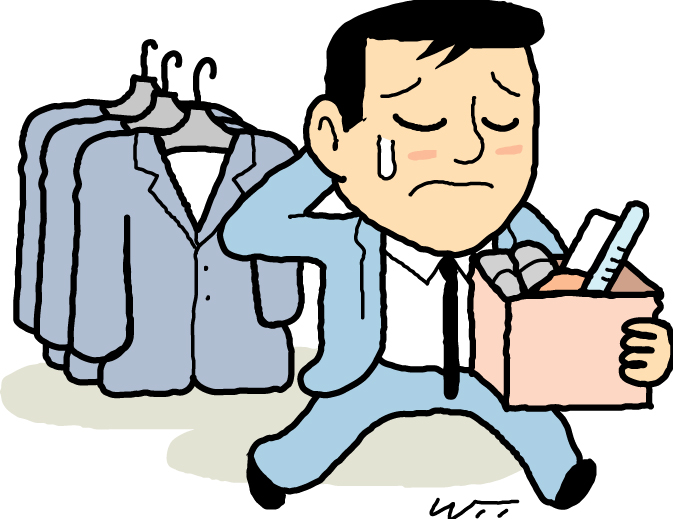
[Asia Economy Reporter Seungjin Lee] Employee A, who works at a major domestic fashion company, recently requested a transfer from the 'menswear' department, where he had been for the past seven years, to a new business division. A explained, "Since preparing for employment, I only focused on menswear, especially men's suits, but now it is a department most employees avoid," adding, "The department size has been shrinking every year."
"No one goes to menswear"
According to the fashion industry on the 15th, there is a continuing exodus of employees working in the menswear department. In the past, menswear, centered on suits, played a key role in the fashion industry, and competition for related departments was the fiercest. However, the menswear market has experienced a downturn over the past several years and suffered severe sluggishness last year due to the impact of COVID-19, making it a department avoided by employees.
In fact, Samsung C&T Fashion Division, which operates leading domestic suit brands such as Galaxy and Rogatis, recently replaced the head of the menswear business division from an executive director to a department head level.
This trend is similar elsewhere. Employee B, working at another domestic fashion company, said, "Executives assigned to menswear are practically feeling pressured to resign due to the poor state of the menswear market," adding, "Most new employees tend to apply for online business departments, and even 'traditionalists' who have been in the men's suit business for over 10 years are recently trying to leave the department."
Irrecoverable, shutting down business
The domestic men's suit market has been on a decline for several years. With the spread of casual dress codes at workplaces, more employees have loosened their ties, and last year, the demand for suits sharply decreased as remote work became widespread due to COVID-19. According to the Korea Federation of Textile Industries, the domestic menswear market, which was worth 6.8668 trillion won in 2011, shrank by about 45% to an estimated 3.6556 trillion won last year.
Shinsegae Tom Boy ended the business of 'Comodo,' a first-generation menswear brand, last month. Since acquiring Shinsegae Tom Boy in 2011, the company had continuously invested and restructured the business, but due to the prolonged downturn in the menswear market and ongoing deficits, it judged recovery to be impossible. Last year, Hansem's 'Canali' and Taejin International's 'Louis Quatorze Shirts' also ceased operations. LF's 'TNGT' reversed its product ratio from 70% suits and 30% casual wear in the past to 30% suits and 70% casual wear recently.
An industry insider explained, "The size of the menswear business department is expected to continue shrinking according to market trends," adding, "Since menswear has a high offline proportion and lacks price competitiveness, it will be reorganized to focus on online, and only a few high-end brands will survive offline."
© The Asia Business Daily(www.asiae.co.kr). All rights reserved.

![Clutching a Stolen Dior Bag, Saying "I Hate Being Poor but Real"... The Grotesque Con of a "Human Knockoff" [Slate]](https://cwcontent.asiae.co.kr/asiaresize/183/2026021902243444107_1771435474.jpg)















