Hyundai Marine & Fire Insurance Traffic Climate Environment Research Institute Study
Electric Vehicles Experience 33.4% Reduction in Driving Range During Long-Distance Winter Driving
[Asia Economy Reporter Ki Ha-young] An analysis has emerged advising that when driving long distances in electric vehicles during winter, drivers should consider a 20-30% reduction in driving range. Since waiting times for charging during the Lunar New Year holiday long-distance drives are also longer than usual, it is recommended to carefully plan charging stops for the outbound and return trips.
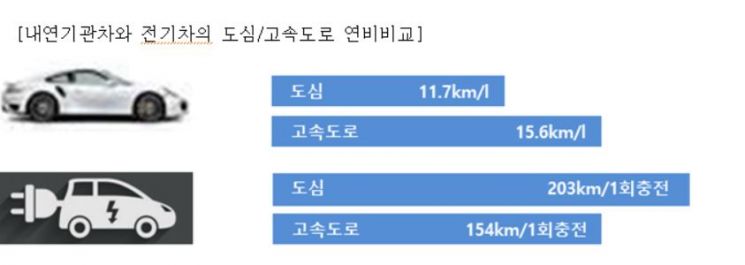
According to the "Lunar New Year Holiday Long-Distance Driving Safety Measures Study" released on the 11th by Hyundai Marine & Fire Insurance's Traffic Climate Environment Research Institute, the energy efficiency (fuel economy) of electric vehicles on highways in winter drops by 24%, resulting in a 33.4% decrease in driving range compared to normal conditions. This means the driving distance per single charge is correspondingly shorter.
This study reflected urban and highway driving experiments for electric and internal combustion engine vehicles to measure fuel economy, as well as a survey of 300 people with over 4 hours of driving experience during the Lunar New Year holiday. Hyundai Marine & Fire Insurance conducted the investigation using Hyundai Motor Company's electric vehicle Ioniq and mid-size sedan Sonata. The urban driving section was around the Gwanghwamun area in Seoul, and the highway driving section covered a 77 km route from Gwanghwamun, Seoul to Yeoju Rest Area in Yeoju County, Gyeonggi Province.
It was analyzed that electric vehicles experience battery performance degradation in winter, and while their fuel efficiency is good in stop-and-go urban driving, it actually decreases during highway driving. This contrasts with internal combustion engine vehicles, whose fuel efficiency improves by 33% on highways.
In a survey of 150 electric vehicle drivers, 33.4% reported a decrease in driving range during winter when temperatures dropped below freezing compared to usual. The proportion of drivers waiting more than 20 minutes to charge at highway rest stops during the Lunar New Year holiday increased by 21.4 percentage points. This underscores the importance of carefully planning charging during long-distance driving in the holiday period.
Similar studies have been conducted overseas. In Norway, a test of 20 electric vehicles investigated the impact of battery performance degradation in winter (minus 2 degrees Celsius) on driving range, finding an average 18.5% reduction compared to the WLTP (Worldwide Harmonized Light Vehicles Test Procedure) standard.
The main cause of increased battery consumption during winter long-distance driving in electric vehicles is the decline in battery performance due to lower temperatures. Additionally, on highways, less frequent use of brakes results in minimal regenerative energy recovery, leading to greater battery consumption.
Dr. Lee Soo-il of Hyundai Marine & Fire Insurance's Traffic Climate Environment Research Institute said, "Those planning long-distance drives during the Lunar New Year holiday in electric vehicles should consider a 20-30% decrease in driving performance compared to usual, plan charging locations in advance, and drive safely."
© The Asia Business Daily(www.asiae.co.kr). All rights reserved.
![Clutching a Stolen Dior Bag, Saying "I Hate Being Poor but Real"... The Grotesque Con of a "Human Knockoff" [Slate]](https://cwcontent.asiae.co.kr/asiaresize/183/2026021902243444107_1771435474.jpg)
















