First Call 21 Days After Inauguration
China's 'Declaration of War'
South Korea's Burden Likely to Increase
No Mention of North Korea
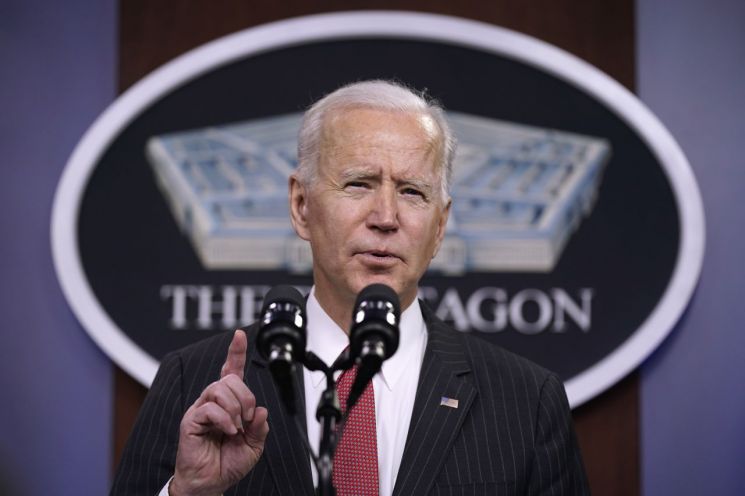 U.S. President Joe Biden is giving a speech at the Department of Defense, announcing the establishment of a task force to develop a China defense strategy.
 [Photo by AP Yonhap News]
[Asia Economy New York=Correspondent Baek Jong-min] U.S. President Joe Biden, in his first call with Chinese President Xi Jinping, directly raised issues that China finds uncomfortable, such as human rights, trade, Hong Kong, and Taiwan, applying strong pressure. President Biden, demonstrating the expertise of a diplomat, showed a more unrestrained approach than former U.S. President Donald Trump.
It is also noteworthy that the North Korea issue, which is of great interest to our government, was not mentioned this time either.
The White House announced on the 10th (local time) that President Biden and President Xi had their first phone conversation.
Most of the content of the call disclosed by the White House was consistent with strong pressure on President Xi.
After congratulating China on its biggest holiday, the "Chunje" (Lunar New Year), President Biden immediately went on the offensive. According to the White House, President Biden confirmed that he prioritizes the safety, prosperity, health, and a free and open Indo-Pacific for the American people.
President Biden particularly emphasized his concerns to President Xi about China’s coercive and unfair economic practices, the suppression in Hong Kong, human rights abuses in the Xinjiang region, and threats to Taiwan.
The White House stated that President Biden mentioned he would engage in practical and results-oriented interventions if they benefit Americans and allied nations worldwide. This is interpreted as a stance to actively pressure China in alliance and solidarity but to cooperate if China makes concessions.
The White House also reported that President Biden and President Xi exchanged views on common issues such as the response to the novel coronavirus infection (COVID-19), global health security, climate change, and non-proliferation of weapons.
China Declared a Competitor by the U.S...No Mention of North Korea
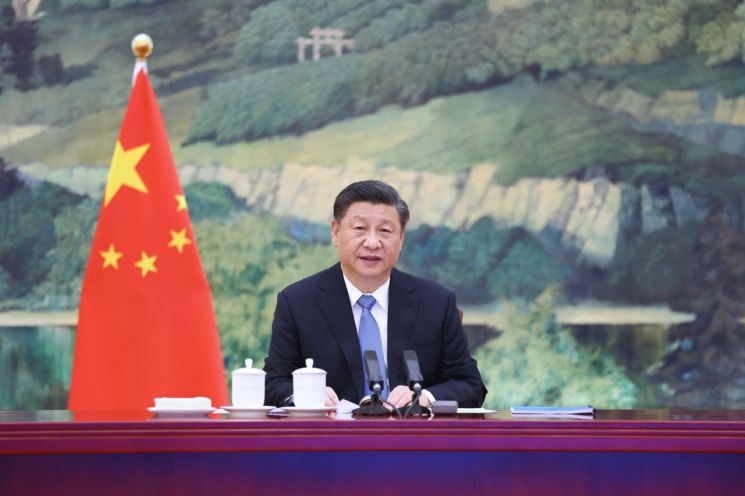
The call between the two leaders took place 21 days after President Biden’s inauguration. Since taking office, President Biden has continuously increased pressure on China.
President Biden mentioned intense competition with China and directly referred to President Xi as undemocratic.
On the same day, during his first visit to the Department of Defense since taking office, President Biden also announced the establishment of a task force to develop a defense strategy against China.
Before the call between the two leaders, U.S. Secretary of State Antony Blinken and Japanese Foreign Minister Motegi Toshimitsu also provided support.
According to the State Department, the two ministers agreed to willingly accept additional regional cooperation, including coordination among the three countries?South Korea, the U.S., and Japan?and through the Quad for a free and open Indo-Pacific.
The State Department particularly stated that the two expressed concerns about China’s growing claims around the Senkaku Islands (尖閣, known as Diaoyu Islands in Chinese). Secretary Blinken reaffirmed that the Senkaku Islands fall under Article 5 of the U.S.-Japan Security Treaty.
The remarks by President Biden and Secretary Blinken on this day suggest that South Korea cannot be an exception in the U.S. alliance efforts to pressure China. This increases the likelihood that the Moon Jae-in administration’s diplomacy will once again be tested amid U.S.-China conflicts.
President Biden also did not mention the North Korea issue during his call with President Xi. This is expected to be a burden for the South Korean government, which desires an early resumption of North Korea-U.S. negotiations. The Biden administration has only stated that it will review its North Korea strategy.
© The Asia Business Daily(www.asiae.co.kr). All rights reserved.


















