President Xi Jinping Promises Economic Cooperation at 'China-Central and Eastern Europe (CEEC) 17+1 Summit'
China Strives to Secure Allies Amid US-China Tensions
[Asia Economy Beijing=Special Correspondent Jo Young-shin] Amid the US-China conflict, China has proposed an economic cooperation plan to expand imports of agricultural and livestock products from Central and Eastern European countries. The dominant analysis is that China is seeking to embrace Eastern European countries, which were formerly under socialist regimes, to secure allies.
There is also an interpretation that China's expansion of agricultural and livestock product imports from Central and Eastern Europe is an economic cooperation plan aimed at the United States. China signed a Phase 1 trade agreement with the US in January last year, focusing on expanding agricultural and livestock product imports, but the implementation rate was only 70%.
According to China's state-run People's Daily and Global Times on the 10th, Chinese President Xi Jinping promised at the ‘Central and Eastern Europe Countries (CEEC) 17+1 Summit’ held via video conference the day before that China will increase imports of agricultural and livestock products from Central and Eastern Europe by 50% over the next five years.
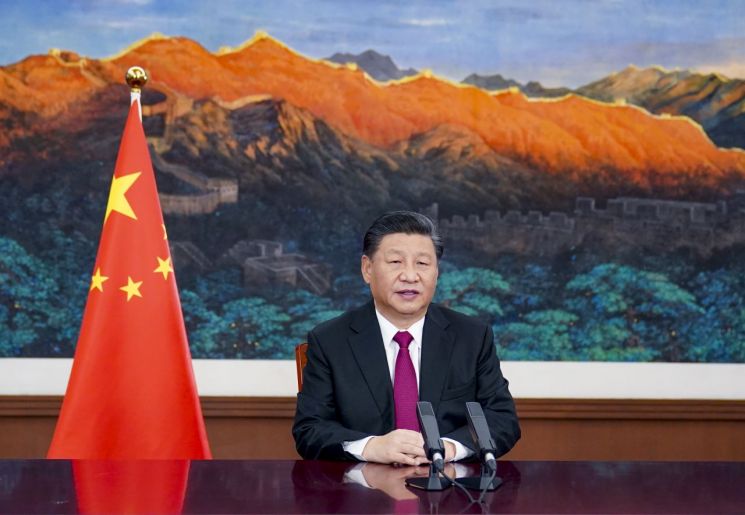
President Xi further stated, "China will import more than 170 billion dollars worth of goods from Central and Eastern European countries within the next five years." He also proposed specific cooperation measures such as establishing agricultural wholesale markets in Central and Eastern European countries and introducing youth farmer exchange programs.
Considering that Central and Eastern Europe is less developed compared to Western Europe and has a relatively large agricultural sector, President Xi's policy to expand agricultural and livestock product imports is seen as addressing the pressing needs of these countries.
The Global Times analyzed that competition between agricultural and livestock products from Central and Eastern Europe and those from the United States is inevitable, and that the decision to expand imports of Central and Eastern European agricultural and livestock products will provide Chinese consumers with more choices.
China's imports of agricultural and livestock products from Central and Eastern Europe amounted to 1.46 billion dollars (as of 2019), which accounts for only 0.64% of China's total agricultural product imports.
Jang Hong, a researcher at the Chinese Academy of Social Sciences, said, "Considering the need to narrow the trade imbalance between China and these countries, expanding imports of agricultural and livestock products from this region is a natural measure," and predicted that this decision will help the economic recovery of Central and Eastern Europe.
China also promised cooperation not only in economic fields but also in medical care, education, and sports with Central and Eastern European countries. To this end, China signed a total of 88 memorandums of understanding (MOUs) and contracts with Hungary, Albania, Czech Republic, Serbia, Bulgaria, Croatia, Slovakia, Macedonia, and others.
Meanwhile, Chinese media reported that Serbia was the first in Europe to start administering Chinese-made COVID-19 vaccines, and that vaccine cooperation between China and Central and Eastern European countries will become more active.
© The Asia Business Daily(www.asiae.co.kr). All rights reserved.

















