Frequent Occurrences of Double Parking and Vehicle Abandonment on Driveways
Difficult to Take Measures Like Towing in Private Spaces Such as Apartments
Legislative Research Office Urges Legal Amendments for Immediate Action
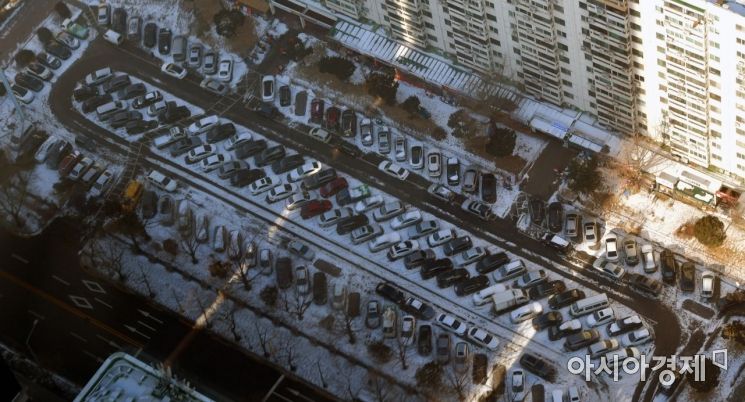 On January 10th, a parking lot of an apartment in Seoul was filled with vehicles. Photo by Yoon Dong-joo doso7@
# In May 2019, at an apartment complex in Gangseo-gu, Seoul. Mr. A attempted to enter the underground parking lot with his vehicle, but as it was an unregistered vehicle, the parking management office did not open the barrier gate. Enraged, Mr. A parked his vehicle right in front of the parking barrier, blocking the entrance and exit of the parking lot.
# In August 2018, at an apartment complex in Songdo, Incheon. In retaliation against the management office placing illegal parking warning stickers, Mr. B parked his passenger car at the entrance of the apartment’s underground parking lot. The vehicle was left unattended for about 7 hours, causing serious inconvenience to the residents.
Residents of apartments and other multi-family housing often suffer mental stress due to parking difficulties, almost as much as from noise between floors. As acts such as double parking or leaving vehicles blocking entrances have become serious social issues, there are calls for active administrative measures and legislative improvements.
On the 9th, the National Assembly Legislative Research Office stated in its report titled "Current Status and Improvement Measures of Parking-Related Laws Examined Through Parking Conflicts in Multi-Family Housing" that "It is necessary to consider more active administrative measures against acts that intentionally obstruct others’ parking, which is not merely a matter of parking order."
Under current laws, it is difficult to punish acts such as 'inconsiderate parking.' Although various laws, including the Road Traffic Act, regulate parking-related matters, there are few legislative examples that directly sanction parking-related acts in private areas such as multi-family housing.
Articles 32 and 33 of the Road Traffic Act prohibit parking in certain locations. Police officers or city/county officials can order the vehicle owner to change or move the parking method and can impose fines or penalties.
However, internal roads and parking lots within apartment complexes mostly do not fall under the definition of 'roads' covered by the Road Traffic Act. It is also difficult to classify parking lots as no-parking zones, making it challenging to enforce fines or vehicle towing through the Road Traffic Act.
Furthermore, while some parking behaviors are restricted in public parking lots to maintain order, there are no clear behavioral restrictions for parking lots in private spaces. There are also no regulations prohibiting blocking parking lot entrances or obstructing parking, which have become social problems.
Prohibition and punishment under Article 185 of the Criminal Act for 'general traffic obstruction' are possible. In the 2018 case of blocking the parking lot entrance at an apartment in Songdo, Incheon, Mr. A was prosecuted and sentenced by the Incheon District Court to six months in prison with a two-year probation for general traffic obstruction and obstruction of business. However, there are only lower court rulings related to this, and no direct Supreme Court precedents have been found yet.
Moreover, applying the Criminal Act to disorderly parking and going through criminal proceedings requires considerable time and cost, making immediate action against others’ parking obstruction clearly limited.
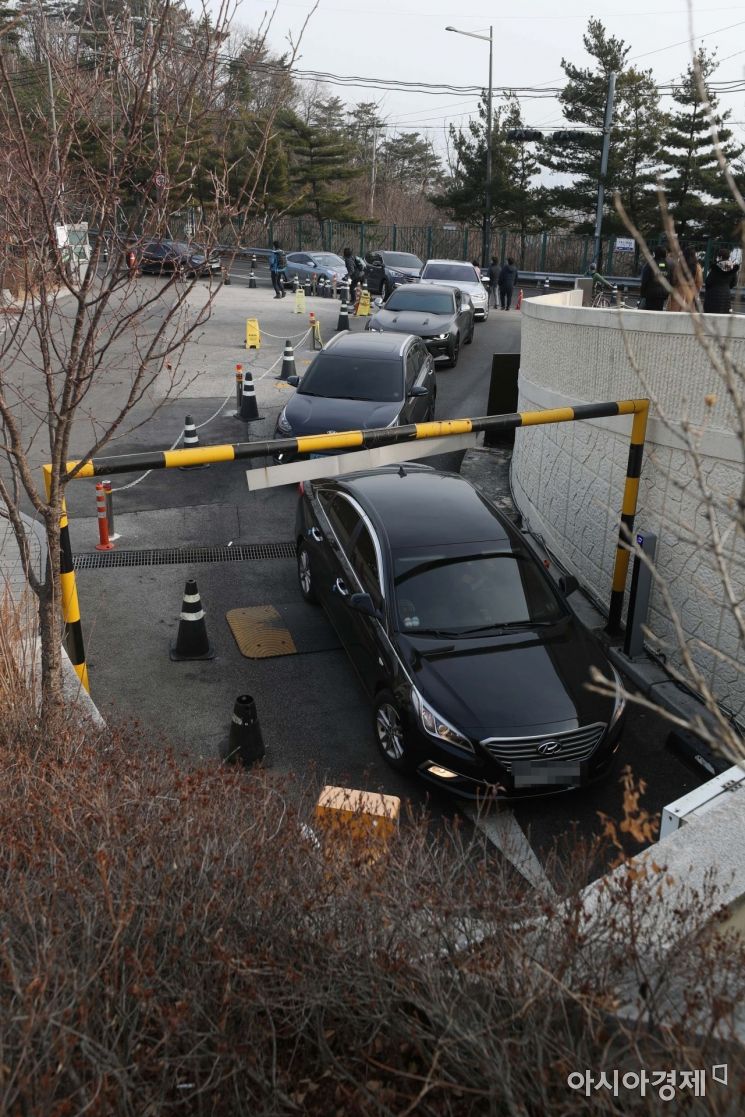 In December last year, vehicles were moving to the parking lot at Bukak Palgakjeong in Jongno-gu, Seoul. Photo by Mun Ho-nam munonam@
The Legislative Research Office emphasized, "Parking order within multi-family housing is directly connected to the daily lives of many citizens. Considering the increasing frequency and severity of social conflicts, relying solely on residents’ voluntary resolution is insufficient, and more active discussions on the role of administration and legal maintenance should take place."
As a legislative example, provisions related to disabled-only parking zones in the "Act on Guarantee of Convenience for the Disabled, the Elderly, Pregnant Women, etc." were presented. According to these provisions, even in private spaces such as apartments, fines can be imposed if non-disabled persons park in disabled-only parking zones or obstruct disabled parking.
Legislative researcher Park Jun-hwan suggested, "Measures allowing the imposition of fines or other actions could be considered when parking order within multi-family housing is excessively disrupted, such as frequent parking of unauthorized vehicles or obstructing registered residents’ parking."
© The Asia Business Daily(www.asiae.co.kr). All rights reserved.


















