Lee Jae-myung and Yoon Seok-yeol Surpass 30% in Some January Polls... Volatile Korean Politics, One Year Is a Long Time
[Asia Economy Reporter Ryu Jeong-min] The reason presidential candidates pay close attention to public opinion poll approval ratings is due to the symbolism contained in the numbers. When analyzing presidential election polls in Korean politics, the key figures to watch are approval ratings of 5%, 10%, and 30%.
For politicians dreaming of becoming the occupant of the Blue House, a 5% approval rating carries special significance. While 1-3% can be achieved simply by having one's name included in the poll, breaking through the 5% barrier is a different matter.
Only about five figures, including leading presidential candidates, can consistently surpass the 5% threshold in polls. This was confirmed in a recent poll conducted by OhmyNews commissioned to Realmeter from the 25th to 29th of last month, surveying 2,529 people nationwide aged 18 and over about the next presidential election.
The individuals who exceeded the 5% approval rating for the presidential election were Gyeonggi Province Governor Lee Jae-myung (23.4%), Prosecutor General Yoon Seok-youl (18.4%), Democratic Party leader Lee Nak-yeon (13.6%), People's Party leader Ahn Cheol-soo (5.3%), and former Liberty Korea Party leader Hong Joon-pyo (5.2%) ? only five in total. For detailed information on the poll, please refer to the Central Election Poll Deliberation Commission website.
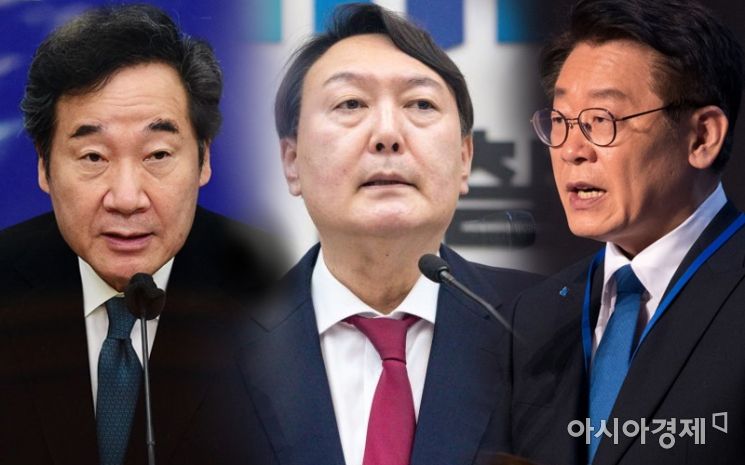
A 5% approval rating in the presidential election is a benchmark for being recognized as a meaningful presidential candidate. So what does breaking through the double-digit 10% approval rating signify? It is a figure that can elevate a candidate to a leading presidential contender. In the OhmyNews poll, only three people (Lee Jae-myung, Yoon Seok-youl, and Lee Nak-yeon) surpassed the 10% barrier. In other polls as well, individuals receiving more than 10% support are mostly three or fewer.
A 30% approval rating in a presidential election is a dream figure for politicians. Surpassing 30% naturally brings the label of a "dominant trend." However, in a fiercely contested presidential race, it is possible that no candidate exceeds 30% in polls.
How is the 2022 presidential election, scheduled for March next year, unfolding? In January of this year alone, two candidates among the presidential hopefuls broke through the 30% barrier. Prosecutor General Yoon Seok-youl, classified as a broad opposition candidate regardless of his own intention, surpassed 30% in a YTN poll.
YTN commissioned Realmeter to conduct a preference survey for next presidential candidates among 1,000 men and women aged 18 and over nationwide on January 1-2. The result showed Yoon’s approval rating reached 30.4%.
Gyeonggi Province Governor Lee Jae-myung surpassed 30% in a Segye Ilbo poll. Segye Ilbo commissioned Research & Research to conduct a preference survey for next presidential candidates among 1,010 people aged 18 and over nationwide from January 26 to 28. Lee received a 32.5% approval rating.
For detailed information on the Segye Ilbo and YTN polls, please refer to the Central Election Poll Deliberation Commission website.
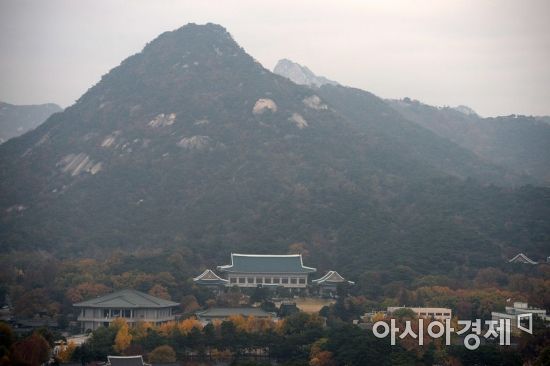 Photo by Moon Ho-nam munonam@
Immediately after the YTN and Segye Ilbo polls were released, the label "dominant trend" was attached to both Yoon and Lee. Yoon became the subject of the dominant trend without even declaring his intention to participate in politics. Lee also formed a dominant trend despite focusing on Gyeonggi Province administration, somewhat apart from Yeouido politics.
Breaking through the 30% approval rating is a noteworthy result, but considering the dynamism of Korean politics, the label "dominant trend" may be premature. Former Prime Minister Ko Gun recorded 35.1% in a 2005 July Munhwa Ilbo poll but dropped out midway without even appearing on the 2007 presidential ballot.
The dynamic nature of Korean politics can also be seen in recent cases. Just 10 months ago, there was another presidential candidate who surpassed not only 30% but also 40% approval ratings. OhmyNews commissioned Realmeter to conduct a preference survey for next presidential candidates among 2,552 men and women aged 19 and over nationwide from April 20 to 24 last year. Politician Lee Nak-yeon’s approval rating reached 40.2%. For detailed information, please refer to the Central Election Poll Deliberation Commission website.
One year is a long time in the presidential race. It is also noteworthy that the ruling and opposition party presidential lineups are not yet clear. Once the party matchups become clear, the approval ratings of presidential candidates may develop differently from now.
Um Kyung-young, director of the Era Spirit Research Institute, said, “With the breakthrough of the 30% approval rating, Lee has secured representation of the ruling party, and Yoon has secured anti-Moon (anti-Moon Jae-in) representation,” but added, “Considering the remaining election period, it is not a level to be complacent about.”
© The Asia Business Daily(www.asiae.co.kr). All rights reserved.
![Clutching a Stolen Dior Bag, Saying "I Hate Being Poor but Real"... The Grotesque Con of a "Human Knockoff" [Slate]](https://cwcontent.asiae.co.kr/asiaresize/183/2026021902243444107_1771435474.jpg)
















