Government and Seoul City Promote Dongja-dong Public Housing Project
1,450 Public Housing Units, 960 Private Sale Units
Seoul City Permits Construction Up to 40 Floors
Private Sale Land Development to Complete by 2030
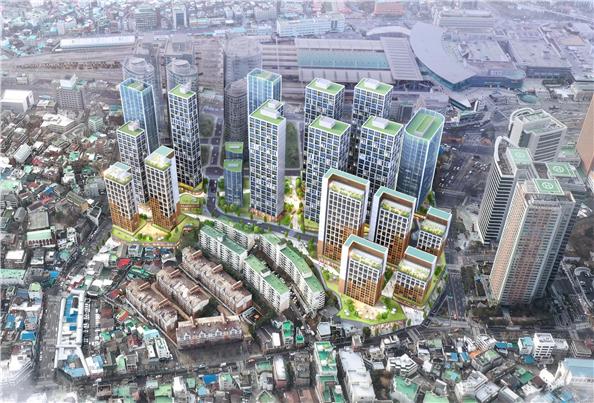 The view of Dongja-dong jjokbangchon near Seoul Station, the largest jjokbangchon village in Korea, after being developed into a high-rise apartment complex through an urban regeneration project (Photo by Ministry of Land, Infrastructure and Transport)
[Asia Economy Reporter Moon Jiwon] Dongja-dong, the largest shantytown near Seoul Station, will be redeveloped into a high-rise apartment complex consisting of about 10 buildings. A total of 2,410 housing units, including public housing for existing shantytown residents and private sale housing, will be supplied here.
The Ministry of Land, Infrastructure and Transport, Seoul Metropolitan Government, and Yongsan District announced on the 5th the promotion plan for the "Public Housing and Urban Regeneration Project to Improve the Residential Environment of Seoul Station Shantytown."
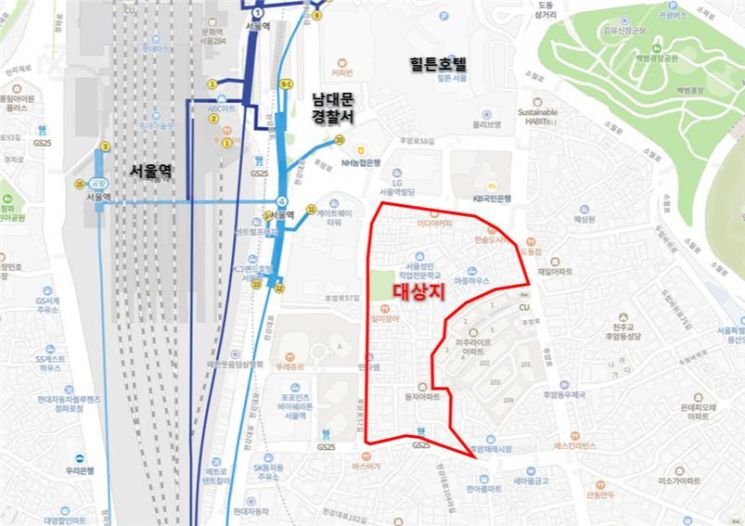
The project site is the area around Dongja-dong, Yongsan-gu, known as Seoul Station Shantytown, located in the direction of Namsan from Seoul Station (47,000㎡). This area was formed as urban poor displaced during the rapid urbanization and industrialization process in the 1960s gathered around Seoul Station.
Although the size has decreased due to several urban renewal projects, it remains the largest shantytown cluster in Korea with about 1,000 residents.
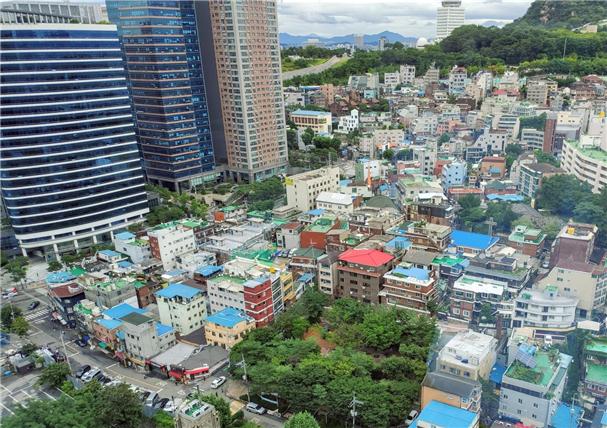 Seongja-dong Goshiwon Village near Seoul Station (Photo by Ministry of Land, Infrastructure and Transport)
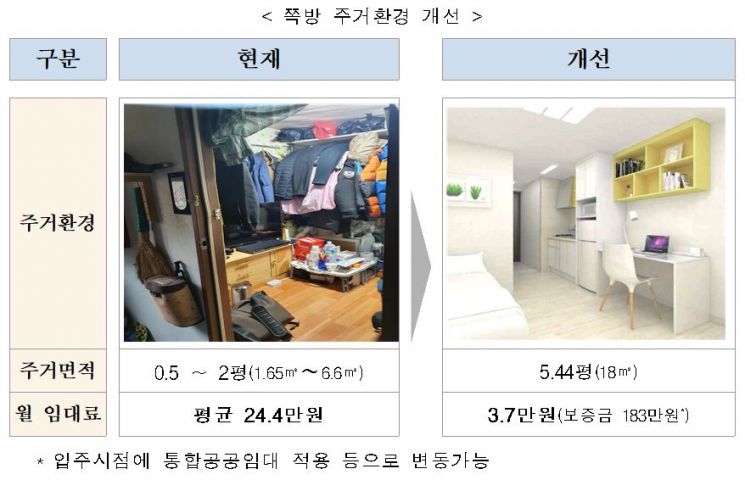
Residents here typically live in cramped spaces of less than 2 pyeong (approximately 6.6 square meters) paying a monthly rent of 240,000 KRW. Most of the buildings have poor insulation, soundproofing, and heating, and the sanitary conditions are also poor. About 80% of the buildings are over 30 years old and require maintenance.
Previously, redevelopment projects led by the private sector were attempted but failed due to insufficient relocation measures for shantytown residents. Therefore, the Ministry of Land, Infrastructure and Transport, Seoul Metropolitan Government, and Yongsan District decided that public intervention is necessary to promote the redevelopment project and decided to proceed with the "Seoul Station Shantytown Redevelopment Plan."
First, the Seoul Station Shantytown Redevelopment Plan will be promoted as a public housing project. Korea Land and Housing Corporation (LH) and Seoul Housing Corporation (SH) will participate as joint project implementers.
A total of 2,410 housing units will be supplied, including 1,450 public housing units (1,250 rental units and 200 sale units) for existing residents such as shantytown residents, and 960 private sale housing units.
The specific size of the complex will be finalized after district planning, but the government envisions about 17 apartment buildings. Seoul City has allowed building heights of up to 40 floors in this area.
To prevent large-scale relocation of shantytown residents during the project, construction will be carried out sequentially by dividing the complex. First, buildings in the area where rental and public sale housing will be built will be demolished, and public housing will be constructed. After existing residents complete resettlement, the remaining land will be redeveloped to supply private housing.
Temporary residences for about 150 shantytown residents in the area to be demolished first will be created using guesthouses or modular houses in parks within the project district. Shantytown residents will be able to live in spaces 2 to 3 times larger and more comfortable than before, at about 15% of the current rent.
For about 100 households living in general housing who wish to relocate temporarily, temporary residences will be provided using nearby jeonse (long-term lease) or purchased rental housing.
Landowners included in the project district will be compensated considering current land use and transaction cases. Merchants will be supported to continue their business activities through business compensation or commercial spaces within the housing complex.
The government plans to complete district designation this year after procedures such as gathering residents' opinions. Next year, district planning and compensation will begin, with construction of the public housing complex starting in 2023, residents moving in by 2026, and private sale land development completed by 2030.
An urban regeneration New Deal project will also be promoted near the project site. Convenience facilities such as national and public kindergartens, libraries, and community cafes accessible to both residents and local community members will be installed in the public housing complex.
Byun Chang-heum, Minister of Land, Infrastructure and Transport, said, "The virtuous cycle development of shantytowns, which started in Yeongdeungpo shantytown, has finally borne fruit here at Seoul Station, the largest scale after Daejeon," and added, "The supply of 1,160 sale housing units and 1,250 rental housing units near Seoul Station holds great significance in housing policy."
© The Asia Business Daily(www.asiae.co.kr). All rights reserved.
![Clutching a Stolen Dior Bag, Saying "I Hate Being Poor but Real"... The Grotesque Con of a "Human Knockoff" [Slate]](https://cwcontent.asiae.co.kr/asiaresize/183/2026021902243444107_1771435474.jpg)













