First State Department Visit: "Stop Supporting Saudi Attacks on Yemen"
Also Halting Arms Sales to Saudi... A Step Toward Returning to Iran Nuclear Deal
Macron: "Welcome US-Iran Dialogue, Will Be an Honest Mediator"
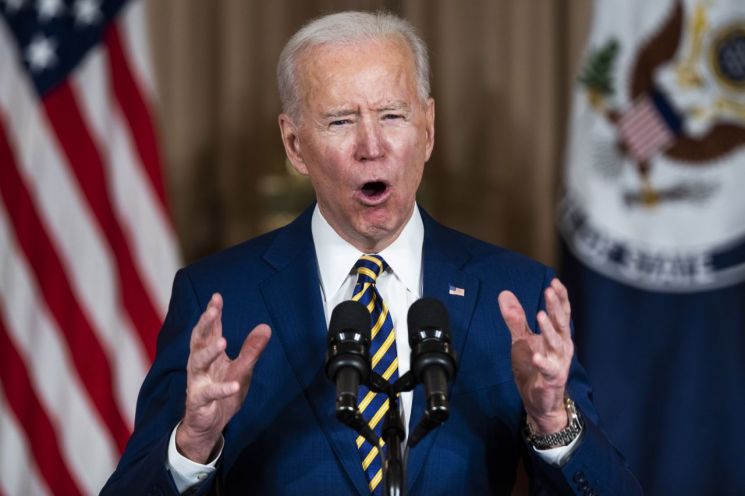
[Asia Economy Reporter Hyunwoo Lee] U.S. President Joe Biden declared that the war in Yemen between the Saudi Arabia-led Arab coalition and the Houthi rebels must come to an end, announcing the cessation of U.S. attack support for Saudi Arabia. Previously, the U.S. government had made it clear that it intended to end its close relationship with Saudi Arabia by reviewing the arms export agreements made under former President Donald Trump and announcing a suspension of arms supplies. This is interpreted as a measure to readjust relations with Saudi Arabia and to make a major strategic shift in the Middle East, including returning to the Iran nuclear deal framework from which former President Trump withdrew.
According to foreign media such as CNBC, on the 4th (local time), President Biden, during his first visit to the U.S. State Department since taking office, stated, "The war in Yemen must end," and announced, "We will end all U.S. support for offensive operations in the Yemen war, including arms sales to Saudi Arabia." Prior to this, President Biden had argued since before the election that the U.S. should stop involvement in the war due to the massacre of numerous civilians caused by Saudi Arabia's attacks in Yemen. The U.S. State Department also announced last month that it would review the existing arms export deals with Saudi Arabia made under former President Trump and temporarily suspend arms exports.
Resetting Relations with Saudi Arabia at the Center of Middle East Conflicts
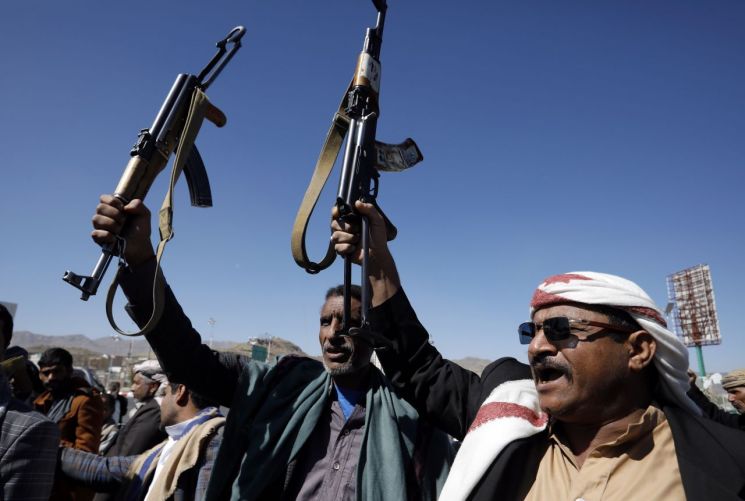
Following this shift in U.S. policy, Saudi Arabia and the Arab League began normalizing relations with Qatar, which had been blockaded along with Yemen since the 4th of last month. Previously, Saudi Arabia had pressured the Houthi rebels in Yemen and Qatar, accusing them of being linked to Shia powerhouse Iran. The Yemen civil war, which began in 2015, has been one of the major ongoing conflicts in the Middle East for six years, with the Saudi-led Arab coalition fighting fiercely against the Houthi rebels alongside the Yemeni government forces. As the war prolonged, Yemen's major port facilities were paralyzed, and with the spread of COVID-19, Yemeni residents suffered massive damage due to food shortages and lack of medicine.
As criticism over civilian casualties grew louder, the U.S. Democratic Party proposed a resolution in 2019 to end U.S. involvement in the Yemen war, citing unnecessary large-scale civilian deaths. However, it was blocked due to opposition from former President Trump and the Republican Party. At that time, former President Trump flaunted his personal special relationship with the Saudi royal family, signing various advanced weapons export contracts and touting them as his achievements while continuing military support for Saudi Arabia.
One of the actions taken by former President Trump on his last day in office, the 19th of last month, was signing an advanced weapons export contract including F-35 fighter jets to Saudi Arabia. President Biden has completely blocked this and announced the end of U.S. support for Saudi Arabia's attacks in Yemen, effectively declaring the end of the honeymoon relationship between Saudi Arabia and the U.S. The U.S. political media outlet Politico interpreted President Biden's Middle East policy shift away from a Saudi-centric approach as a strategic move toward returning to the Iran nuclear deal (JCPOA), which was one of his campaign promises during the presidential election.
French President Emmanuel Macron, "Welcomes America's New Resolve"
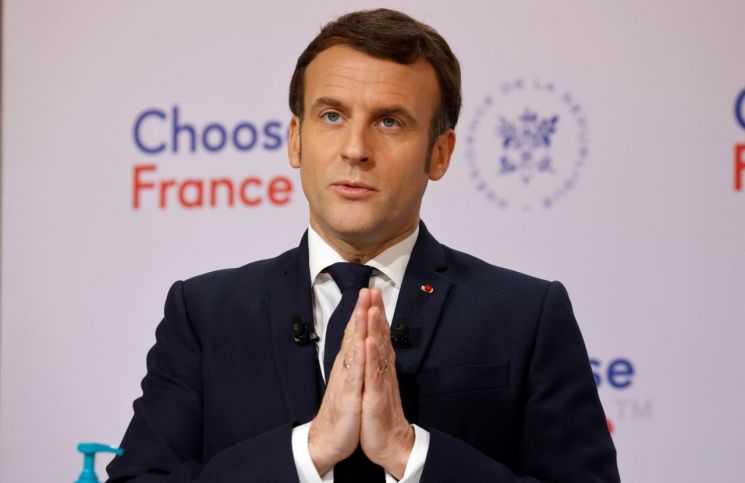
The change in U.S. Middle East policy and the willingness to return to the Iran nuclear deal have been welcomed by the international community. French President Emmanuel Macron, during a video conference with the U.S. foreign policy think tank 'Atlantic Council,' said, "I welcome America's new resolve to return to the Iran nuclear deal and will serve as an honest mediator between the U.S. and Iran," emphasizing, "Saudi Arabia and Israel must also be part of this agreement in some form."
The Iran nuclear deal refers to the agreement made in July 2015 between Iran and the six countries known as the P5+1?the United States, United Kingdom, France, China, Russia, Germany?as well as the European Union (EU). The main point was that Iran would abandon its nuclear development program in exchange for the lifting of economic sanctions by the U.S. and the EU. However, the Trump administration unilaterally withdrew from the deal in 2018 and reinstated sanctions, which provoked strong backlash from Iran and the international community.
The Trump administration appealed for support to restore Iran sanctions at the United Nations last year but was largely ignored by most countries. The prevailing international opinion was that since the Iran sanctions were part of the details of the nuclear deal, it was illogical for the U.S., having already withdrawn from the deal, to reinstate them. President Biden had previously described this event as a diplomatic disaster during his candidacy and made returning to the Iran nuclear deal a key campaign promise.
© The Asia Business Daily(www.asiae.co.kr). All rights reserved.
![Clutching a Stolen Dior Bag, Saying "I Hate Being Poor but Real"... The Grotesque Con of a "Human Knockoff" [Slate]](https://cwcontent.asiae.co.kr/asiaresize/183/2026021902243444107_1771435474.jpg)


















