Exchange Frequently Designates Stocks
Limits on Small and Mid-Cap Stocks Reduce Individual Investor Losses
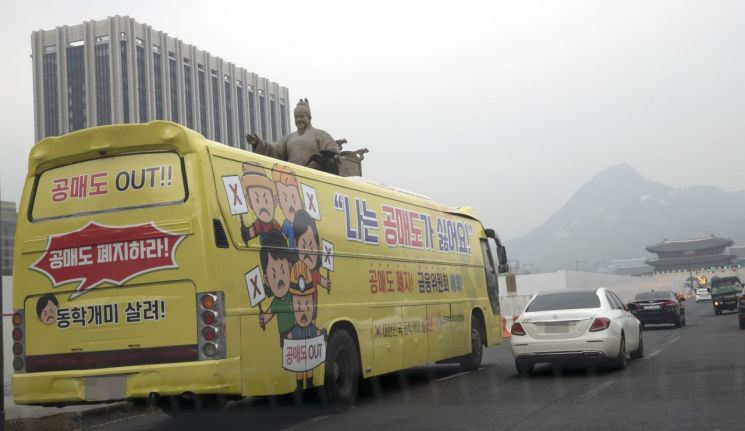
[Asia Economy Reporter Park Jihwan] Financial authorities have decided to introduce a Hong Kong-style plan that allows short selling of certain stocks starting from May, addressing the controversy over short selling that has persisted since the beginning of the year. The Hong Kong-style approach involves the exchange designating shortable stocks on an ongoing basis, considering factors such as the underlying assets of derivatives and a minimum market capitalization. To increase accessibility of short selling for individual investors, a Japanese-style system, where stock lending is actively conducted for individual investors, has been benchmarked.
Since 1994, Hong Kong has permitted short selling for stocks with a market capitalization of at least 3 billion Hong Kong dollars (approximately 460 billion KRW) and a 12-month turnover rate (the rate at which stockholders change) of 60% or higher. As of October 2019, short selling was conducted on about 710 stocks, representing 37% of roughly 1,900 stocks, and on 230 fund stocks. Limiting short selling of small and mid-cap stocks helps reduce harm to individual investors who trade these stocks heavily. Most shortable stocks have abundant liquidity, so the impact of short selling on individual stock prices is also limited.
There are differences in how short selling eligible stocks are designated. In Korea, stocks eligible for short selling are automatically reselected twice a year (June and December) based on the KOSPI 200 and KOSDAQ 150 indices. The exchange selects constituent stocks based on market capitalization by industry group at the end of April and October, announces changes for two weeks, and operates the indices accordingly.
In contrast, the Hong Kong-style system allows the exchange to designate shortable stocks on an ongoing basis. Stocks are selected based on factors such as △underlying assets of derivatives △market capitalization and turnover rate meeting certain thresholds. A financial authority official explained, "While Korea automatically selects short selling eligible stocks as representative index components, Hong Kong’s exchange decides short selling eligible stocks itself on an ongoing basis," adding, "Hong Kong has more diverse criteria for recognizing short selling than Korea."
To dispel controversy over a tilted playing field, a Japanese-style short selling system will be introduced to expand short selling opportunities for individual investors. The Korea Securities Finance Corporation will expand its individual lending (stock lending) system, which bears settlement risk, so that individuals can borrow stocks for stable short selling. The Financial Services Commission plans to secure individual lending volumes of 2 to 3 trillion KRW by the time short selling resumes, enabling individual short selling transactions in most constituent stocks of the KOSPI 200 and KOSDAQ 150.
© The Asia Business Daily(www.asiae.co.kr). All rights reserved.
![Clutching a Stolen Dior Bag, Saying "I Hate Being Poor but Real"... The Grotesque Con of a "Human Knockoff" [Slate]](https://cwcontent.asiae.co.kr/asiaresize/183/2026021902243444107_1771435474.jpg)
















