YouTube Policy: No Monetization if Inactive for Over 6 Months
"Apology for Monetization" Backdoor Advertising YouTuber's Return Faces Authenticity Criticism
Expert: "Continuous Regulation and Platform System Overhaul Needed"
[Asia Economy Reporter Kim Young-eun] YouTubers who had halted their activities amid criticism over the so-called 'undisclosed sponsorship controversy' are now beginning to return with explanations and apologies. This has sparked criticism that YouTube's policy, which makes it impossible to generate revenue after a certain period of inactivity, is the reason, leading to renewed attention on the 'YouTuber 6-month comeback rule.'
Undisclosed sponsorship refers to the act of receiving sponsored products or advertising fees but not disclosing this, instead deceiving subscribers into believing the items were personally purchased, while secretly pocketing advertising fees. It is considered a deceptive act toward subscribers.
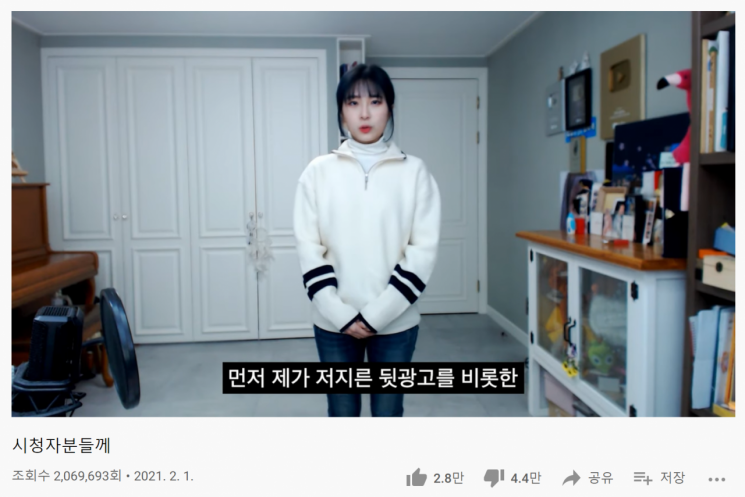
On the 1st, YouTuber YangPang uploaded a one-hour video titled 'To My Viewers' on her YouTube channel. Previously, in August last year, YangPang admitted and apologized for posting videos without indicating they were sponsored advertisements, and had suspended her activities. It is known that there were about 20 such videos without the 'paid advertisement' label, and later suspicions of manipulation related to a sports brand also arose. Before declaring her hiatus, YangPang had around 2.5 million subscribers.
In the video posted that day, YangPang said, "I am truly sorry for disappointing you due to various wrongdoings, including undisclosed sponsorship," and added, "During the past six months of self-reflection, I have deeply reflected every day on all the reckless remarks I made and the deceptive actions toward my fans since the start of my broadcasting."
Public opinion remains skeptical about the sincerity of YouTubers involved in undisclosed sponsorship controversies who announce their return along with apologies. This is because if no content is uploaded to a YouTube channel for more than six months, it can be difficult to generate revenue.
According to the 'FAQ on Video Monetization Approval for Channels' posted on YouTube's customer support page, YouTube may revoke a channel's monetization eligibility at its discretion if the channel has been inactive for more than six months or if no community posts have been uploaded or published. In other words, if a YouTube channel is confirmed as an 'inactive account' for over six months, the YouTuber will lose access to all monetization tools and related features on the channel.
Previously, YouTubers such as Bogyeom, Moon Bok-hee, and Tzuyang, who declared retirement or took a hiatus amid the undisclosed sponsorship controversy, all returned and resumed activities within six months. Public opinion holds that YangPang's comeback reconfirms the 'YouTuber 6-month comeback rule,' meaning most YouTubers who caused social controversies return within six months.
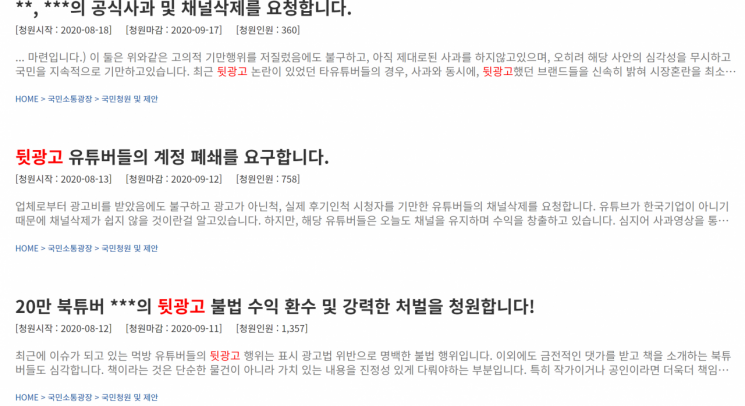
Netizens responded with comments like "I knew they would come out soon," "They rested just the right amount of time, now it's time to make money," and "Did they post an apology to avoid channel deletion?" They point out that these returns are linked to YouTube's monetization policies and that ultimately, the YouTubers could not give up their earnings. Relatedly, since the large-scale undisclosed sponsorship controversy erupted last August, more than six petitions have been posted on the Blue House's national petition board demanding punishment for YouTubers who illegally profited from undisclosed sponsorships.
The government has taken measures following the controversy. The Fair Trade Commission (FTC) revised the 'Guidelines on Indications and Advertisements Regarding Recommendations and Endorsements' last year and announced that from this year, businesses engaging in undisclosed sponsorship on social networking services (SNS) will be fined up to 2% of related sales (income) or up to 500 million KRW. Previously, only advertisers were punished for violations of the Act on Labeling and Advertising, but going forward, YouTubers, influencers, and celebrities will also be subject to sanctions.
Additionally, on the 17th of last month, the government announced that the FTC recently commissioned a study on 'Monitoring and Establishing a Culture of Voluntary Legal Compliance to Prevent Unfair Advertising on Social Networking Services (SNS).' This aims to intensively monitor and sanction unfair advertising by influencers active on major SNS platforms such as YouTube, Instagram, and Facebook.
The FTC plans to select an external specialized agency to monitor undisclosed sponsorship and other issues starting as early as this month, conducting continuous monitoring until the end of the year. If the agency finds suspected cases of unfair advertising, it will first request voluntary correction from the influencer or advertiser and then assess compliance before reporting to the FTC.
Experts emphasize the need for continuous regulation through laws as well as the reorganization of platform systems like YouTube.
Jo Yoon-mi, head of C&I Consumer Research Institute, said on YTN Radio's 'Saengsaeng Economy,' "Our country's laws do not separately regulate acts that must be done, only those that must not be done. Receiving advertisements or sponsorships from businesses must be disclosed, but regulations on this are insufficient. There is a need to diversify and change the legal framework."
Furthermore, Jung Ji-yeon, secretary-general of the Korea Consumer Federation, said on CBS Radio's 'Kim Hyun-jung's News Show,' "Even if the Fair Trade Commission strengthens crackdowns, undisclosed sponsorship will continue to evolve. I think illegal acts will be eradicated if the punishment for being caught is much stronger than the profits gained from undisclosed sponsorship, but it is not something that can be solved by cracking down on YouTubers alone; platform responsibility must also be strengthened."
She added, "It seems necessary to assign responsibility to platforms like YouTube itself so that self-regulatory monitoring systems can function well."
© The Asia Business Daily(www.asiae.co.kr). All rights reserved.



















