If Merger Succeeds, World No. 2... Possibility of Antitrust Regulation Halt
[Asia Economy Reporter Park Byung-hee] The CEOs of the two major U.S. oil companies, ExxonMobil and Chevron, reportedly discussed a merger at the end of last year, according to the Wall Street Journal (WSJ) citing sources on the 31st of last month (local time).
WSJ explained that if the merger is completed, it could become the largest merger in history.
According to sources, Mike Wirth, CEO of Chevron, and Darren Woods, CEO of ExxonMobil, immediately began talks about a merger as the COVID-19 pandemic continued. Both companies are under significant financial pressure due to reduced demand for crude oil and natural gas.
Sources said the merger discussions remained at an early stage and are not currently progressing. However, the sources expect merger talks to resurface in the near future.
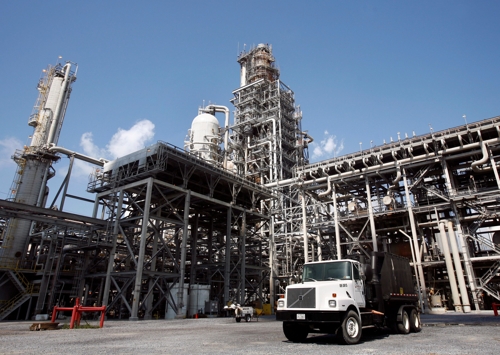
WSJ noted that both companies trace their roots back to John Rockefeller's Standard Oil, and if the merger is realized, it would create a giant oil company similar to Standard Oil, which was broken up in 1911 due to U.S. antitrust regulations.
If the two companies merge, they would become the world's second-largest oil company after Saudi Arabia's Aramco in terms of market capitalization and production volume. The combined market capitalization is expected to exceed $350 billion, with daily oil and gas production reaching approximately 7 million barrels.
However, WSJ anticipates that the merger could face antitrust regulatory challenges. President Joe Biden has declared climate change as one of the biggest crises facing the U.S. and has announced a move away from fossil fuels. On the 27th of last month, Biden signed an executive order halting oil and gas drilling on federal lands and waters and announced plans to hold a climate summit in April. Given the Biden administration's prioritization of environmental issues, it is highly likely that the merger, which would increase the influence of ExxonMobil and Chevron, could be blocked.
A market insider pointed out that the merger should have taken place during the presidency of Donald Trump, who was more favorable to the oil industry, suggesting that Exxon and Chevron have already missed the opportunity. It is estimated that the merger could reduce annual capital expenditures by $10 billion and administrative costs by $15 billion.
The market has long suggested that the two companies should integrate to cut costs and improve management efficiency. In fact, the oil refining industry, which is in crisis, saw large-scale mergers and acquisitions last year. Chevron acquired Noble Energy for $5 billion, and ConocoPhillips merged with Concho Resources with a $10 billion investment.
Chevron announced its fourth-quarter results on the 29th of last month. At the press conference, CEO Wirth did not mention a merger with ExxonMobil but only gave a general statement that efficiency could be improved through integration.
ExxonMobil will announce its fourth-quarter results before the opening of the New York Stock Exchange on the 2nd. ExxonMobil recorded losses exceeding $2 billion through the third quarter of last year and is expected to report losses for four consecutive quarters. In November last year, ExxonMobil abandoned its long-term plan to increase daily production by 1 million barrels by 2025. Under this 2018 plan, ExxonMobil had planned to spend $230 billion. There are also forecasts that Exxon will have to reduce its annual dividend payout, which amounts to $15 billion. Chevron also reported losses close to $5.5 billion last year.
According to S&P Global Market Intelligence, as of the end of the third quarter last year, ExxonMobil had $69 billion in debt, and Chevron had $35 billion. The stock prices of ExxonMobil and Chevron fell by 29% and 20%, respectively, last year.
© The Asia Business Daily(www.asiae.co.kr). All rights reserved.
![Clutching a Stolen Dior Bag, Saying "I Hate Being Poor but Real"... The Grotesque Con of a "Human Knockoff" [Slate]](https://cwcontent.asiae.co.kr/asiaresize/183/2026021902243444107_1771435474.jpg)
















