Determination to Support Tax Collection Overcoming COVID-19
Commissioner Kim Dae-ji: "We Must Expand from Tax Imposition to Benefit Administration"
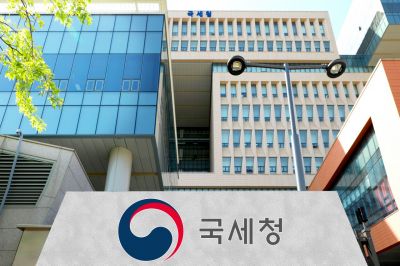
[Sejong=Asia Economy Reporter Kim Hyunjung] The National Tax Service (NTS) has presented tax administration support measures for overcoming the novel coronavirus infection (COVID-19), such as reducing tax audits and excluding tax verifications, as the direction for national tax administration operations this year. It will exclude self-employed individuals affected by COVID-19 from the regular tax audit selection targets and also postpone the value-added tax filing and payment for individual business owners. The tax administration, which has so far focused on tax imposition and collection, plans to actively expand into benefit administration, including the payment of subsidies.
On the morning of the 28th, Kim Daeji, Commissioner of the NTS, held a nationwide regional office chiefs meeting at the Government Complex Sejong and confirmed and announced the ‘2021 National Tax Administration Operation Plan’ with these contents. While last year emphasized ‘strict measures’ against unearned income to curb real estate speculation, this year the focus has shifted to ‘supportive tax administration’ to help overcome the crisis.
First, the total number of tax audits will be reduced from about 16,000 cases to about 14,000 cases, and measures to exclude self-employed and small business owners from tax verifications (exclusion from regular audit selection, exemption from filing content verification, etc.) will be extended until the end of this year. In particular, the scope of support will be expanded to include self-employed individuals whose sales have sharply declined due to COVID-19, who were not originally eligible. Some booming industries such as leisure, home economy, and media content creation are excluded from this target.
In addition, for simplified audits targeting small and medium-sized enterprises (SMEs), the on-site audit period will be limited to 50% or less in principle, while focusing on tax administration support linked to the Korean New Deal. A Korean New Deal division will be newly established in the central and local tax offices’ livelihood support communication task force, and a ‘Korean New Deal Tax Support Center’ will be set up in tax offices nationwide. SMEs receiving Korean New Deal budgets or directly conducting related projects will be excluded or deferred from regular tax audits, and a fast track will be introduced for prior review of research and development (R&D) tax credits. The tax support requirements for job-creating SMEs will be relaxed from a 4% or more employment increase to 3% or more, and regulatory innovation will be pursued, such as allowing unmanned liquor vending machines at liquor sales license locations.
Building real-time income tracking infrastructure for proactive tax support is also a key pillar of tax administration this year. The collection cycle of income data for personal service-type business operators will be shortened, and cooperation with the Korea Workers' Compensation & Welfare Service will support the elimination of blind spots in employment insurance. The transition to ‘digital tax administration’ considering the COVID-19 situation is also highlighted as a major task. HomeTax 2.0 will be fully promoted to provide non-face-to-face taxpayer services such as facial recognition and customized navigation, and convenience in civil complaints and consultations will be enhanced by introducing KakaoTalk consultations. The filing and payment deadline for the second half of 2020 value-added tax for individual business owners will be extended by one month to the 25th of next month by official decree.
However, strict measures will be taken against tax evasion. Investigation efforts will focus on tax evasion or private profit tax evasion by booming industries such as leisure and home economy that have enjoyed windfall benefits from COVID-19, media content creators, and irregular capital transactions. The NTS plans to actively respond to multinational corporations’ tax avoidance, such as transfer pricing manipulation using tariff-free systems (FTAs), by participating in international digital tax discussions.
Commissioner Kim emphasized, "The new normal triggered by the pandemic is replacing existing systems in most areas of the economy and society," adding, "We must expand beyond the traditional role of tax administration related to tax imposition and collection to the area of benefit administration."
© The Asia Business Daily(www.asiae.co.kr). All rights reserved.
![Clutching a Stolen Dior Bag, Saying "I Hate Being Poor but Real"... The Grotesque Con of a "Human Knockoff" [Slate]](https://cwcontent.asiae.co.kr/asiaresize/183/2026021902243444107_1771435474.jpg)
















