Up to 600,000 KRW Provided for Replacing Home Low-NOx Boilers... 1,200 Units Targeted for Replacement This Year... Ultrafine Dust Emissions Reduced to 1/8... Effective in Reducing Fine Dust
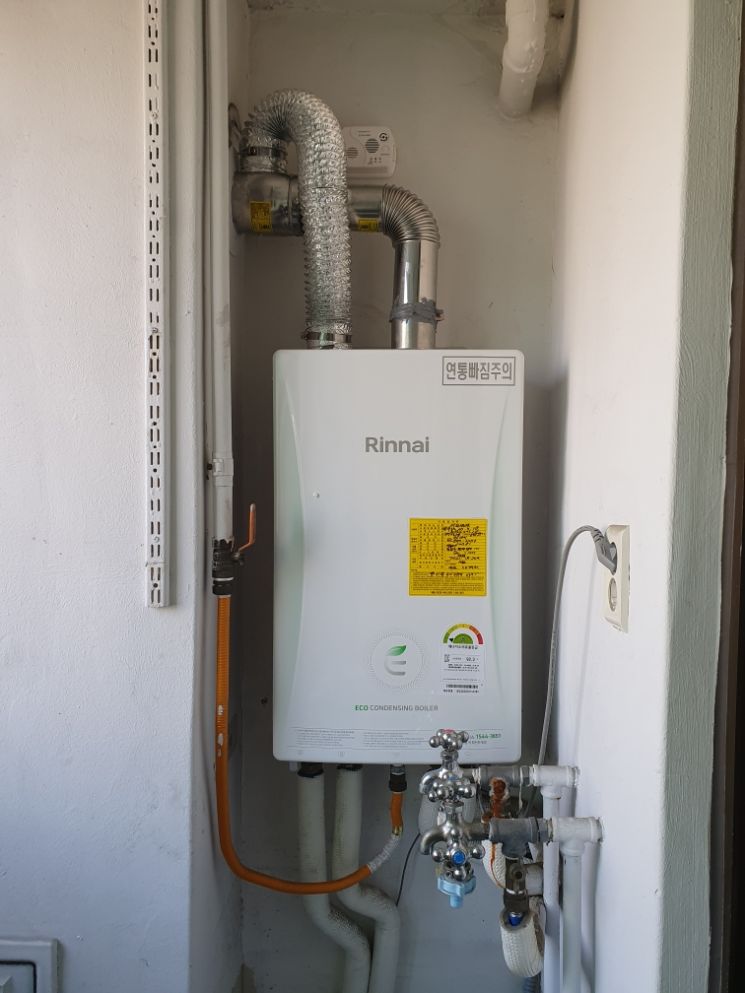
[Asia Economy Reporter Park Jong-il] Yeongdeungpo-gu (District Mayor Chae Hyun-il) will provide subsidies for households that install low-NOx (eco-friendly condensing) boilers to improve air quality.
While conventional boilers used in households emit about 173 ppm of nitrogen oxides, a major cause of fine dust (PM-2.5), low-NOx boilers emit less than 20 ppm, which is about one-eighth of conventional boilers, making them very effective in reducing fine dust.
In addition, the thermal efficiency is over 92%, higher than the 80% of conventional boilers, allowing households to save approximately 130,000 KRW annually on heating costs.
The district plans to distribute 1,200 low-NOx (eco-friendly condensing) boilers this year and will provide subsidies to households that install them to actively reduce fine dust. General households will receive 200,000 KRW, and low-income households (basic livelihood security recipients or near-poverty class) will receive 600,000 KRW.
Compared to last year, priority support will be given to homeowners of residences (single-family, multi-family, apartments, row houses, multiplex houses, etc.) replacing boilers that are over 10 years old. Public facilities, officetels, and neighborhood living facilities are excluded from subsidy eligibility. However, considering the durability period, subsidies will be provided on a first-come, first-served basis starting with boilers urgently needing fine dust reduction and thermal efficiency improvement. After September this year, homeowners replacing boilers less than 10 years old may also receive subsidies on a first-come, first-served basis within the remaining budget.
When applying for the subsidy, a certificate of eco-friendly boiler installation must be submitted. The mandatory manufacture, sale, and use of eco-friendly boilers for households has been in effect since April 3 last year, and in principle, only boilers certified as Grade 1 by the Minister of Environment can be installed.
For boilers used for more than 10 years, a photo of the nameplate (showing manufacturing date and number) proving this and a photo proving the eco-friendly boiler was installed in 2021 must be submitted together.
Since low-NOx boilers produce condensate, installation may be restricted in places where condensate piping installation is not possible. Therefore, households wishing to replace old boilers should inquire in advance with the boiler manufacturer about installation feasibility.
If the boiler is purchased through a supplier (sales agency), the consumer can sign a contract with the supplier for the boiler purchase and installation cost minus the subsidy (200,000 KRW for general households, 600,000 KRW for low-income households). The supplier must proceed with the boiler installation after the district confirms the subsidy payment.
Meanwhile, some cases of fraudulent receipt of eco-friendly boiler subsidies have occurred, so the district, together with the city, will monitor subsidy receipt practices to prevent this.
The boiler age will be verified through manufacturer and city gas safety inspection records, and false entries regarding manufacturing and installation dates will be carefully checked. If fraud is confirmed, the subsidy will be immediately reclaimed. Installers who falsify construction records will be fined 10 million KRW.
Households wishing to install low-NOx boilers can apply by visiting the district’s Environment Division in person or by mail starting January 25. For more details, visit the Yeongdeungpo-gu Office website under the ‘Yeongdeungpo News’ section.
Chae Hyun-il, Mayor of Yeongdeungpo-gu, said, “The household low-NOx boiler replacement support project is a win-win as it effectively preserves air quality by reducing fine dust and saves heating costs. We ask for active participation from many residents.”
© The Asia Business Daily(www.asiae.co.kr). All rights reserved.

















