Expansion of Airborne Asbestos Investigation to Non-Regulated Small Buildings Including Hagwon and Community Child Centers
[Asia Economy Reporter Lim Cheol-young] The Seoul Institute of Health and Environment Research is strengthening asbestos safety inspections in underground stations with high asbestos exposure concerns, as well as in small-scale multi-use facilities not subject to regulations, such as local children's centers and academies, to create an environment safe from asbestos.
On the 27th, the Seoul Institute of Health and Environment Research announced that it will increase the frequency of asbestos concentration inspections at five stations?Samseong Station, Anguk Station, Euljiro 3-ga Station, Seongsu Station, and Nowon Station?from once every six months to once every quarter.
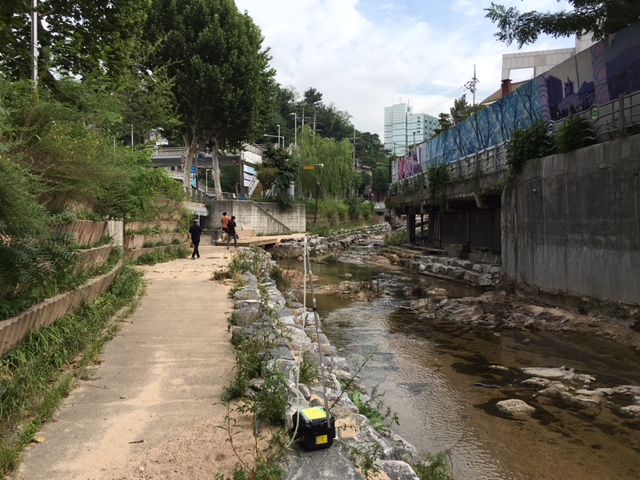
The institute is an asbestos analysis specialized organization certified by the Ministry of Environment and the Ministry of Employment and Labor. It investigates airborne asbestos concentrations in various living environments with potential asbestos exposure risks, including schools, general buildings, asbestos dismantling and removal sites such as redevelopment and reconstruction projects, underground stations, rivers and parks, and tunnel interiors.
Furthermore, the institute plans to conduct airborne asbestos inspections at facilities used by health-sensitive groups including children and adolescents, even if these small-scale facilities are not subject to asbestos safety regulations. This includes 22 local children's centers (under 500㎡) and 11 academies (under 430㎡).
Previously, the institute measured airborne asbestos concentrations at 123 locations around living environments with asbestos exposure concerns such as underground stations, rivers and parks, general atmospheric environments, and tunnel interiors, as well as at 396 locations across 37 asbestos dismantling and removal sites including housing redevelopment and reconstruction projects and urban renewal promotion projects.
In addition, in cooperation with the Seoul Metropolitan Office of Education, the institute investigated indoor airborne asbestos concentrations at schools where asbestos dismantling and removal work was conducted during the summer vacation period to create a “safe school environment free from asbestos concerns.” The investigation covered 112 indoor air points across 18 schools, and all results were within the U.S. “Asbestos Hazard Emergency Response Act (AHERA)” standard (70 s/㎟ or less), confirming final safety.
Director Shin Yong-seung stated, “We will continue to actively monitor not only around our daily living environments but also areas in legal blind spots to create a safe living environment free from asbestos and protect citizens’ health.”
© The Asia Business Daily(www.asiae.co.kr). All rights reserved.

















