If Designated as a Public Institution, Strict Control Is Required...
FSS Discusses Again... Likely to Designate National Maritime Science Museum
KEPCO Industrial Development's Reversion Push Also Criticized as Privatization Backtrack
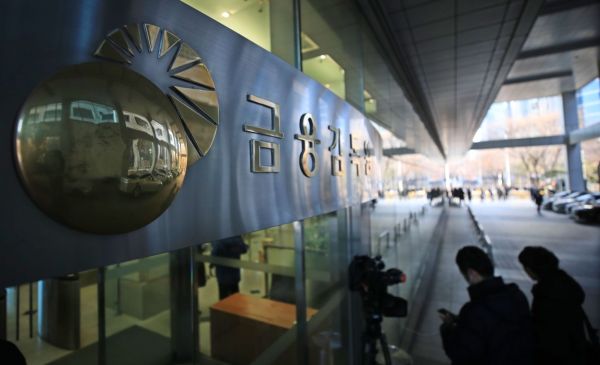
[Sejong=Asia Economy Reporter Kwon Haeyoung] Ahead of the Ministry of Economy and Finance's Public Institution Management Committee meeting, some institutions including the Financial Supervisory Service (FSS) are on high alert over the possibility of being designated as public institutions. If designated as a public institution, they will be subject to strong control by the Ministry of Economy and Finance, significantly restricting their autonomy. In particular, the government is pushing to revert Korea Electric Power Industrial Development (KEPID), which was privatized 18 years ago, back into a public enterprise, leading to evaluations that this is a general backtrack on privatization.
According to the Ministry of Economy and Finance on the 26th, the Public Institution Management Committee will convene on the 29th to discuss whether to designate certain institutions, including the FSS, as public institutions. The Ministry finalizes the list of institutions subject to the Public Institution Management Act by the end of January each year. Public institutions are categorized into public enterprises, quasi-governmental institutions, and other public institutions. Once designated as a public institution, transparency, efficiency, and accountability in operations are strengthened across various areas such as total personnel cost systems, management evaluations, management guidelines, management disclosures, and customer satisfaction surveys. From the perspective of the institutions, they inevitably face increased burdens due to the Ministry’s stringent control. The Ministry currently manages a total of 340 public institutions, one more than in 2019.
This year, the FSS is again on the discussion table of the Ministry’s Public Institution Management Committee. The recent series of private equity fund investment losses involving Lime, Optimus, and Discovery funds has fueled public opinion demanding stronger supervisory responsibility and control over the FSS, which has drawn attention to this public institution designation. Last month, the Ministry notified the Financial Services Commission (FSC) that the FSS meets the criteria for a public institution under the Public Institution Management Act, but the FSC expressed opposition, arguing that the FSS is already subject to controls equivalent to those of a public institution.
Besides the discussion on designating the FSS as a public institution, the Ministry plans to newly designate the National Maritime Science Museum and the Architectural Space Research Institute as public institutions due to their establishment as new institutions or independence as affiliated institutions.
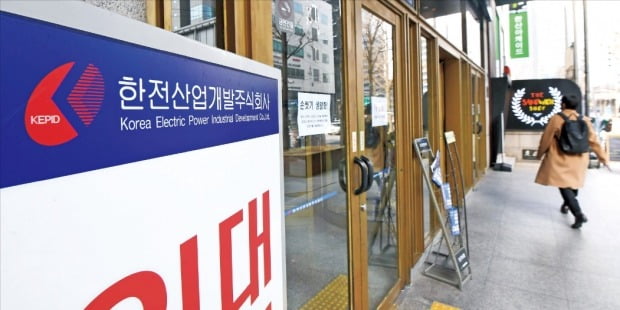
In addition to designating new public institutions, the government has also begun the process of reverting already privatized companies back into public institutions. The procedure to convert Korea Electric Power Industrial Development (KEPID), privatized in 2003, back into a public enterprise after 18 years has officially started.
Korea Electric Power Corporation (KEPCO) and power generation companies recently issued a request for advisory services on acquiring shares of KEPID. In the request for proposal, these companies stated that the purpose is for KEPCO and five power generation companies to jointly acquire shares of KEPID in relation to the policy of converting irregular workers to regular positions. These five companies said they will review a reasonable acquisition cost for the shares held by the Federation of Korean Trade Unions, the largest shareholder of KEPID, and will conclude contracts after due diligence and consultation with accounting and legal experts. Established in 1990 as a 100% subsidiary of KEPCO, KEPID was privatized in 2003 and currently the Federation of Korean Trade Unions holds 31%, KEPCO 29%, and minority shareholders 40% of the shares.
The push to revert KEPID to a public institution aims to facilitate the smooth conversion of irregular workers to regular positions. This was triggered by the industrial accident death of Kim Yong-gyun, who worked as an irregular worker at the Taean Thermal Power Plant in Chungnam in 2018. Since then, labor groups have demanded that KEPCO and power generation companies directly employ KEPID’s irregular workers. As of September last year, KEPID had a total of 2,913 employees, of which 757 were irregular workers. KEPCO is reportedly negotiating with the Federation of Korean Trade Unions regarding the share acquisition.
A variable is the opposition from minority shareholders holding 40%. Rather than proposing alternatives such as strengthening work expertise or investing in safety facilities, concerns have been raised that this backtrack to convert a privatized company back into a public enterprise could reduce management efficiency and increase fiscal burdens.
© The Asia Business Daily(www.asiae.co.kr). All rights reserved.
![Clutching a Stolen Dior Bag, Saying "I Hate Being Poor but Real"... The Grotesque Con of a "Human Knockoff" [Slate]](https://cwcontent.asiae.co.kr/asiaresize/183/2026021902243444107_1771435474.jpg)












