"Need for Regulatory System on Interests Between Public Officials and Private Sector, Not Just High-Ranking Officials"
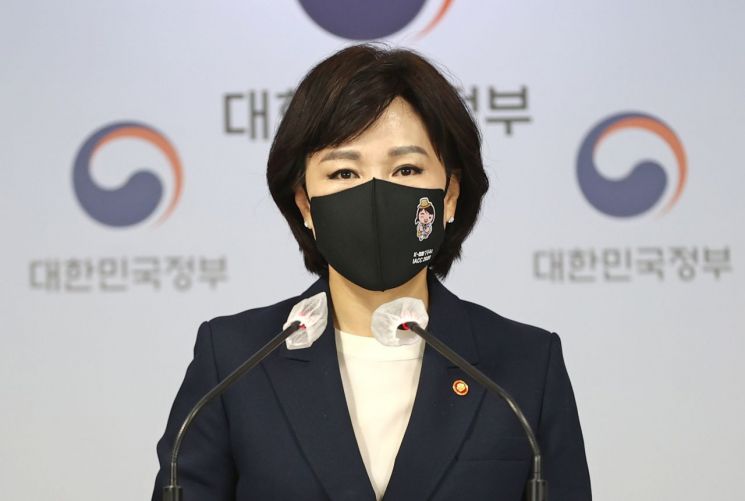 Jeon Hyun-hee, Chairperson of the Anti-Corruption and Civil Rights Commission. (Photo by Yonhap News)
[Asia Economy Reporter Moon Chaeseok] The Anti-Corruption and Civil Rights Commission (ACRC) has declared that it will actively collaborate with the Corruption Investigation Office for High-ranking Officials (CIO) starting this year and announced plans to accelerate the enactment of the Public Officials Conflict of Interest Prevention Act.
On the 22nd, during this year’s presidential briefing, the ACRC revealed plans to report and transfer complaints of corruption by high-ranking officials to the CIO and to support the implementation of integrity policies within the CIO.
Previously, on December 10 last year, the ACRC amended the Anti-Corruption and Civil Rights Commission Act to add the CIO as an institution to which the ACRC can directly report corruption suspicions involving high-ranking officials.
When issues requiring institutional improvements are identified during CIO investigations, the CIO will notify the ACRC, which will then promote reforms to block structural corruption.
The ACRC holds the position that the Conflict of Interest Prevention Act must be promptly passed by the National Assembly to improve not only high-ranking officials but also the overall corruption system within the public service.
Conflict of interest among public officials refers to situations where personal or property-related interests such as kinship, regional ties, friendships, or economic benefits interfere with or may interfere with fair job performance during the execution of official duties.
The ACRC believes that managing only high-ranking officials is insufficient to regulate corruption involving public officials entangled with private sector interests. The Conflict of Interest Prevention Act has been stalled for several years.
During the 2019 government briefing under former Chairperson Park Eun-jung, the ACRC also identified the enactment of the Conflict of Interest Prevention Act as a major task but failed to achieve results.
In June last year, the government drafted a bill and submitted it to the National Assembly, but it remains pending. The law was not passed during the 20th National Assembly session.
There are concerns that legislative momentum will weaken after the April by-elections for Seoul and Busan mayors and the transition to the 20th presidential election period.
Therefore, the ACRC reported to the president, stating, "We will make every effort to ensure its passage this year."
© The Asia Business Daily(www.asiae.co.kr). All rights reserved.
![Clutching a Stolen Dior Bag, Saying "I Hate Being Poor but Real"... The Grotesque Con of a "Human Knockoff" [Slate]](https://cwcontent.asiae.co.kr/asiaresize/183/2026021902243444107_1771435474.jpg)
















