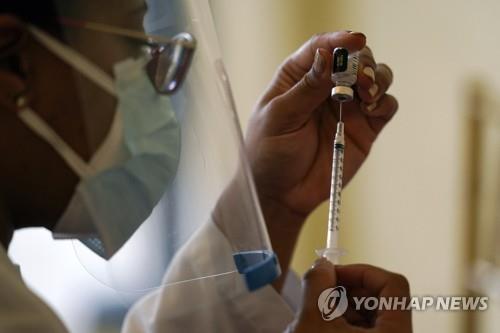
[Asia Economy Reporter Onyu Lim] A study has found that antibodies generated either from initial infection with the novel coronavirus (COVID-19) or from vaccination may be vulnerable to the variant virus that emerged in South Africa. This suggests that even after receiving a COVID-19 vaccine, it may be necessary to develop new vaccines and administer additional doses each time a major variant arises, similar to influenza.
The Wall Street Journal (WSJ) reported on the 22nd (local time) that the vaccine jointly developed by BioNTech and Pfizer has proven effective against the UK variant virus, but there are no verified results yet regarding the South African variant.
As the COVID-19 pandemic marks its first year and new variants emerge, researchers worldwide are struggling to track and understand them. Concerns are growing especially in regions where a significant portion of the population is believed to have formed COVID-19 antibodies, yet variant viruses have appeared.
This variant COVID-19 research was conducted by extracting blood from subjects who were infected with the initial COVID-19 and culturing the virus in the laboratory. WSJ reported that before the formal publication of the paper, clinical trial results from the UK and South Africa are expected within weeks, which will allow precise assessment of how effective vaccines are against the variant COVID-19.
So far, the South African variant COVID-19 has been detected in 22 countries including Canada, China, and Germany. South African researchers confirmed that the variant virus either completely neutralizes antibodies formed from previous COVID-19 infections or is barely affected by them.
The study was conducted by examining the response of antibodies obtained from patients infected during the first wave to the variant COVID-19 virus. Another study in South Africa focused on the spike protein of the variant virus, revealing that out of 44 antibodies from early COVID-19 patients, 21 failed to counter the variant virus. Only three types of antibodies extracted from past severe COVID-19 patients effectively blocked the variant virus.
Through this, researchers concluded that there is a possibility of reinfection with COVID-19 and that the effectiveness of existing vaccines, which are designed to neutralize the virus's spike protein, may be reduced.
Separately from the South African research, Rockefeller University and the California Institute of Technology in the United States conducted studies by extracting blood from individuals vaccinated with Pfizer and Moderna vaccines. The results showed that the three major South African variant viruses could significantly reduce the effectiveness of antibodies formed by vaccination.
© The Asia Business Daily(www.asiae.co.kr). All rights reserved.

















