KCC 2021 Work Plan
Transparent Disclosure of Mobile Phone Prices and Subsidies Achieved through Separate Announcement System Implementation
Expansion of OTT and Other Services
Strengthening of User Protection Measures
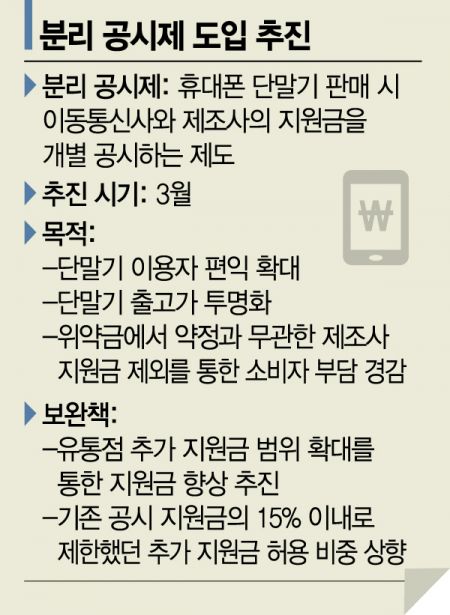
[Asia Economy Reporter Minyoung Cha] The long-debated mobile phone separate disclosure system, a “hot potato” in the telecommunications industry, is set to be implemented soon. As the ruling party, which proposed the amendment to the Device Distribution Structure Improvement Act (Device Distribution Act) including the separate disclosure system earlier this year, and the Ministry of Science and ICT, the main regulatory body, have reached an understanding, the introduction of the system has gained momentum. The separate disclosure system requires mobile phone manufacturers and telecom operators to individually disclose sales subsidies. With the Korea Communications Commission (KCC) reinforcing its stance in this year’s annual work report, the amendment to the Device Distribution Act, currently pending in the 21st National Assembly, is expected to pass the parliamentary hurdle next month.
KCC’s 7-Year Wish to Be Fulfilled
The ‘2021 Work Plan’ announced by the KCC on the 20th includes user protection policies such as the separate disclosure system. The KCC will promptly implement the system once the amendments to the Device Distribution Act, separately proposed by Democratic Party lawmakers Seungrae Cho, Hyesook Jeon, and Seungwon Kim, are passed. Currently, if a smartphone subsidy is 300,000 KRW, only the total amount is displayed, but going forward, separate subsidy details such as 200,000 KRW from the manufacturer and 100,000 KRW from the telecom operator must be disclosed.
This policy aims to eradicate so-called “hogeng” controversies and resolve public inconvenience by improving transparency in mobile phone pricing and other institutional reforms. One expected benefit is reducing customer burden by excluding manufacturer subsidies unrelated to contracts from penalties for early contract termination. On the other hand, concerns have been raised that excessive market transparency could reduce competition among the three major telecom operators, ultimately backfiring on consumers. There are also ongoing criticisms that it could weaken the competitiveness of mobile phone manufacturers in the global market. A telecommunications industry official stated, “Once the government’s separate disclosure system is established, we plan to set internal schedules accordingly.”
Thus, it is evaluated that the KCC’s 7-year-long aspiration has finally found a breakthrough. Despite a chilly atmosphere among manufacturers, the separate disclosure system has been pursued continuously since 2014. Even mobile phone manufacturers who opposed it as recently as last year have recently shifted their stance. KCC Standing Commissioner Changryong Kim said, “Regarding claims that the introduction of the separate disclosure system would harm manufacturers, virtual simulations showed no such data,” adding, “Not all information will be disclosed.” The KCC will also implement supplementary measures, such as increasing the proportion of additional subsidies to retailers, which was previously limited to within 15% of the disclosed subsidy.
Strengthening User Protection Measures for OTT
The KCC will also strengthen user protection measures in response to the expansion of new service markets such as Over-The-Top (OTT) services and live commerce. According to global investment bank Credit Suisse, the subscription economy market size is estimated to have grown from approximately $420 billion (470 trillion KRW) in 2015 to about $530 billion (594 trillion KRW) last year. However, public opinion points out that consumer protection policies are insufficient compared to the market growth rate.
Additionally, the KCC plans to improve the statutory and double damages compensation system for telecom operators’ management responsibility in the event of communication failures within this year. In cases of sudden internet service outages like the Google YouTube blackout, the mandatory notification and compensation period for users will be shortened from 4 hours to 2 hours.
Furthermore, in June, the KCC will disclose after-sales service (AS) costs for major device components. It will also establish standards for valuing used phones and strengthen used phone compensation programs. In December, to prevent damages related to mobile application payments, the KCC will enhance inspections and revise systems for each usage stage, including subscription, use, and cancellation. Typical consumer damages include subscribing to unnecessary services or having to pay penalties upon early cancellation.
© The Asia Business Daily(www.asiae.co.kr). All rights reserved.
![Clutching a Stolen Dior Bag, Saying "I Hate Being Poor but Real"... The Grotesque Con of a "Human Knockoff" [Slate]](https://cwcontent.asiae.co.kr/asiaresize/183/2026021902243444107_1771435474.jpg)
















