Biden Emphasizes Alliances, Possibility of Comprehensive Conflict with China
Risk of Facing Conflict Situations Amid Internal Crises in US and China
[Asia Economy Reporter Naju-seok] Domestic experts predicted in a panel discussion organized by Asia Economy that the inauguration of U.S. President-elect Joe Biden will mark a new turning point in U.S.-China relations.
While the U.S. hegemony is expected to be maintained for the time being, there were also strong voices calling for more stable crisis management.
Kim Heung-jong, President of the Korea Institute for International Economic Policy, anticipated that pressure policies against China will continue in the Biden era. Kim analyzed, "The current situation, where anti-China sentiment is unprecedentedly widespread, increases the likelihood that the Biden administration will pursue a tough policy toward China."
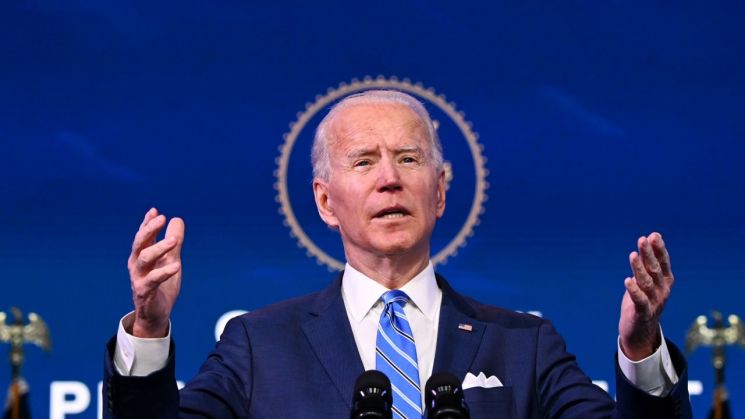
Kim predicted, "The Biden administration is expected to pressure China through a multilateral approach rather than the unilateral approach of the previous Donald Trump administration, and it is anticipated to confront China more sharply on human rights issues such as Hong Kong, Xinjiang Uyghur, and Tibet."
However, he also forecasted, "There is a possibility of cooperation with China on internationally widely shared values, such as environmental issues and health issues including COVID-19."
Jung Dae-jin, Research Professor at Ajou University’s Ajou Institute for Unification Studies, emphasized the importance of stable management of the U.S.-China hegemonic rivalry. Jung said, "The domestic situations of the U.S. and China are expected to be important variables," adding, "Stable domestic management is essential to prevent the U.S. and Chinese leadership from succumbing to the temptation to transfer internal crises to external enemies to create political breakthroughs." He diagnosed, "If either side makes a political decision to resolve domestic crises through external conflicts, it cannot be ruled out that conflicts between the two countries will intensify unpredictably."
There was also a glimpse of the possibility of stable management. Jung said, "The U.S. is likely to resume U.S.-China strategic dialogues that were absent during the Trump era, and both sides are expected to make efforts to manage the competition between the U.S. and China to prevent it from escalating into a catastrophe by utilizing the personal friendship between President Biden and President Xi Jinping that has continued from the past."
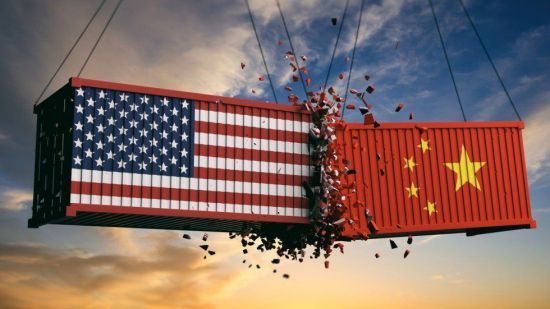
Experts evaluated that China suffered more than the U.S. amid the COVID-19 crisis.
Heo Yoon, Professor at Sogang University Graduate School of International Studies, said, "Favorability toward China has continuously declined since President Xi Jinping’s inauguration and plummeted in 2020," adding, "Economically, it is true that China has shown signs of relatively quick recovery from the COVID-19 crisis, but the U.S.-China hegemonic competition is expected to deepen further in numerous areas including politics, economy, trade, investment, technology, human rights, military, and security after Biden’s inauguration." He predicted, "The U.S. is expected to corner China by mobilizing the capabilities of its allies on a bipartisan basis."
Seo Jeong-geon, Professor at Kyung Hee University, also pointed out, "China’s power, which was on the rise through the COVID-19 period, should be evaluated as somewhat diminished." Seo said, "The motivation of the Biden administration’s China policy will be to pressure the somewhat weakened China and restore the U.S.’s international status," and forecasted, "Compared to the Trump administration, which focused solely on trade and technology sectors, the Biden administration is expected to increase pressure on China based on universal principles such as human rights, norms, and transparency beyond the economy."
© The Asia Business Daily(www.asiae.co.kr). All rights reserved.


















