Palm Vein Contactless Identity Verification
Financial Supervisory Service Ancillary Business Application
Lease-Up License Acquisition
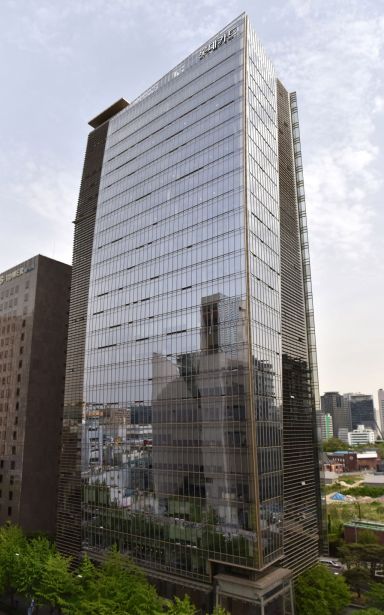
[Asia Economy Reporter Ki Ha-young] Lotte Card is accelerating business diversification from the beginning of the year, focusing on bio-authentication and leasing businesses. This move aims to secure profitability amid concerns of an economic downturn due to the prolonged COVID-19 pandemic and the challenging card industry environment, including deteriorating merchant fee income, which is its core business.
According to the industry on the 19th, Lotte Card recently applied to the Financial Supervisory Service for an ancillary business involving non-face-to-face identity verification using bio-authentication (palm vein recognition). Lotte Card plans to partner with 14 domestic airports, excluding Incheon Airport, to provide a service that verifies identity using palm vein recognition instead of an ID card.
The Korea Airports Corporation, with which Lotte Card is seeking partnership, has been offering identity verification services using biometric information such as palm veins and fingerprints for domestic flights at 14 airports since 2018.
This ancillary business application is analyzed as a measure to expand Lotte Card’s existing 'HandPay' service in response to increased demand for non-face-to-face authentication due to COVID-19. In 2017, Lotte Card introduced HandPay, the world’s first payment service using palm vein recognition. The method is hygienic and more accurate than other authentication methods, as it uses a near-infrared sensor to examine hemoglobin components in the veins without direct contact with the terminal. Currently, it is installed and operated at over 160 locations, including 7-Eleven and Oak Valley.
Lotte Card also recently acquired a license for the leasing business. It plans to start operations as early as the first half of this year, beginning with durable goods products. Additionally, to enter the future growth area of MyData (personal credit information management business), the company amended its articles of incorporation through a board meeting earlier this year. The amendments added business purposes such as ▲providing merchant information to credit information companies ▲personal credit information management ▲investment advisory ▲financial product advisory ▲loan brokerage and mediation. Through this, Lotte Card plans to participate in the second phase of the MyData preliminary licensing review.
The reason Lotte Card is focusing on business diversification is due to the worsening management environment, including reduced credit sales revenue caused by merchant fee cuts and intensified competition from big tech companies entering the financial sector. Although it achieved a net profit of 81.2 billion KRW, a 90.8% increase compared to the previous year as of the third quarter last year, it ranks in the lower tier among the seven specialized card companies. As of the third quarter, its credit sales market share was 9.34%, losing the fifth place it had held for several years to Woori Card.
Lotte Card plans to secure various revenue sources through such business diversification this year. CEO Jo Jwa-jin also emphasized in his New Year's address, "This year, many challenges lie ahead, including uncertainties from the COVID-19 situation, the reduction of the maximum interest rate, and the recalculation of merchant fee rates," adding, "We must create our own unique Lotte Card in our own way."
© The Asia Business Daily(www.asiae.co.kr). All rights reserved.
![Clutching a Stolen Dior Bag, Saying "I Hate Being Poor but Real"... The Grotesque Con of a "Human Knockoff" [Slate]](https://cwcontent.asiae.co.kr/asiaresize/183/2026021902243444107_1771435474.jpg)
















