Ministry of SMEs and Startups Announces Analysis of Employment Status in Regulatory Free Zones
326 Businesses, 1,255 More Jobs Compared to Pre-Designation
Increase in SME Job Creation... Manufacturing Sector Accounts for 55.7%
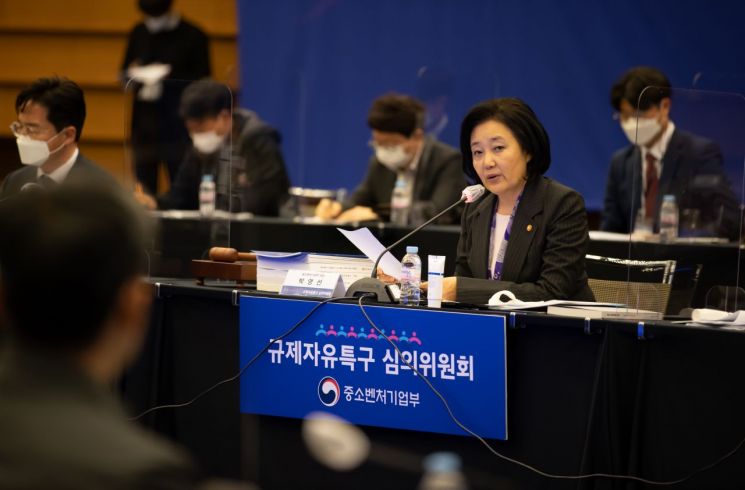
[Asia Economy Reporter Kim Bo-kyung] As of the end of last year, the number of jobs at business sites within the Regulatory Free Zones increased by nearly 20% compared to before the zones were designated. In particular, it was found that jobs were created mainly in manufacturing and small and medium-sized enterprises.
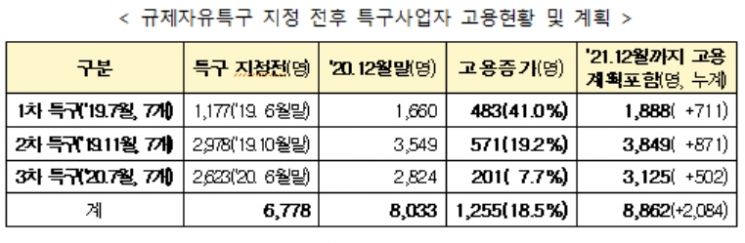
The Ministry of SMEs and Startups announced on the 19th that as of the end of December last year, the total number of jobs at 326 companies within the Regulatory Free Zones reached 8,033, an increase of 18.5% (1,255 jobs) compared to before the zones were designated.
This result comes from a direct survey of employment status at business sites within the zones for 326 companies, excluding 74 public enterprises and government-funded research institutes, out of 400 companies participating in the 1st to 3rd phase zone projects.
The Regulatory Free Zone system is a policy that relaxes regulations related to new businesses on a regional basis. Governors of cities and provinces, excluding the metropolitan area, can apply for zone designation to foster innovative and strategic industries.
In the 1st and 2nd phase zones designated in 2019, 1,054 jobs were created, and in the 3rd phase zone designated in July last year and currently preparing for demonstration in 2021, 201 jobs were added.
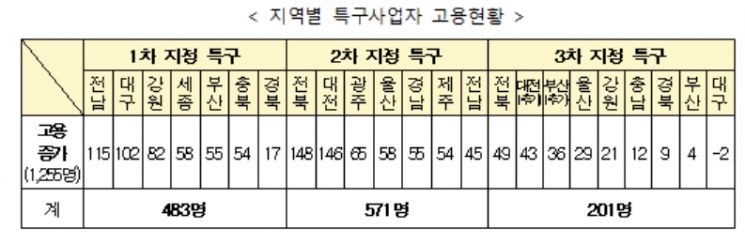
Among the zones, the Jeonbuk Eco-friendly Vehicle Zone showed the highest employment increase (148 jobs), continuously contributing to job recovery in the region after GM's withdrawal.
The Jeonnam e-Mobility Zone, where micro electric vehicle production plants have been established (115 jobs), and the bio sectors in Daegu (102 jobs) and Daejeon (146 jobs) zones showed remarkable job creation effects.
The proportion of employment increase through 143 companies relocated from other regions was 40.9% (513 jobs), indicating the job creation effect due to company relocations such as headquarters moves and branch establishments to the region.
With the progress of demonstration projects, additional new employment for commercialization is also planned, suggesting that the Regulatory Free Zone system is significantly contributing to regional innovation growth and job creation.
By company size, small enterprises and small business owners (546 jobs, 43.5%), medium-sized enterprises (385 jobs, 30.7%), and mid-sized enterprises (177 jobs, 14.1%) accounted for 88.3% (1,108 jobs) of the total job increase among zone businesses, indicating that jobs were mainly created in small and medium-sized enterprises.
By industry, the sectors with both high employment scale and growth rate were manufacturing, information and communication, and professional scientific and technical services (1,050 jobs), accounting for 83.7% of the total employment increase (1,255 jobs). Among these, manufacturing sectors such as mobility (autonomous vehicles, eco-friendly vehicles, etc.), medical devices, and batteries had the highest share (699 jobs, 55.7%).
By business age, companies established less than 3 years ago accounted for 21.3% (267 jobs), those established between 3 and 7 years ago accounted for 24.1% (302 jobs), and those established more than 7 years ago accounted for 54.7% (686 jobs), with the majority of employment increase coming from companies older than 7 years among all zone businesses.
Future zone businesses are reported to have plans for a total of 829 new hires by the end of this year when the demonstration projects conclude. It is expected that additional significant job creation effects will appear during the commercialization process of new technologies and services after the demonstration is completed.
Park Young-sun, Minister of SMEs and Startups, stated, "The Regulatory Free Zones will lead as forward bases for future strategic industries and to ensure job creation, we will meticulously prepare for rapid legal revisions and conversion to temporary permits so that the 1st and 2nd phase zones do not halt operations even after demonstration completion."
She added, "To ensure that the achievements of regional innovation growth become visible early, we plan to continuously support various policy measures such as R&D, funding, and market access tailored to the needs of zone and startup companies."
© The Asia Business Daily(www.asiae.co.kr). All rights reserved.



















