Court, "Hospital responsible for 60%... Ordered Chosun University plaintiff to be paid a total of approximately 287 million won"
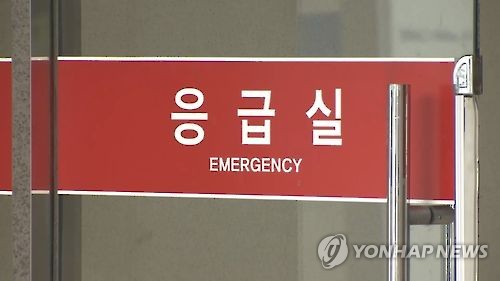 The court recognized 60% of the hospital's responsibility for medical negligence in the case where a newborn showing symptoms of respiratory distress died from hypoxia. Photo by Yonhap News
[Asia Economy Reporter Han-ah Na] A ruling has been made recognizing the medical negligence and liability for compensation of a university hospital in a case where a newborn showing symptoms of respiratory distress died from hypoxia due to medical staff negligence during treatment.
On the 17th, the Gwangju High Court announced that it overturned the original ruling and partially ruled in favor of the plaintiff in the appeal trial of a damages claim lawsuit filed by the family of A (who was one month old at the time of death) against Chosun University Hospital.
The court recognized the hospital's responsibility as 60% and ordered the Chosun University Foundation to pay the plaintiff a total of approximately 287 million KRW.
On January 7, 2016, A visited the emergency room of Chosun University Hospital with symptoms of coughing. The medical staff diagnosed A with acute bronchiolitis, prescribed medication, and discharged her.
However, the next day, A showed symptoms of respiratory distress due to pneumonia and cyanosis, and after visiting a secondary medical institution in Jeonnam, she returned to the emergency room of Chosun University Hospital.
Later, on the night of January 11, 2016, while maintaining a ventilator to remove phlegm, the medical staff attempted a closed endotracheal suction on A, but her peripheral oxygen saturation rapidly dropped, and ultimately A died.
A’s family claimed that during the endotracheal suction, the hospital staff mistakenly dislodged the tube, causing it to enter the esophagus, which interrupted oxygen supply and led to hypoxia and death. They filed a lawsuit demanding compensation of 589 million KRW from the hospital.
The court stated, "Considering the evidence, testimonies of related parties, and supplementary results from the Medical Dispute Mediation and Arbitration Agency, it appears that the medical staff failed to maintain sufficient depth of airway intubation and proper tube positioning, and after the drop in oxygen saturation, they did not promptly re-intubate the displaced tube, resulting in medical negligence that led to the infant’s death from hypoxia."
The court further ruled, "However, since infants have much shorter airways than adults making it difficult to adjust intubation length, and due to abundant saliva and secretions making precise intubation challenging, as well as the anatomical structure that allows tube position to easily shift with slight movement, and considering the infant’s health condition and medical staff’s actions, it is reasonable to limit the liability ratio to 60%."
© The Asia Business Daily(www.asiae.co.kr). All rights reserved.

















