A total of 4,620 transactions in December last year... Over 8% increase compared to the previous month
Demand turning to villas amid rising house and jeonse prices
Prices surge in areas with expectations for public redevelopment and other maintenance projects
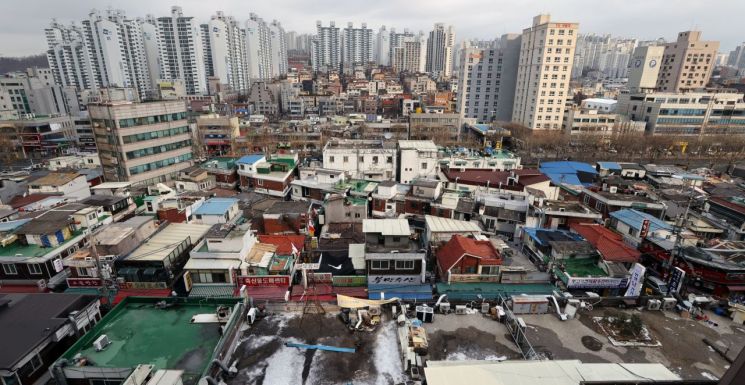
[Asia Economy Reporter Onyu Lim] Due to the ripple effects of the apartment-driven jeonse (long-term lease) shortage and expectations for public redevelopment and other maintenance projects, prices of multi-family and row houses in Seoul have also been rising.
◆Villa transaction volume 'rebounded' last month... January apartment transactions 'reversed' = According to the Seoul Real Estate Information Plaza on the 17th, the total number of multi-family and row house sales in Seoul in December last year was 4,620. This is an 8.2% (578 transactions) increase compared to 4,268 transactions in the previous month. With about two weeks left in the reporting period, it is expected that last month's sales will exceed 5,000 transactions.
Transactions of multi-family and row houses remained below 5,000 from January to May last year but surged to 7,538 in July, driven by 'panic buying' by 20 to 30 households, marking the highest level in 12 years and 3 months since April 2008 (7,686 transactions). Subsequently, due to the impact of the July 10 real estate measures and August 4 supply measures, transactions sharply decreased to 4,350 in August and 4,096 in September, but slightly rebounded to 4,649 in October, decreased again in November, and rebounded last month.
In the new year, transactions up to the 15th of this month totaled 701, making it difficult to determine the trend yet, but this is nearly double the apartment transactions (363) during the same period, indicating strong demand for multi-family and row houses.
Typically, apartment transaction volumes are 2 to 3 times higher monthly than those of multi-family and row houses, but due to the significant rise in apartment prices and increased real estate regulations last year, there were two months?September and October?when multi-family and row house transactions surpassed apartment transactions.
Last month, multi-family and row house transactions were concentrated in outer Seoul areas such as Eunpyeong-gu (493 transactions, 10.7%) and Gangseo-gu (368 transactions, 8.0%), as well as in areas with high housing demand due to transportation and school districts like Songpa-gu (325 transactions, 7.0%) and Yangcheon-gu (305 transactions, 6.6%). This was followed by Gangbuk-gu (304 transactions, 6.6%), Gangdong-gu (268 transactions, 5.8%), Jungnang-gu (259 transactions, 5.6%), and Guro-gu (206 transactions, 4.5%).
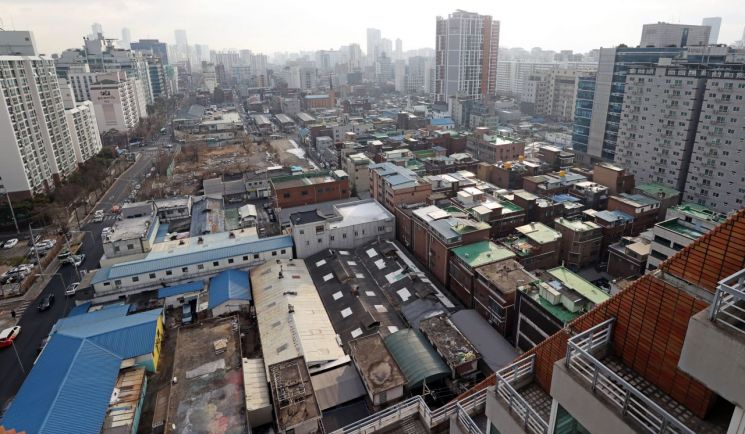
◆Multi-family and row house prices rose as much in 5 months after the Lease Protection Act as in the previous 2 years = The increase in multi-family and row house sales is interpreted as a result of both real demand and investment demand rising. As apartment prices continue to rise and jeonse prices soar, many buyers are turning to villas. Since the implementation of the new Lease Protection Act, including the right to request contract renewal and the cap on rent increases, apartment jeonse prices have surged, making it difficult for households to move, leading them to look toward villas. A real estate industry official explained, "Among some demand groups such as newlyweds, there has been an increase in cases considering purchasing or leasing clean, newly built villas instead of apartments."
In fact, since the full implementation of the new Lease Protection Act in August, villa price increases have been steep. From July to December last year, over five months, the average sale price of row houses in Seoul rose from 298.81 million KRW to 319.46 million KRW, an increase of 20.65 million KRW, which is similar to the increase of 20.78 million KRW over the previous two years (July 2018 to July 2020).
The average jeonse price of row houses in Seoul also rose by 14.33 million KRW from 202.6 million KRW in July last year to 216.41 million KRW in December, matching the jeonse price increase of 14.28 million KRW over the previous two years and one month.
A real estate industry official analyzed, "With the rise in apartment prices combined with the jeonse shortage, demand for purchasing villas as residences inevitably increases," adding, "Expectations for public redevelopment also seem to be reflected in the price increases of multi-family and row houses."
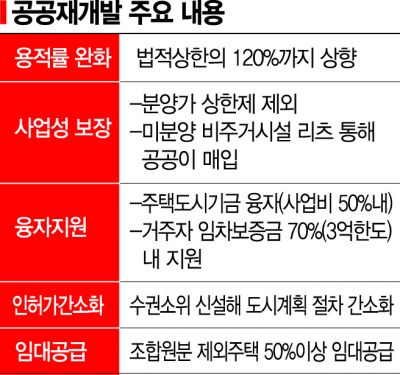
◆Investment demand also drawn to villas with fewer regulations amid development expectations = Investment demand is also focusing on multi-family and row houses. Real estate regulations are concentrated on apartments, and interest has grown due to expectations for public redevelopment.
In the June 17 measures last year, the government restricted jeonse loan financing for apartments priced over 300 million KRW in regulated areas, but multi-family and row houses were not subject to this, allowing 'gap investment' through jeonse loans to continue. Furthermore, despite major revisions to the housing rental business registration system through the July 10 measures, tax benefits for multi-family houses, villas, one-room units, and officetels were maintained, resulting in lower tax burdens.
Expectations for public redevelopment are also high. Since the government announced the promotion of public redevelopment in May last year, prices of old houses in candidate areas have surged. For example, a villa in Jangwi New Town with a net area of 32.85㎡ (land area 19.13㎡) on the 3rd floor was traded at 229 million KRW in July last year but surged to 412 million KRW by December when the contract was signed. Jangwi New Town is known to have applied for public redevelopment in districts 8, 9, 11, and 12.
A multi-family house in Seongbuk 1 District, Seongbuk-dong, Seongbuk-gu, which applied for public redevelopment, with a net area of 22.35㎡ (land share 30.31㎡), was traded at 370 million KRW in February last year, and by October of the same year, the sales contract was signed at 430 million KRW, increasing by 60 million KRW. Recently, in Dongjak-gu Heukseok 2 District, selected as a pilot site for public redevelopment, inquiries from buyers surged after the announcement, causing listings to disappear and premiums to form above 1 billion KRW.
© The Asia Business Daily(www.asiae.co.kr). All rights reserved.
![Clutching a Stolen Dior Bag, Saying "I Hate Being Poor but Real"... The Grotesque Con of a "Human Knockoff" [Slate]](https://cwcontent.asiae.co.kr/asiaresize/183/2026021902243444107_1771435474.jpg)













