Some Restaurants Openly Serve Less Food to Female Customers
Restaurant Says "Women Eat Less, It's Consideration"
Women Outraged "Why Are We Discriminated Against When Paying the Same?"
"From University Cafeterias to General Restaurants, It's the Same"
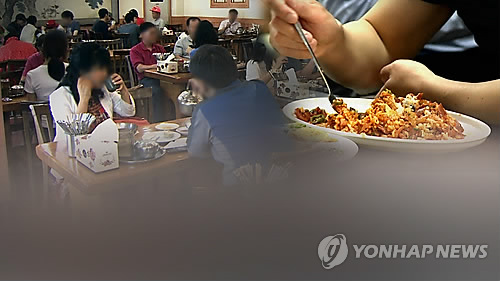 Among women, there have been ongoing complaints that female customers receive smaller portions of rice and side dishes compared to male customers. Restaurants have responded with remarks such as "Because you're a woman, you eat less," fueling continuous controversy over so-called "food gender discrimination." [Image source=Yonhap News]
[Asia Economy Reporter Han Seung-gon] # Recently, Kim, a woman in her 20s who went to a restaurant with her coworkers, had an unpleasant experience. The portion of rice bowls served at the restaurant differed between male and female employees, and when she asked the owner about it, the restaurant owner said, "Since you are a woman, you probably eat less. We prepared it that way on purpose, so just eat it." Kim said, "I paid the same amount of money but was treated differently because of my gender. It’s so absurd and infuriating," adding, "I have no intention of ever visiting this restaurant again."
Recently, some restaurants in Seoul have been providing different rice bowl portions based on gender, sparking controversy over whether this constitutes 'gender discrimination.' From the restaurant’s perspective, since women generally eat less than men, they serve smaller portions initially and offer more upon additional orders. However, women criticize this practice, saying, "All customers should be treated equally; there is no law that says women and men should be treated differently."
Park, a woman in her 30s who works in an office, said, "If you’re going to serve less rice, then you should charge less as well. It’s ridiculous to charge the full price but give less food." She added, "When I confronted the owner, the response was, 'Women eat less or leave food behind,' which only made things worse," expressing her disbelief.
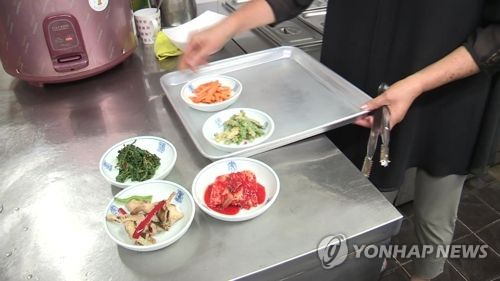
Another woman in her 20s, Lee, also recently had a similar experience. She said, "I went to a kalguksu (hand-cut noodle soup) restaurant in Seoul, and the amount of noodles was very different," adding, "When I complained, they finally gave me a bit more noodles, but my mood was already ruined, and it was absurd."
She emphasized, "It seems like the restaurant is practicing gender discrimination. Some say it’s not discrimination, but it clearly is." She continued, "I even experienced the same discrimination at a university cafeteria. It’s really frustrating because society behaves this way. I just don’t understand why."
Such cases can easily be found on social networking services (SNS) like Facebook and Twitter. This is why there is criticism that this is not just an isolated incident but a common situation in many restaurants.
Netizens unanimously agree that giving smaller food portions only to women is clear discrimination. They also stress that if smaller portions are to be served, prior consent should be obtained and the meal price should be reduced accordingly.
Twitter user A said, "At OOO restaurant, the rice bowl sizes for women and men are completely different. At OO place, even when ordering the same kalguksu, they openly take one order for a woman and one for a man."
Another netizen said, "People who haven’t experienced this really don’t know. It feels really disgusting," adding, "When you ask why they give less rice, they scold you, saying, 'You’re going to leave it anyway.'” They pointed out, "These restaurants need to be widely known so people stop going there and they come to their senses."
Meanwhile, as some restaurants continue to discriminate based on gender, it seems difficult to resolve this issue uniformly through administrative measures.
An official from a consumer protection counseling center, who requested anonymity, said, "One way to resolve this is to file complaints with the district office responsible for the restaurant, but customers are unlikely to go that far," adding, "This is why the issue seems to persist." They suggested, "If restaurants treat all customers equally without adjusting food portions based on gender, there would be no problem."
© The Asia Business Daily(www.asiae.co.kr). All rights reserved.
![Clutching a Stolen Dior Bag, Saying "I Hate Being Poor but Real"... The Grotesque Con of a "Human Knockoff" [Slate]](https://cwcontent.asiae.co.kr/asiaresize/183/2026021902243444107_1771435474.jpg)


















