A total of 4,700 households expected to be supplied in existing redevelopment zones all located near subway stations
Seoul City to implement land transaction permit system in these areas to prevent speculation
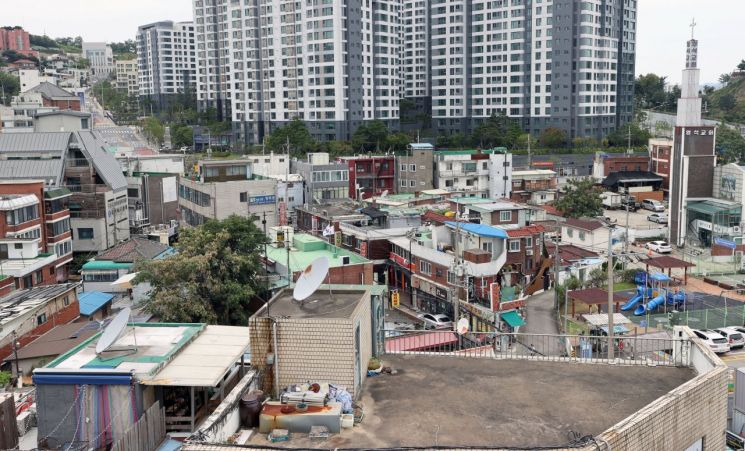
[Asia Economy Reporter Onyu Lim] Eight locations, including Heukseok 2 District and Yongdu 1-6 District in Seoul, have been finally selected as candidates for public redevelopment. All are redevelopment zones located in station areas, and a total of 4,700 housing units are expected to be supplied through redevelopment. The Seoul Metropolitan Government plans to designate these selected sites as land transaction permission zones to prevent speculative trading.
On the 15th, the Seoul Metropolitan Government and the Ministry of Land, Infrastructure and Transport announced that they had selected eight sites as the first pilot project candidates for public redevelopment introduced under the May-June metropolitan housing supply plan last year: ▲ Sinmunno 2-12 ▲ Yangpyeong 13 ▲ Yangpyeong 14 ▲ Bongcheon 13 ▲ Sinseol 1 ▲ Yongdu 1-6 ▲ Gangbuk 5 ▲ Heukseok 2. The evaluation was conducted on 12 existing redevelopment zones (with one voluntary withdrawal) among 70 sites that participated in the public redevelopment contest and already had redevelopment plans prepared.
All candidate sites are located near station areas but have experienced project stagnation for an average of over 10 years due to lack of feasibility and conflicts among residents since their designation as redevelopment zones. The Seoul Metropolitan Government and the Ministry of Land, Infrastructure and Transport plan to supply a total of 4,700 housing units in these areas through public redevelopment. A Seoul city official explained, "These are places with a high possibility of supplying quality housing in desirable locations for actual demanders if factors hindering project promotion are resolved through public redevelopment."
The candidates were finally selected through the 'Joint Public Redevelopment Pilot Project Candidate Selection Committee of the Ministry of Land and Seoul Metropolitan Government' held the previous day. The evaluation considered factors such as aging, housing supply effect, project feasibility, and balance among districts based on review materials submitted by local governments and zone explanations. Four sites not selected this time were recognized as needing public redevelopment but had issues with local matters. Seoul plans to put these on hold first and reconsider their public redevelopment status at the next selection committee meeting.
To prevent speculative transactions caused by public redevelopment, Seoul plans to designate the selected sites as land transaction permission zones. Additionally, the date for calculating the right to purchase will be announced as September 21 of last year, the public redevelopment contest announcement date, to stabilize the housing market.
The eight sites selected as candidates will be designated as public implementers by Korea Land and Housing Corporation (LH) and Seoul Housing and Communities Corporation (SH) after obtaining residents' consent. The Seoul Metropolitan Government and local governments will establish redevelopment plans applying public redevelopment special provisions and finalize the candidates as ‘public redevelopment zones.’ It is expected that zone designation will be completed and projects will be fully launched as early as the end of this year. LH and SH will hold explanatory meetings for residents based on the preliminary redevelopment plans prepared during the candidate review and collect residents' opinions, while also obtaining consent for designation as public implementers within the year.
Public redevelopment is a project where public implementers participate in redevelopment projects that have been stagnant for a long time due to lack of feasibility and conflicts among residents to improve residential environments and promote housing supply in urban areas. It receives four major public supports: ▲ urban regulation relaxation such as floor area ratio increase ▲ business feasibility guarantees such as exemption from the price ceiling system ▲ project cost loans ▲ simplified approval procedures. Half of the newly constructed housing, excluding the portion allocated to union members, will be supplied as public rental housing or profit-sharing jeonse (long-term lease) to contribute to housing stability for original residents and housing support groups (youth, newlyweds, elderly).
Kim Seong-bo, Director of the Housing and Architecture Headquarters of Seoul, said, “The first public redevelopment pilot project candidates were selected focusing on areas that can proceed more rapidly with public support. We hope these candidates will transform into quality residential areas through public redevelopment and revitalize long-neglected urban residential areas.” He added, “We will promptly handle administrative procedures to ensure smooth public redevelopment promotion and continuously discover necessary institutional improvements. We will also proceed without delay with additional candidate selection procedures for the remaining application zones.”
Kim Heung-jin, Director of the Housing and Land Office at the Ministry of Land, Infrastructure and Transport, said, “We hope the public redevelopment candidates selected this time will contribute to actual demanders securing their own homes. We will closely cooperate with the National Assembly to ensure the prompt passage of the Urban Maintenance Act amendment currently pending and thoroughly manage support measures such as project and relocation costs.”
© The Asia Business Daily(www.asiae.co.kr). All rights reserved.

















