Likely to Be Discussed at the February Extraordinary National Assembly
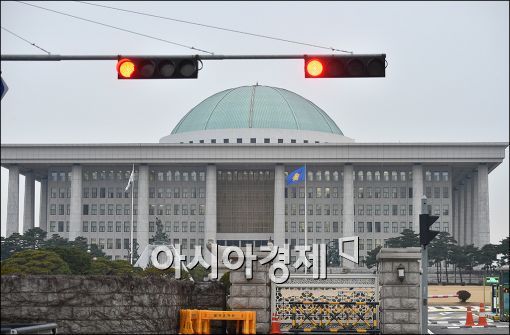 Yeouido National Assembly Building.
[Asia Economy Reporter Kiho Sung] Among the bills expected to pass during the February extraordinary session of the National Assembly, the business community is most concerned about the Collective Litigation Act (class action system) and the Punitive Damages Act. This is because they fear irreversible fatal damage due to astronomical lawsuit amounts and settlements.
According to the National Assembly Legislative Research Office on the 14th, from 2009 to 2018, an average of 420 class action lawsuits were filed annually in U.S. federal courts.
The resulting damages have also snowballed. According to the Korea Employers Federation, from 1995 to early 2014, 4,226 class action lawsuits were filed in the U.S., with over 40% of listed companies experiencing class actions. Among these, 1,456 cases were settled, with total settlement amounts reaching $68 billion. The impact on stock prices is also severe. Considering that stock prices fell by a cumulative 4.4% after news of class actions became known, the Federation estimated that a total shareholder value loss of $262 billion occurred.
The business community is also concerned about the burden of proof on plaintiffs, which does not even exist in the U.S., where the class action system is well established. The original draft of the class action system created by the Ministry of Justice allows plaintiffs to claim damages in a ‘rough’ manner, while imposing an obligation on defendants to provide ‘specific’ responses and explanations. Accordingly, consumers claiming damages may be recognized even if evidence is somewhat insufficient or ambiguous, but responding companies must provide explanations and answers in a detailed manner.
Another major issue is the failure to recognize companies’ ‘right to refuse submission of trade secrets.’ If a company refuses to submit trade secrets, the court is to presume the plaintiff’s claims as true. If the bill passes, companies may be forced to risk leaking trade secrets in order to explain themselves. There are also concerns that this could be exploited to intentionally file related lawsuits.
© The Asia Business Daily(www.asiae.co.kr). All rights reserved.
















