
[Asia Economy Reporter Lee Chun-hee] From now on, the use of residential-type accommodation facilities for housing purposes will be prohibited, and electric vehicle charging stations under 1,000㎡ will be allowed to be located within urban areas.
The Ministry of Land, Infrastructure and Transport announced on the 14th that it will begin legislative and administrative notice from the 15th on amendments to the Enforcement Decree of the Building Act, Enforcement Rules, Fire Structure Rules, and Building Committee Review Standards containing these details.
The amendment includes measures to block the use of residential-type accommodation facilities, which are legally designated as lodging facilities but have increasingly been illegally converted for residential use. These facilities, commonly called 'Saengsuk,' have recently attracted attention as alternative investment destinations amid soaring housing prices.
For newly sold residential-type accommodation facilities, the sales announcement must clearly state "housing use prohibited · lodging business registration required." Additionally, local governments will issue official letters to take legal action against businesses that advertise as if housing use is permitted, labeling such advertisements as false or exaggerated. For already sold facilities used as housing, administrative guidance will be strengthened by producing and distributing notices to community centers indicating that fines will be imposed, and efforts will be made to encourage conversion to residential officetels or housing.
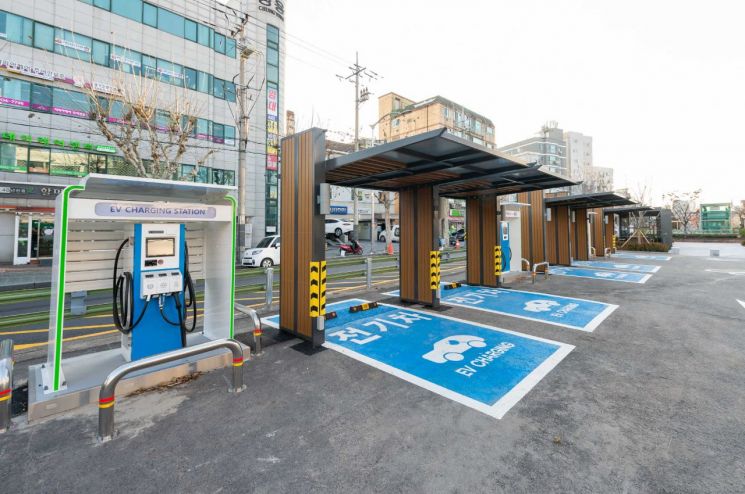
The amendment also includes significant improvements to the classification system of building uses to reflect social and environmental changes. To promote new technologies, electric vehicle charging stations under 1,000㎡ will be newly classified as Type 1 Neighborhood Facilities, allowing their location within residential areas. Virtual reality (VR) simulator experience facilities will be classified as Type 2 Neighborhood Facilities.
In addition, the design documents required for building permits will be simplified. Among the design documents previously required at the time of permit application, energy-saving plans, structural drawings, structural calculation reports, and fire-fighting equipment drawings can now be optionally submitted before the start of construction.
Also, following the enforcement of the amendment to the Enforcement Decree of the Building Act last October, which significantly reduced the scope of building review from "all areas" to "areas designated and announced by local governments," local governments will be required to clearly define the purpose and boundaries of designated review areas to minimize them. The Building Committee Review Standards will be revised to prevent excessive document submission during committee operations and to allow non-face-to-face reviews in preparation for infectious diseases such as COVID-19.
The amendment also includes provisions to expand the installation of Regional Building Safety Centers and Regional Building Management Support Centers and to improve operational efficiency by relaxing the qualification standards for professional personnel from "special-class construction technicians" to "senior construction technicians" or higher.
The legislative and administrative notice period for this amendment to the subordinate laws of the Building Act is from the 15th to the 24th of next month (40 days). After consultations with related ministries and reviews by the Regulatory Reform Committee and the Ministry of Government Legislation, it is expected to be promulgated and enforced around April. The full text is available on the Ministry of Land, Infrastructure and Transport website, and opinions can be submitted by mail, fax, or through the ministry's website.
Kim Sang-moon, Director of Building Policy at the Ministry of Land, Infrastructure and Transport, said, "Through this amendment to the Enforcement Decree of the Building Act, building permits and reviews will be simplified, shortening the permit processing time and reducing financial costs. We expect that the classification of electric vehicle charging stations and VR simulator experience facilities as neighborhood facilities, allowing their location within urban areas, will further activate industries related to new technologies."
© The Asia Business Daily(www.asiae.co.kr). All rights reserved.


















