Korea Real Estate Board January 2nd Week Apartment Price Trends
Seoul Sale Price Increase Rate 0.06%→0.07%
Spike Centered on Songpa-gu Reconstruction Complexes
Provincial Areas Hesitate as Increase Rate Shrinks for 4 Consecutive Weeks
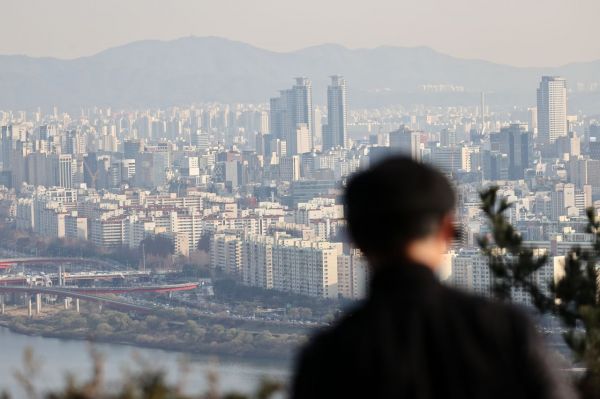
[Asia Economy Reporter Moon Jiwon] Ahead of the Seoul mayoral by-election scheduled for April, buying demand has surged in major redevelopment complexes in the Gangnam area, leading to an increase in the apartment price growth rate in Seoul. In contrast, regions outside the capital, where the 'balloon effect' has subsided, showed signs of stagnation as the rate of increase slowed for the fourth consecutive week.
According to the weekly apartment price trend report for the second week of January released by the Korea Real Estate Board on the 14th, as of the 11th, apartment prices in Seoul rose by 0.07%, an increase from the previous week's 0.06%. This is the highest figure in 26 weeks since the second week of July last year (0.09%).
The Korea Real Estate Board explained, "In the Gangnam area, buying demand increased mainly in areas with redevelopment project benefits such as Apgujeong and Banpo-dong," and "In the Gangbuk area, the price increase expanded mainly in popular station-area complexes such as Mapo and Dongdaemun."
In Seoul, Songpa-gu (0.14%) showed the highest growth rate, followed by Gangdong-gu (0.11%), and Gangnam and Seocho-gu (0.10%), all of which had higher growth rates compared to other districts. The reason for the high price increase in the Gangnam area is the expectation that redevelopment regulations may be eased ahead of the Seoul mayoral by-election, concentrating buying demand on major redevelopment complexes.
In fact, in Songpa-gu, prices rose mainly around the Jamsil-dong redevelopment project complexes; in Gangnam-gu, around Apgujeong, where redevelopment expectations are high; and in Seocho-gu, centered on Banpo-dong, where 'Raemian One Bailey' is about to be launched. It is also known that the number of listings has significantly decreased recently in Jamsil Jugong Complex 5 in Songpa-gu, Eonma Apartments, and Hyundai Apartments in Gangnam-gu.
In Gyeonggi Province, the apartment price growth rate slightly narrowed from 0.37% to 0.36%, but in areas with significant transportation benefits such as Yangju-si (1.35%) and Uijeongbu-si (0.51%), the upward trend continued. Goyang-si (0.88%), where buying demand has concentrated since Gimpo and Paju were designated as regulated areas, also saw a large increase centered on Deogyang-gu (1.06%).
On the other hand, in regions outside the capital, apartment price growth rates shrank again from 0.28% to 0.25%. In these regions, as regulations on the metropolitan area were strengthened, the 'balloon effect' shifted, causing the growth rate to rise to 0.38% on December 14 last year but then slow down to 0.37% → 0.33% → 0.28% → 0.25% as buying demand weakened.
After the government designated 37 areas including Busan and Ulsan as regulated zones on December 18 last year, buying demand is analyzed to have shifted back to the metropolitan area. In Busan (0.45% → 0.35%), Ulsan (0.48% → 0.38%), Gwangju (0.16% → 0.13%), Daegu (0.34% → 0.33%), and Gyeongnam (0.30% → 0.18%), buying demand decreased, leading to a slowdown in the rate of increase.
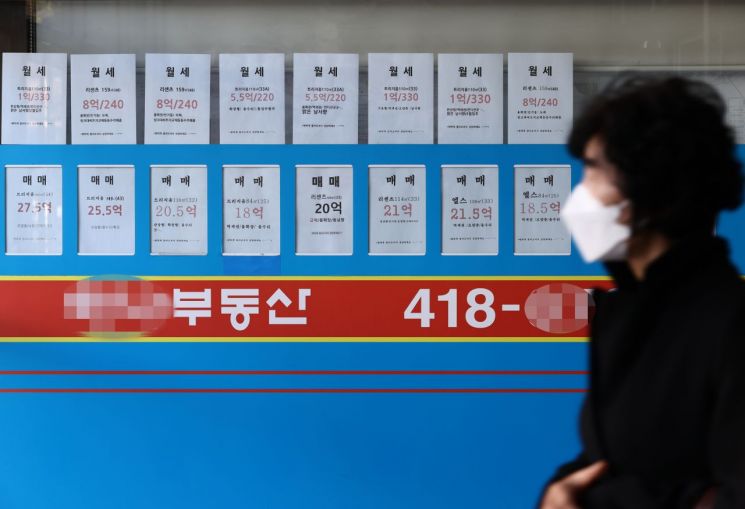
The jeonse (long-term lease) market nationwide generally showed a similar pattern to last week. The jeonse price growth rates for apartments in the metropolitan area and other regions remained the same as last week at 0.23% and 0.13%, respectively.
In Seoul, the upward trend continued amid a shortage of listings, with increases mainly in areas with relocation demand due to redevelopment projects or good residential conditions such as transportation and school districts, and in mid-to-low price complexes. Songpa-gu, which had the highest sales price growth rate, also saw the largest increase in jeonse prices at 0.21%. Yongsan-gu (0.19%), Mapo-gu (0.18%), and Gangnam-gu (0.17%) also showed significant increases.
In Gyeonggi Province, jeonse prices rose mainly in areas with good residential conditions such as Yangju-si (0.69%), Goyang-si (0.49%), and Bundang-gu in Seongnam-si (0.45%). In Incheon, prices increased centered around Songdo New Town, expanding the jeonse price growth rate from 0.33% to 0.37%.
In regions outside the capital, jeonse prices rose by 0.27% this week, a decrease from 0.30% last week. The growth rates in the five major metropolitan cities (0.36% → 0.31%) and the eight provinces (0.20% → 0.18%) all narrowed. Sejong-si saw the largest increase in jeonse prices at 1.67%, but this was also a decrease compared to last week's 1.78%.
© The Asia Business Daily(www.asiae.co.kr). All rights reserved.


















